For estates and infection prevention teams in hospitals and care homes, solid surface for infection control is becoming an increasingly important consideration. Surfaces need to do more than look good — they must withstand constant cleaning, help reduce the risk of infection and cope with everyday wear from staff, patients and visitors.
Solid surface has become a popular choice in healthcare because it is non‑porous, seamless and easy to maintain. Used in the right way, it can make day‑to‑day cleaning simpler and more reliable. In this article, we look at seven practical ways solid surface can support infection control, from bed spaces to en‑suite washrooms.
1. Seamless joints that do not trap dirt
Traditional worktops and cladding often rely on visible joints, trims and grout lines. Over time, these can become weak points that hold moisture, dust and debris, even with regular cleaning. In busy clinical areas, that is the last thing infection control teams want to see.
Solid surface is joined on site to create smooth, inconspicuous seams. Once installed and finished, these joints are difficult to feel and easy to clean straight across. There are fewer crevices where contaminants can accumulate, and fewer small edges for housekeeping staff to work around.
For bed‑head storage, nurses’ stations and wash‑hand basins, this helps reduce the number of potential dirt traps across the whole fit‑out.
2. Non‑porous surfaces that resist moisture and staining
Non‑porous simply means liquid stays on the surface rather than soaking in. In a healthcare setting, this matters. Spills are common – from drinks and food through to disinfectants and clinical fluids – and surfaces are cleaned frequently.
Because solid surface is non‑porous, spills can be wiped away more easily and are less likely to leave permanent staining when cleaning is carried out promptly. This makes it well suited to en‑suite vanity tops, clinical wash‑hand basins and wet rooms, where standing water or absorbed liquids can quickly lead to damage and hygiene concerns with other materials.
For estates teams, non‑porous surfaces help maintain a consistent appearance over time. For infection control staff, they support
routine cleaning processes by providing a smooth, predictable substrate that behaves the same way across a whole department.
3. Integrated upstands and coved upturns behind basins
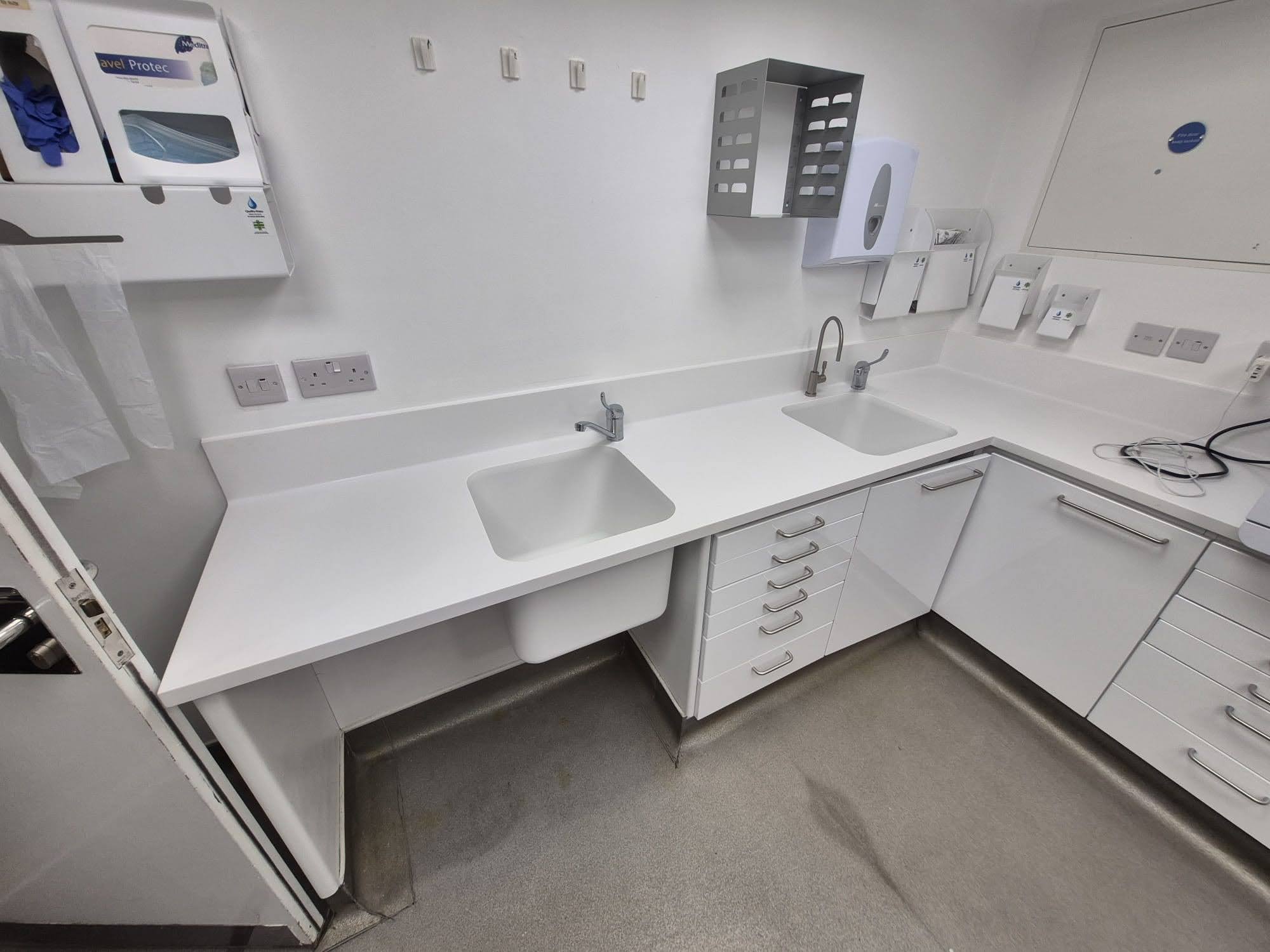
One of the most common problem areas in healthcare interiors is the junction behind basins and sinks. Water runs behind the bowl, sealant fails, and the gap becomes very difficult to clean properly. In high‑risk areas, this is a clear weak point.
With solid surface, upstands and coved upturns can be formed as part of the same installation. Instead of a flat top with a separate splashback, you get a continuous surface that turns up the wall. The junction between horizontal and vertical planes can be gently curved rather than sharply angled.
This approach reduces reliance on sealants alone and removes many of the narrow gaps where water, soap and dirt can accumulate. Cleaning teams can wipe straight up and over the upstand, including the area behind taps and fittings, without having to deal with exposed edges or rough transitions.
4. Rounded corners and edges that are easier to clean
Sharp internal corners, deep grooves and decorative detailing may look good on day one, but they can slow down cleaning and harbour dirt. In healthcare environments, where cleaning must be frequent and repeatable, these details can quickly become a challenge.
Solid surface can be fabricated with radius corners, coved skirtings and rounded edges as standard. This softens the geometry of worktops, wall panels and furniture, leaving fewer tight corners for dust and debris to settle in. It also improves the contact between cloth and surface during cleaning, helping teams achieve more consistent results in less time.
In practical terms, this can make a difference in areas such as medication prep rooms, nurses’ stations, staff kitchens and multi‑bed bays, where surfaces are touched and cleaned many times a day.
5. Durable finishes that withstand frequent cleaning
Healthcare surfaces are exposed to a lot: heavy use, mobile equipment, trolleys, cleaning machines and a wide range of cleaning products. Materials that are not robust enough can quickly show wear, chipped edges, delamination, swollen substrates and visible damage that becomes harder to keep clean.
Solid surface is designed to cope with
day‑to‑day knocks and frequent cleaning when maintained correctly. It does not rely on veneers or laminates bonded to a separate core, so there is no outer layer to peel away. With an appropriate finish and recommended cleaning methods, solid surface can maintain its appearance and performance over many years.
For estates teams, this durability reduces the need for early replacement and unplanned repairs. For infection prevention, it means surfaces stay intact and easier to clean, supporting consistent standards across the building.
6. Repairable surfaces that can be brought back into service
No material is immune to damage, the difference is what happens next. Some surfaces must be removed and replaced if they are chipped, cracked or burned, leading to disruption, waste and, in live environments, temporary workarounds that are not ideal from
an infection control point of view.
One of the advantages of solid surface is that many types of damage can be repaired on site. Scratches, minor burns and certain impact marks can often be sanded out and refinished without replacing the whole section. Even more significant repairs can usually be blended in with careful work.
This repairability allows estates teams to keep key areas in service for longer and deal with localised damage without shutting down whole rooms. For care homes and hospitals that operate around the clock, being able to refresh surfaces rather than replace them outright is a clear benefit.
7. Design flexibility that supports good layouts
Infection control is not just about the material itself; it is also about the layout and detailing of a space. Good design keeps clean and dirty activities separate, supports clear flows and avoids unnecessary junctions and awkward corners.
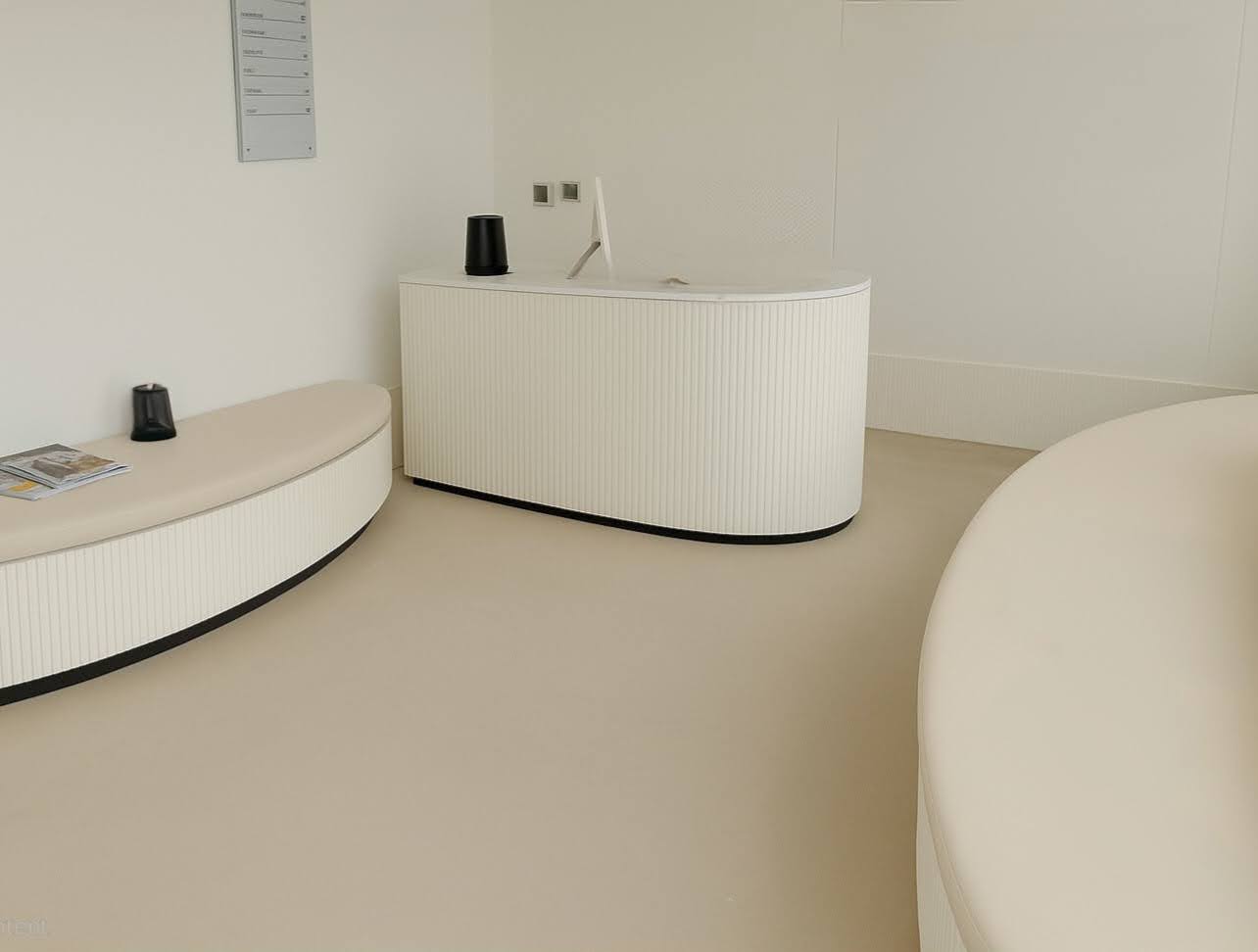
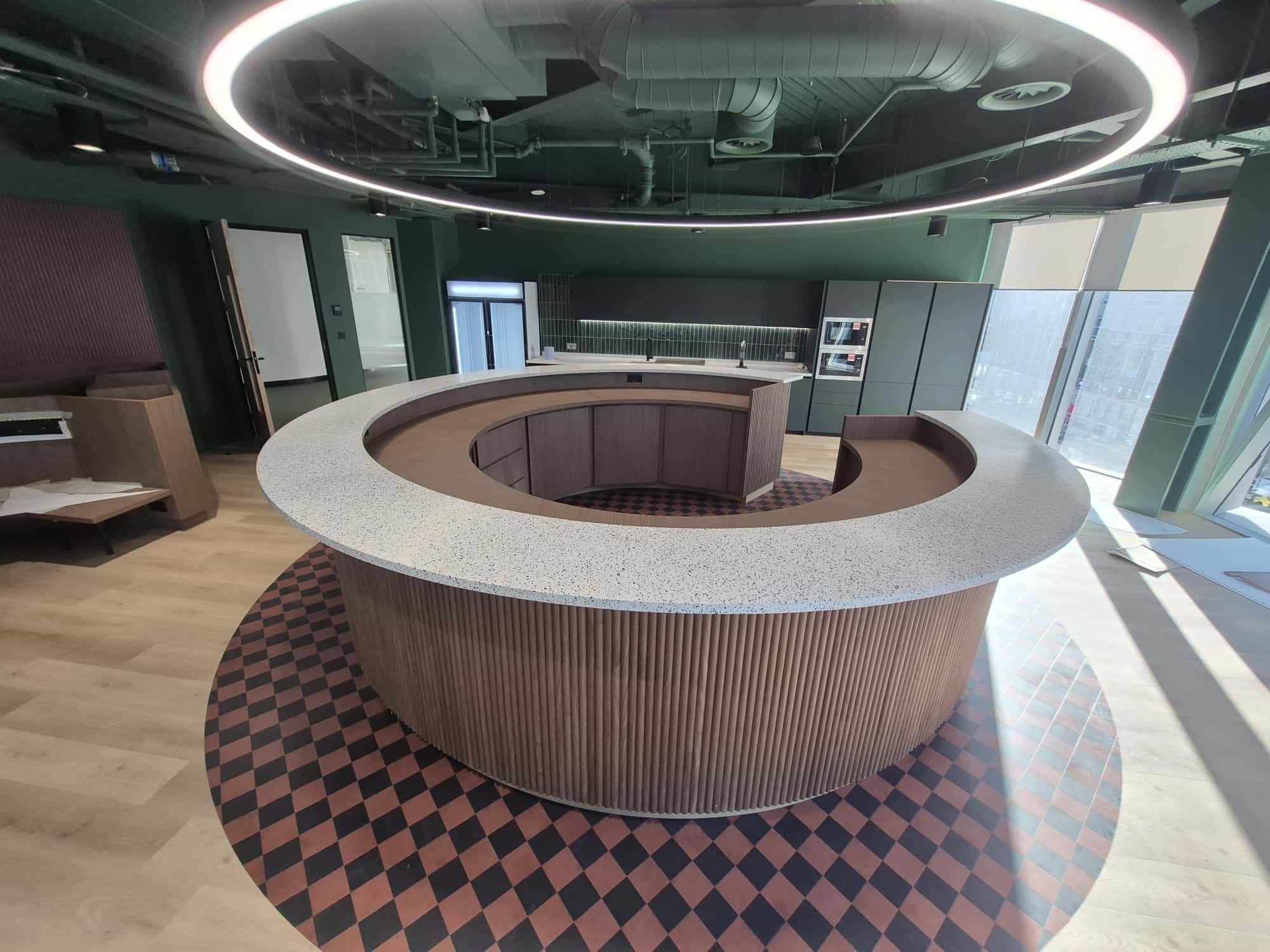
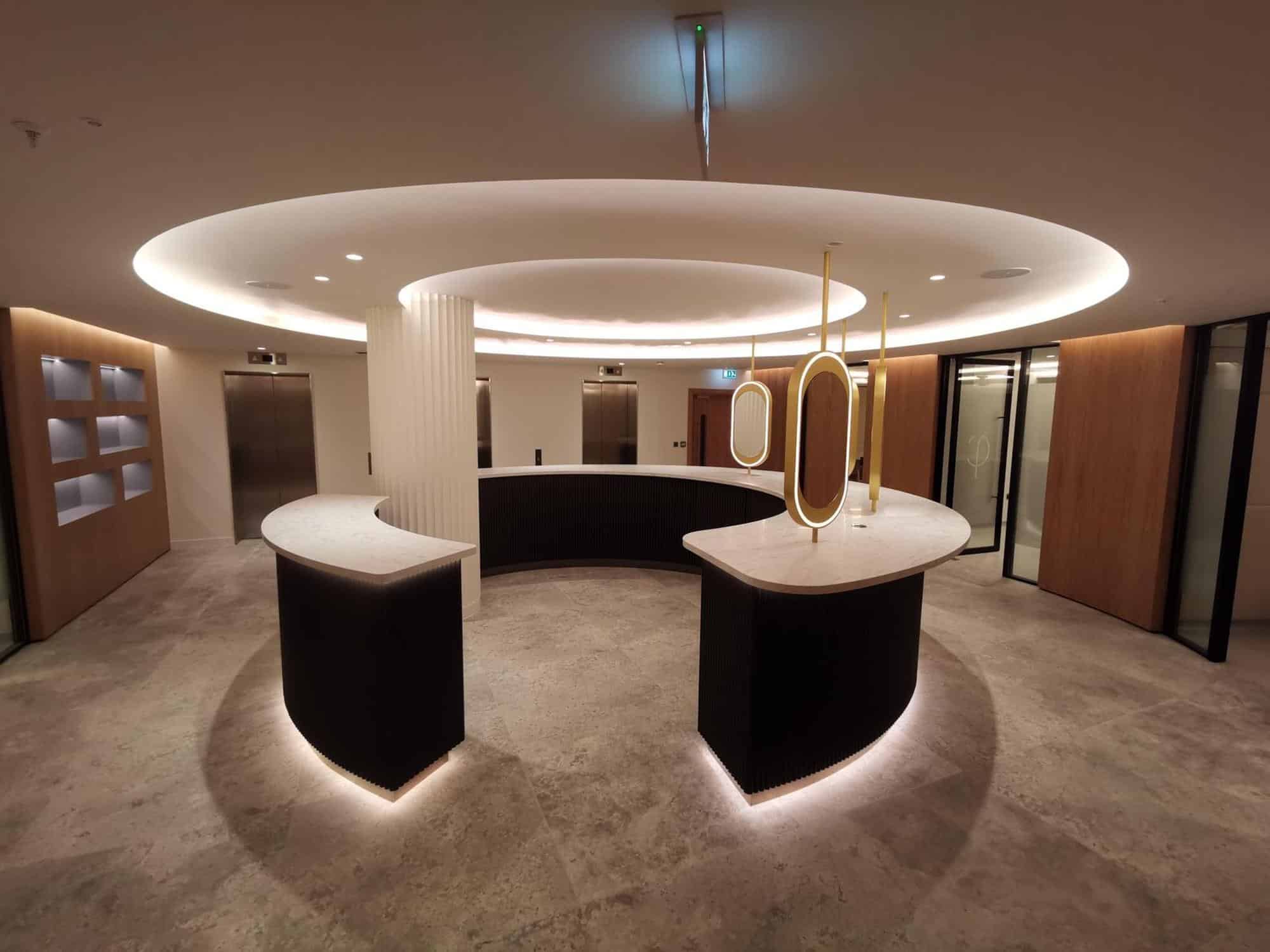
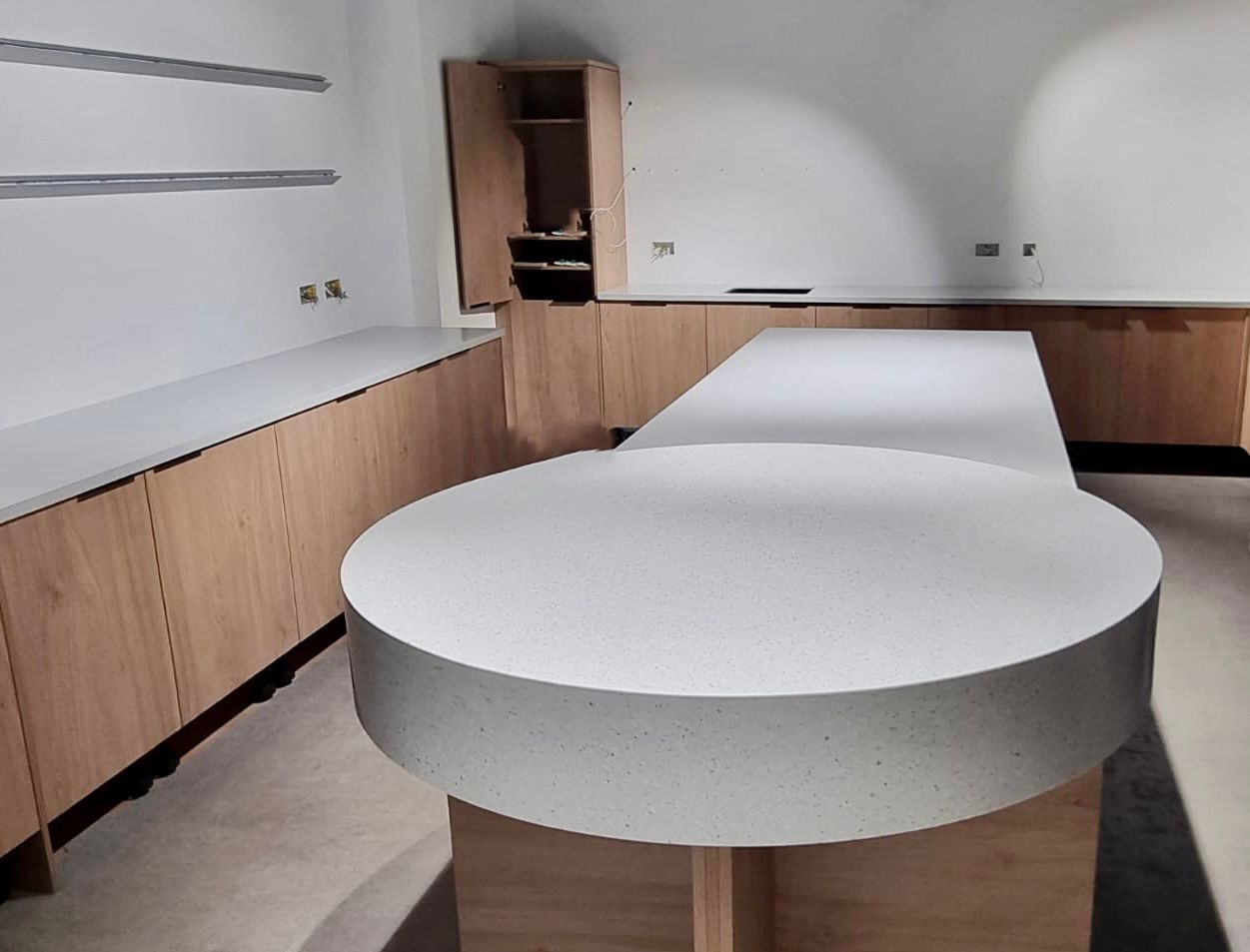
Solid surface offers a high degree of design flexibility. It can be thermoformed into curves, built up into thicker edges and joined seamlessly to create longer runs and custom shapes. This allows designers and estates teams to create surfaces that follow the way a room is actually used – for example, continuous tops with integral shelving, coved returns into walls or curved nurse bases that improve sightlines and circulation.
By using this flexibility, it is often possible to simplify interfaces, remove unnecessary joints and create clearer, more hygienic layouts across wards, treatment areas and sanitary facilities.
A practical tool for estates and Infection Prevention and Control teams
Solid surface is only one part of an effective infection control strategy, but it can make a noticeable difference to daily cleaning and long‑term performance. Its
non‑porous, seamless, durable and repairable nature helps reduce dirt traps, simplify cleaning regimes and extend the life of busy clinical spaces.
The best results come when the material and detailing are considered early – at briefing, design and specification stages, so that healthcare teams, designers and contractors can work together to make the most of what solid surface can offer.
If you are planning a new healthcare project or refurbishing a live ward or care home, we can help you explore how solid surface might support your infection control and operational goals.