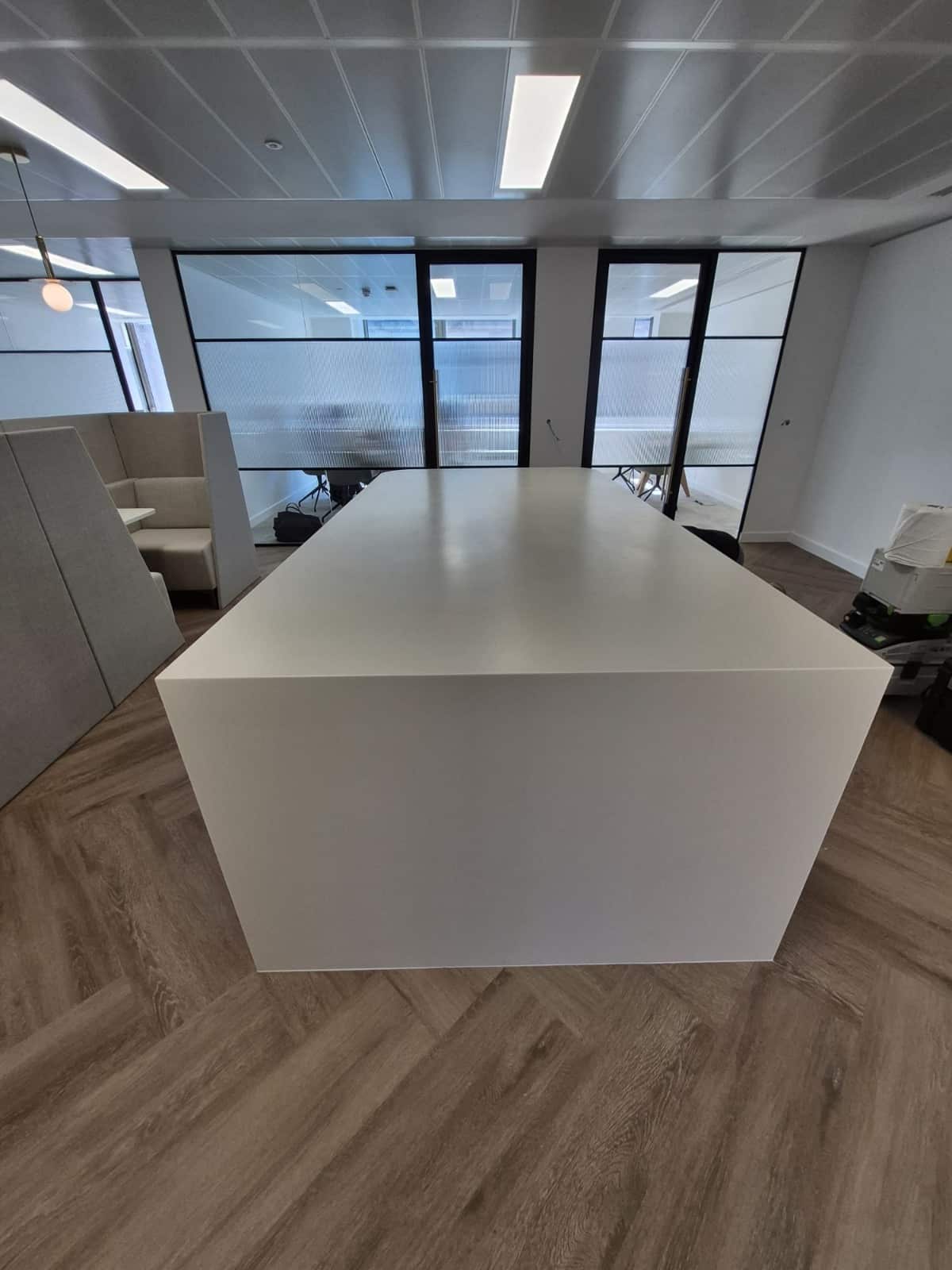
Why Solid Surface reduces snagging on fit out projects …
The project is done and the client is walking the space. Everything looks good, right up until they stop at a surface and point at something, a seam that’s opened slightly, an edge that’s lifting, a finish that was fine at installation but has since moved.
It costs time, money, and credibility on a job you did well in every other respect.
The honest truth is that snagging happens. It happens on our jobs too, and anyone who tells you otherwise probably isn’t being straight with you. What matters is how you minimise the risk upfront, and how you respond when something does need attention. With Solid Surface, both of those things work in your favour, but only when the fabrication has been thought through properly from the start.
Where surface snagging actually comes from
The majority of surface snagging in commercial fit out comes down to a few consistent causes: seams that fail under movement or moisture, edges that chip or lift because they were never properly supported, seam placement that didn’t account for how the surface would actually be used, and material that was never going to hold up in that environment regardless of how well it was installed.
With Solid Surface, the material is homogeneous throughout, which means a properly made seam becomes part of the surface. Done well, you can’t find it, but done poorly, or placed in the wrong position, it will show. The fabrication is what makes the difference. And if something does go wrong down the line, Solid Surface can be repaired and refinished in a way that most other surfaces simply can’t. That’s not a reason to be careless, but it is a genuine safety net.
What lighting reveals that installation doesn’t
This is something worth knowing at specification stage rather than discovering after the client walks the space. A spotlight or low angle light will catch what general lighting on site never showed you. It’s one of the more common causes of a snag that surprises everyone, because the surface genuinely looked fine when it was signed off.
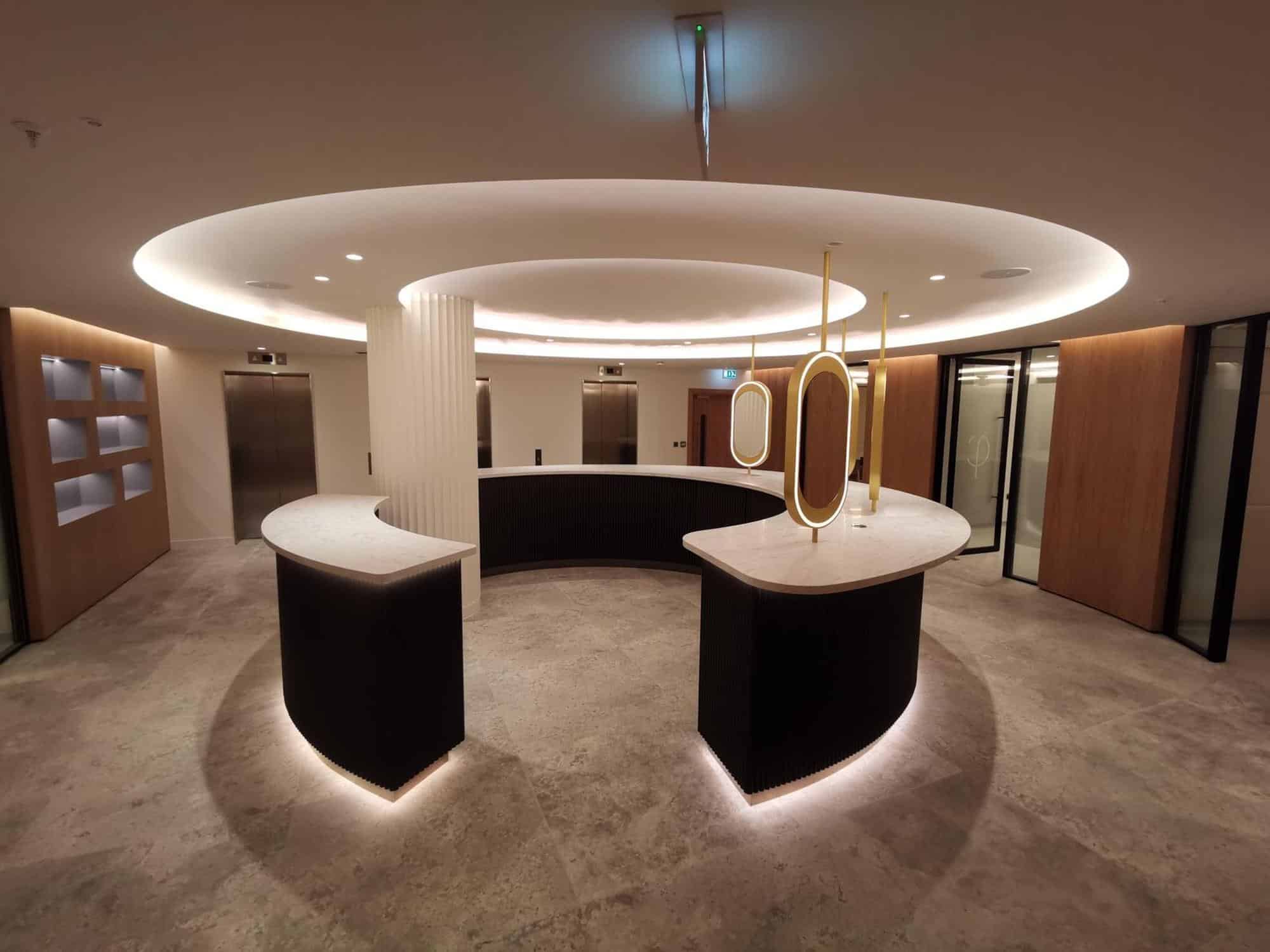
Skilled fabrication accounts for this. Seam placement should consider where and how a space will be lit once occupied, not just whether the bond is structurally sound. For premium or high visibility installations, an S-seam technique can be used. Rather than a straight line that catches the light at a consistent angle, the seam follows a shallow curve that disperses any reflection. We use this on projects where a straight seam would interrupt the surface under certain lighting conditions. It’s a small decision at fabrication stage that removes a predictable problem further down the line.
What proper fabrication removes from your risk list
When we work on a commercial project, the aim is always the same: eliminate as many failure points as possible before anything leaves our workshop.
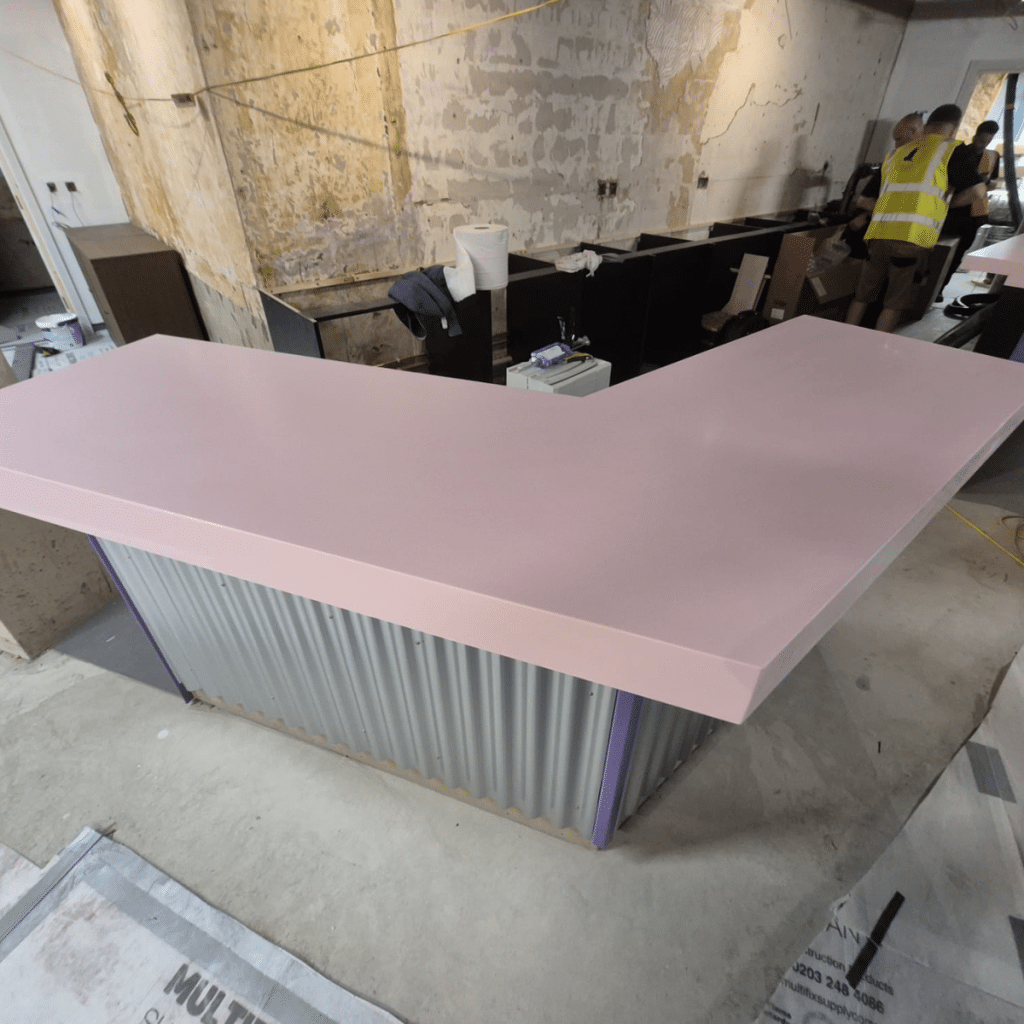
That means thinking carefully about where seams sit in relation to how the surface will be used. A seam running along the front edge of a heavily used worktop carries a different risk to one placed at the back, against a wall junction. Seam placement is a fabrication decision, and it has a real bearing on what you’re dealing with six months after installation.
It also means thinking about substructure. Solid Surface needs consistent support beneath it. Voids, inadequate substrate, or movement in the structure below will eventually show in the surface above, regardless of how good the fabrication is. We talk through substructure with contractors before anything is made, because getting it right at specification stage is far easier than diagnosing a problem after the client has signed off.
Edge profiles matter too. Thin edges look clean, but they’re more vulnerable on high contact surfaces. We’ll always flag where we think a profile choice creates risk, because it’s better to know before the surface reaches site than after.
The value of getting involved early
Most of the surface related snagging we see comes down to one thing: decisions that were locked in before anyone had properly considered the installation environment. The material was chosen from a brochure. Seams were placed wherever was convenient. The substructure wasn’t discussed. Nobody raised the edge detail.
We get involved early on a lot of projects, not to take over the specification, but to sense check it. Is the seam placement sensible? Is the substrate adequate? Is the profile right for how that surface is going to be used? Is there directional lighting that needs to be factored into where seams sit? These are short conversations, but they matter.
Fewer surprises on site means a cleaner run to completion, and a finish the client notices for the right reasons.
Specification checklist
If you’re pricing a project with Solid Surface and want to reduce the risk of surface related issues, these are the questions worth asking before anything is fabricated.
Where are the seams being placed, and why? Seams should sit away from high stress points and be positioned with use patterns in mind, not just sheet sizes.
What’s the substructure? Solid Surface needs consistent, continuous support beneath it. Any void or inconsistency will eventually show in the surface above.
What’s the edge profile, and does it suit the environment? A fine edge profile in a high traffic setting is a risk that’s straightforward to avoid at specification stage.
Where is the directional light coming from? Spotlights will catch what ambient light misses. Seam placement and seam technique should take the lighting plan into account.
How is the fabricator handling colour and batch consistency? On larger runs or multi unit projects, this matters. Confirm it upfront rather than finding a variation once pieces are on site.
Asking these questions at the right point in the process makes the installation smoother and the finished result more reliable.
So, if you’ve got a project coming up and want to talk through the spec before it’s finalised, we’re happy to take a look with you.
Get in touch at bsfsolidsurfaces.com/request-an-estimate/
Other resources – what-is-solid-surface · solid-surface-office-teapoints
___________________________________________________________________________________
Nicola Barden is the Managing Director of BSF Solid Surfaces Ltd, with over 25 years of experience under her belt. She is also a wife, mother to her autistic son, and has three crazy cats and one loopy dog. She enjoys training at the gym, dancing, reading, nature walks and being out and about.
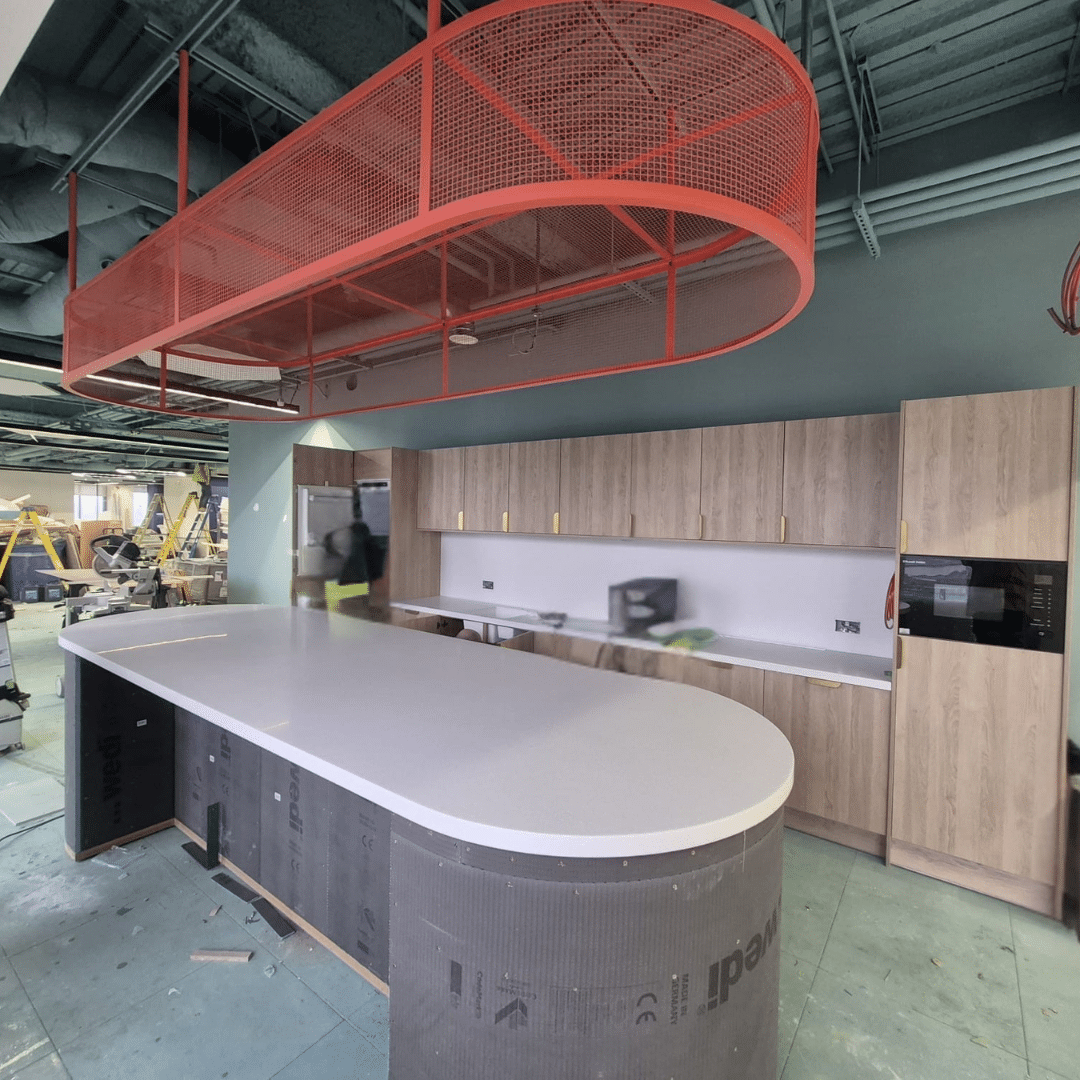
Tristone Solid Surface redefines interior design with its durable, versatile, and sustainable features, enhancing kitchens and bathrooms with seamless, hygienic, and elegant solutions.

Krion Solid Surface combines beauty and functionality, offering durability, hygiene, and versatility for various applications, including healthcare and office interiors, making it ideal for designers and professionals.
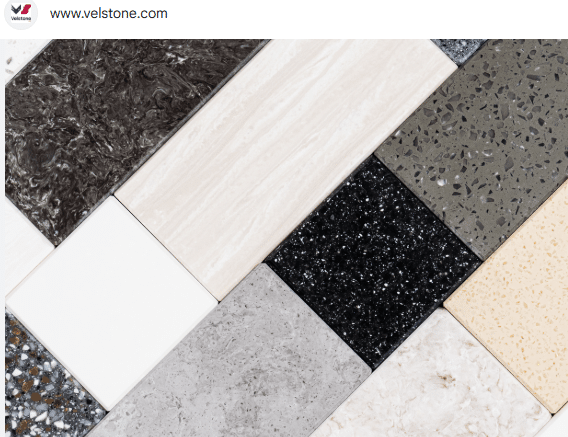
Velstone Solid Surface: The Hybrid That Balances Strength and StyleWhen it comes to Solid Surface materials, Velstone Solid Surface is a trusted name that blends the best of both worlds, acrylic and polyester. This hybrid composition gives it a unique balance of durability, workability, and value, making it a versatile option for a wide range of commercial interiors.
Need help with a project? Contact us for more details.