Why Solid Surface is the first choice for office teapoints
Let’s talk about why Solid Surface is the first choice for office teapoints. The teapoint used to be an afterthought. A corner of the floor plan where the kettle lived, the mugs stacked up, and nobody paid too much attention to what the worktop was made of.
That isn’t the office anymore. Companies now need to think harder about the spaces where people actually want to spend time, and the teapoint has quietly become one of the most used, most scrutinised surfaces in the building. It’s where people gather between calls, linger after lunch, and catch up with colleagues. Decompress before tackling the next thing on their to-do lists.
The worktop gets touched constantly. It gets wiped down several times a day. It takes the weight of bags, the heat of coffee cups, the occasional cleaning product that isn’t quite as gentle as it should be.
So the material decision matters, and is why Solid Surface is the first choice.
We see a lot of teapoints. And the ones that look tired within two years almost always come down to the same few choices made early on.
What the surface is actually doing
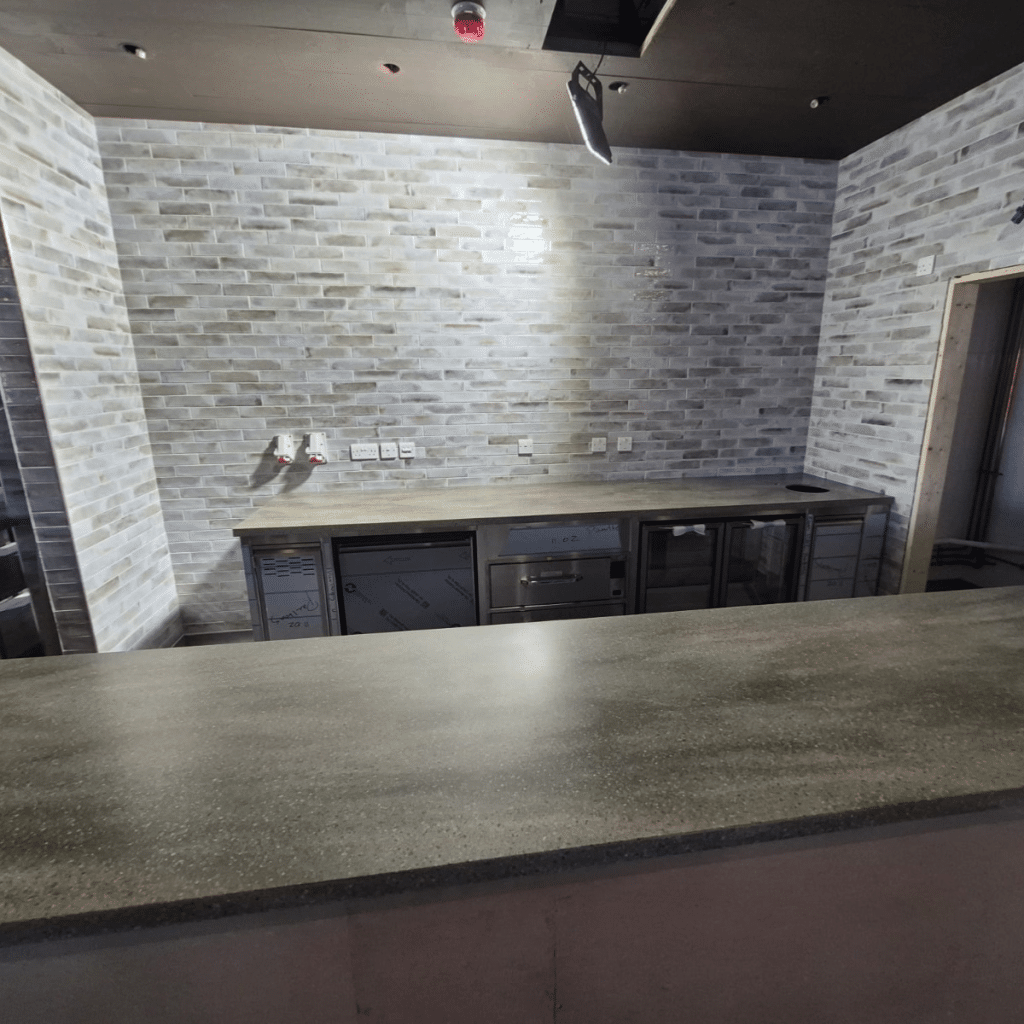
A teapoint worktop sits in a category of its own when it comes to wear. It’s not a desk, which is mostly stationary. It’s not a washroom, which is designed around water from the start. It’s a hybrid: part kitchen, part social space, part service counter. It needs to resist stains, handle heat, cope with moisture around the sink, and still look clean and consistent at the end of a busy Friday.
Most surfaces manage some of those things well, but Solid Surface handles all of it, and it does so beautifully.
The fabrication decisions that make the difference
We’re often involved in office fit outs where the contractor has a good sense of what they want the finished space to look like, but the fabrication detail hasn’t been fully worked through.
For a teapoint specifically, the details that matter most are these.
Seam placement. In a run of worktop with heavy daily use, you want any seams positioned away from the areas that take the most contact and moisture. Around an integrated sink, near the tap, at the corner where bags and cups tend to land, those are the wrong places for a join. We plan seam positions at the templating stage so that the finished surface reads as one piece in the areas that matter.
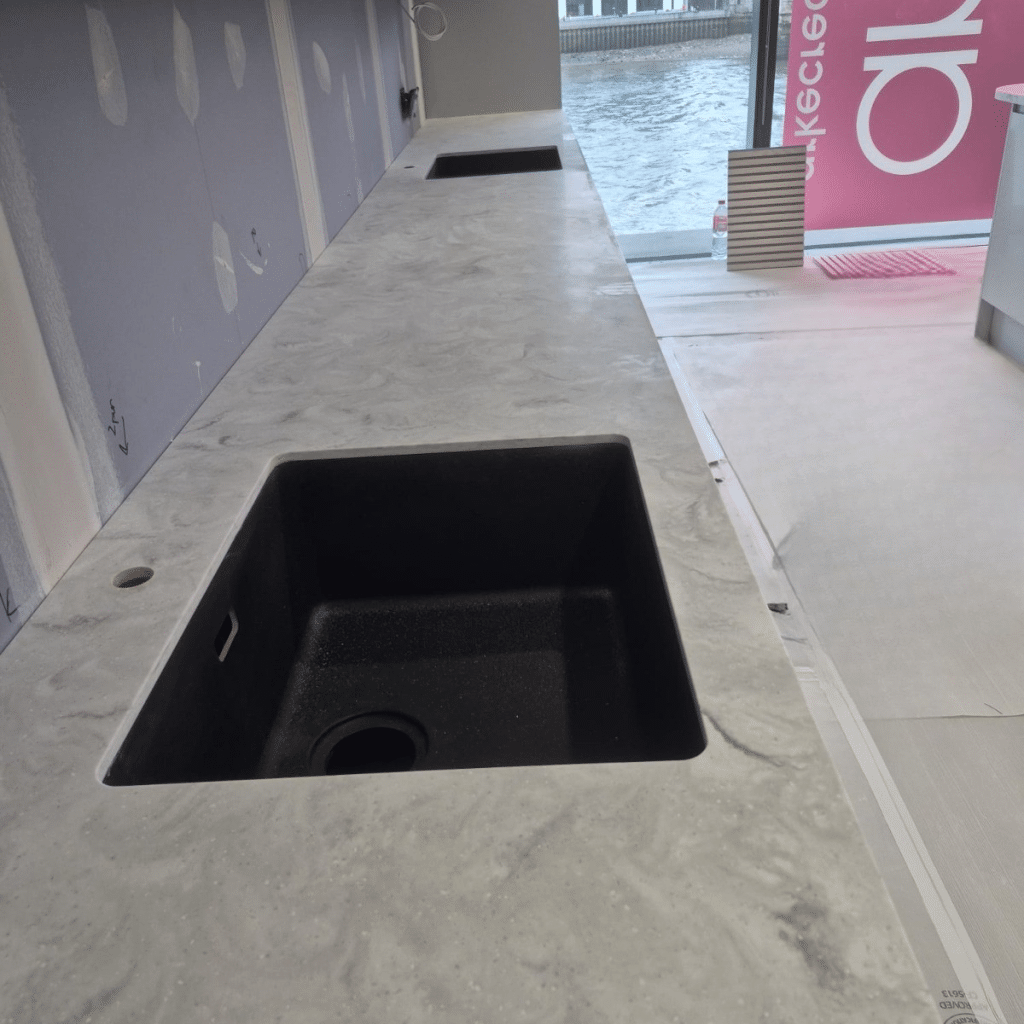
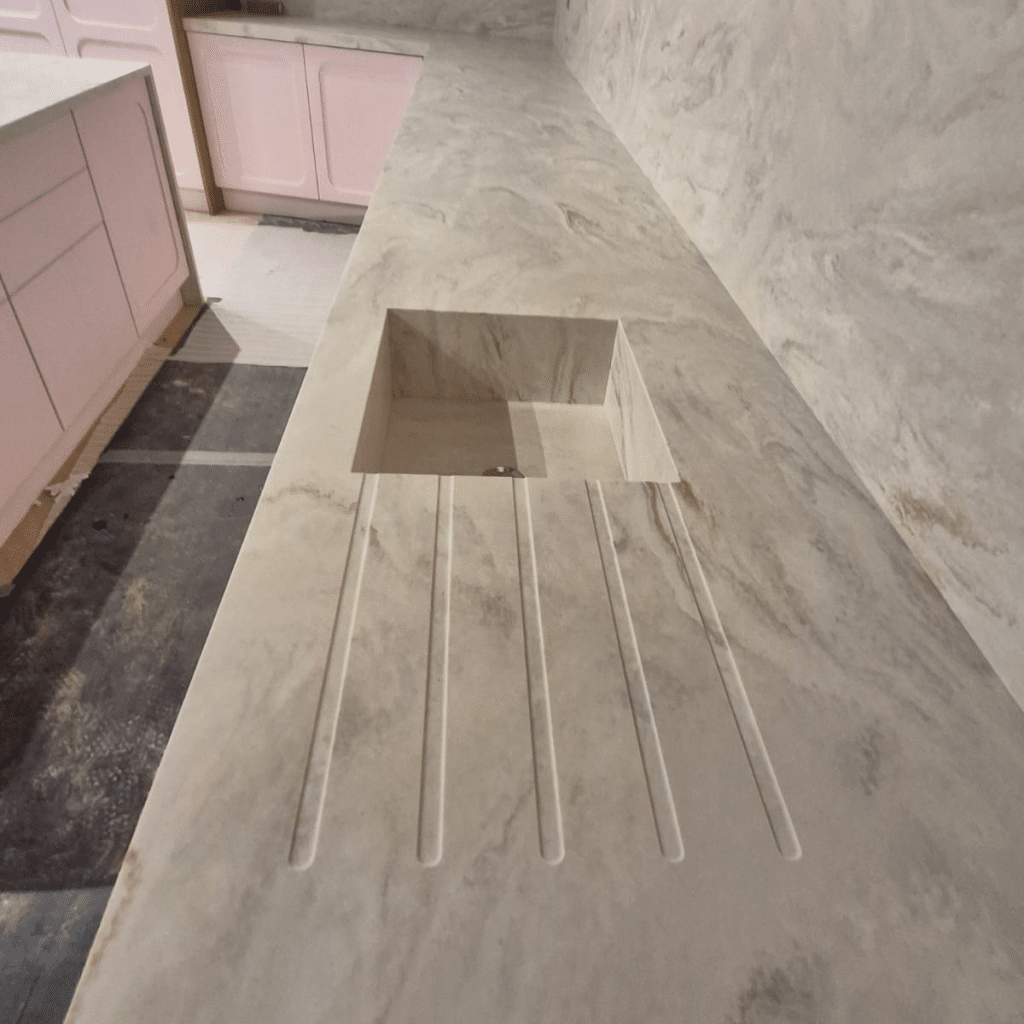
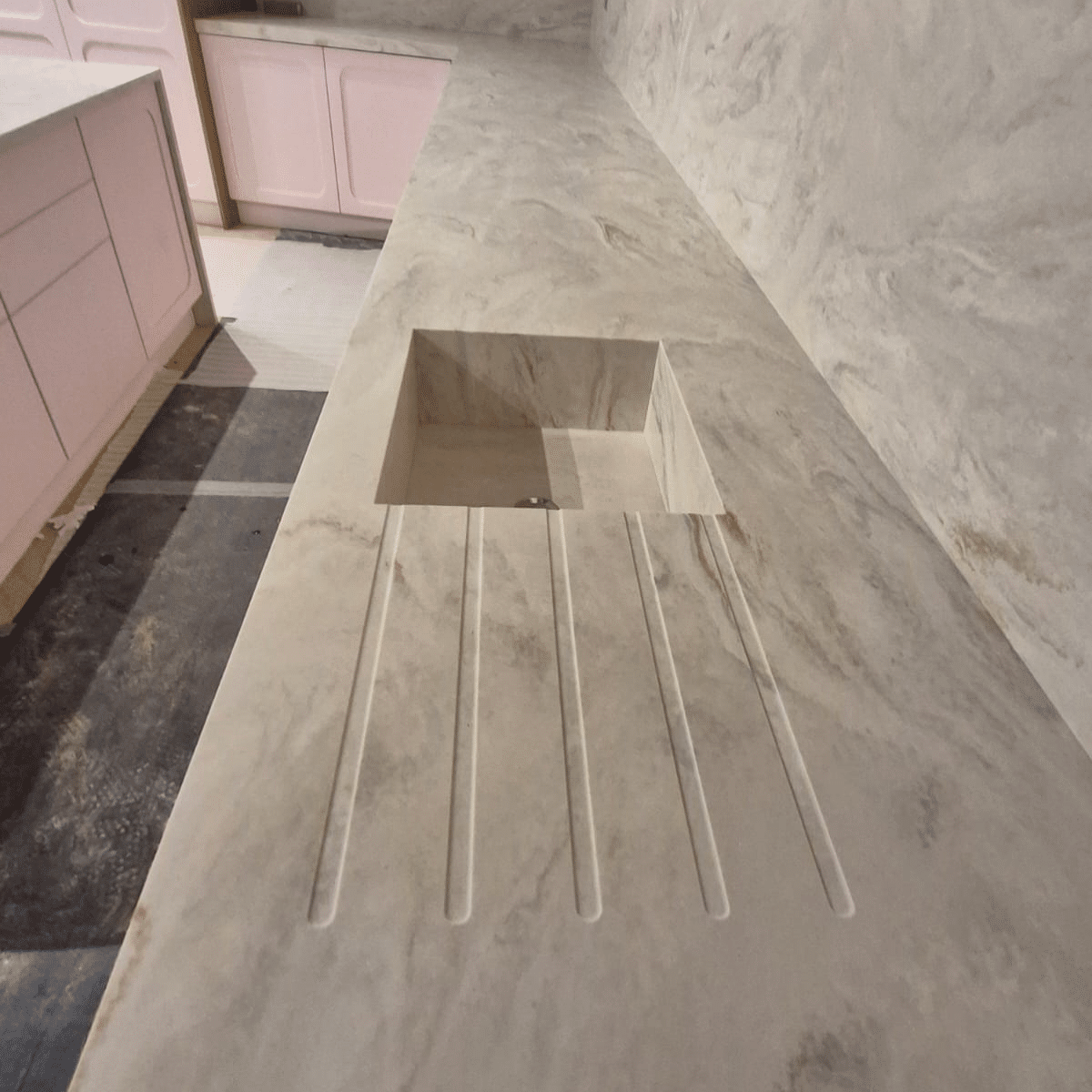
Integrated sinks. One of the things we hear often from office designers is that they want the teapoint to feel intentional but subtle. An integrated sink, fabricated as part of the same surface rather than dropped in, does a lot of that work quietly. No rim to trap limescale. Nothing to lift or discolour over time. Just a clean, continuous line from worktop to bowl.
Coved wall junctions.
Where the worktop meets the wall or the upstand, a coved return, a soft continuous curve rather than a right angle join, removes the ledge where moisture sits and cleaning cloths snag. It’s a small detail that makes daily cleaning easier for the facilities team and keeps the surface looking clean for longer.
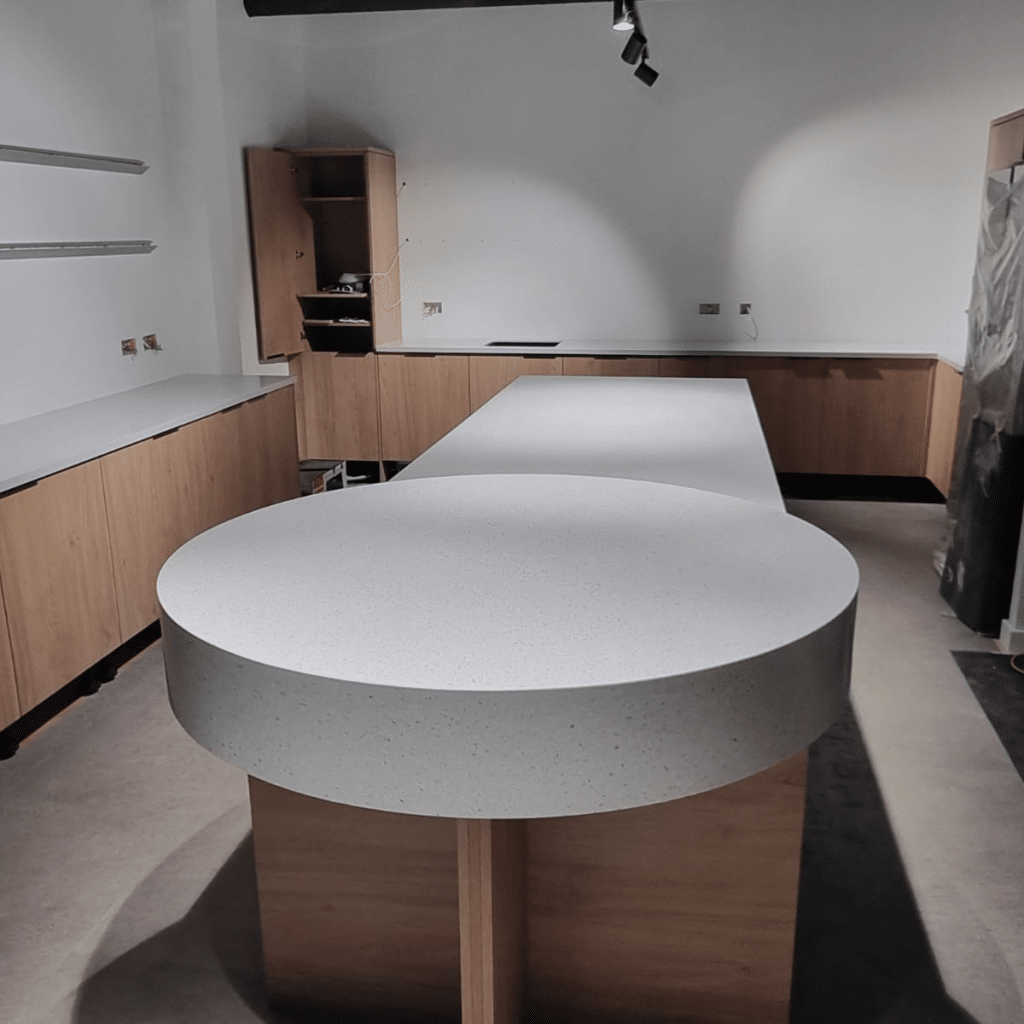
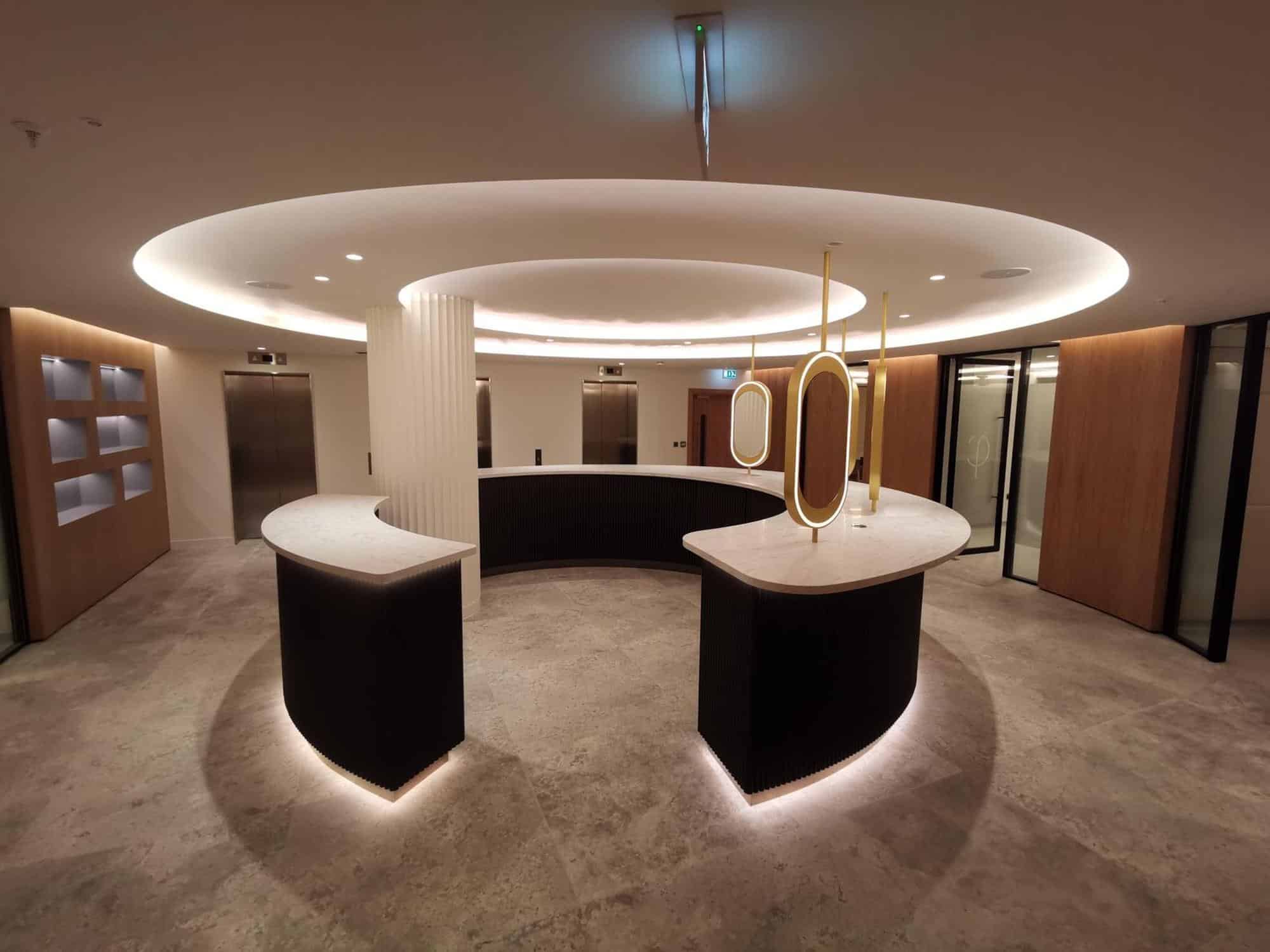
Curved islands and shaped runs. Not every teapoint is a straight run against a wall. Breakout areas increasingly use curved or freestanding islands that invite people to gather around them rather than standing in a line waiting for the kettle. Solid Surface thermoforms well, which means curves that would be impossible in other materials are straightforward in fabrication. The shape can follow the design intent rather than being constrained by the material.
Hygiene and repairability in daily use
Because Solid Surface is non porous, it doesn’t harbour bacteria in the way that materials with grout lines or surface coatings can. The surface can be cleaned with standard commercial products and it won’t degrade with regular use of them.
The other thing worth knowing is that if the surface gets marked, it can be repaired in place. A deep scratch, a heat mark, a stain that’s worked its way in, a fabricator can refinish the affected area and return it to its original finish without replacing the whole top. For a client managing a multi floor office or a multi site estate, that matters. It changes how you think about the surface’s lifespan.
Colour and how it works in the office context
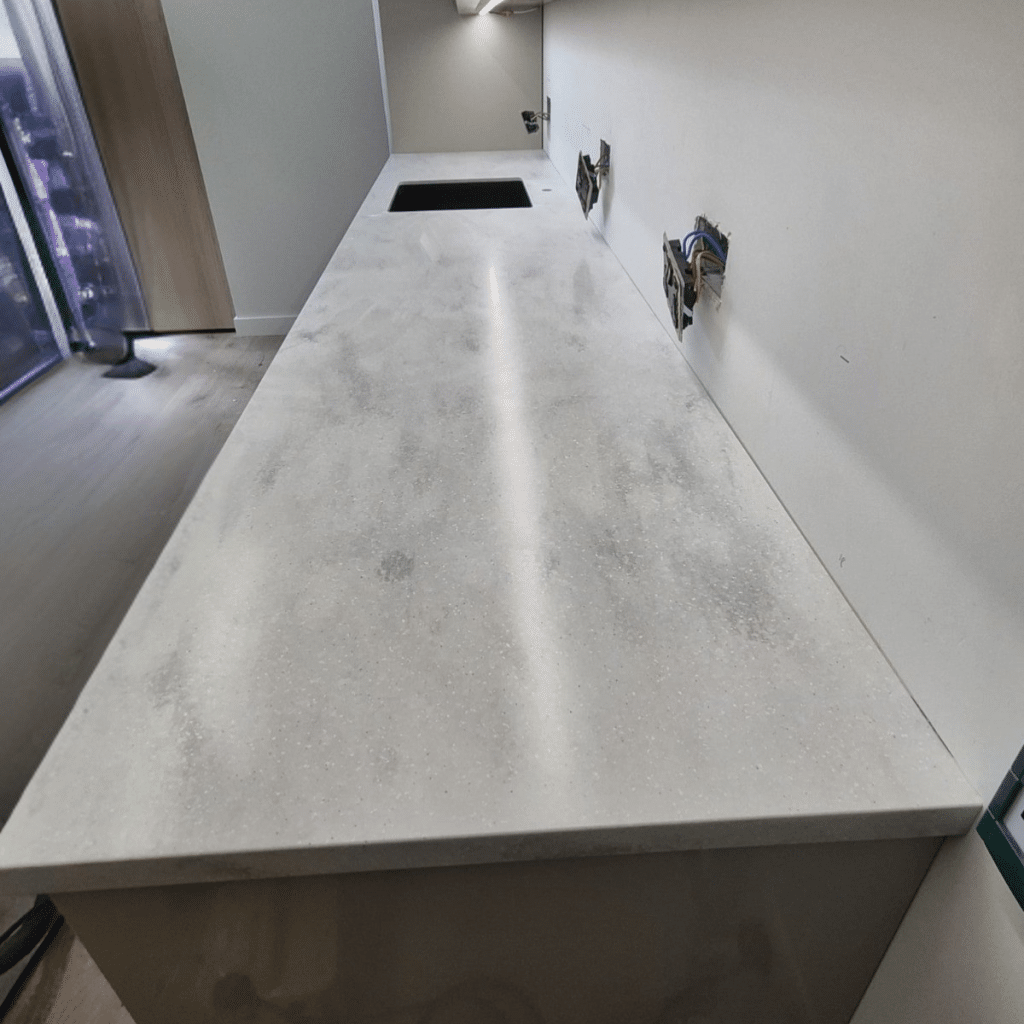
The teapoint often needs to work within a wider office palette, complementing the joinery, the flooring and the brand identity without standing out for the wrong reasons. Solid Surface comes in an extensive range of colours and finishes, from clean whites and warm off whites to deeper tones and textured options.
One practical note on colour selection in office environments: lighter surfaces show residue more readily but tend to look cleaner overall with regular wiping. Darker surfaces can be striking but will show watermarks and dust more visibly in high traffic use. For a teapoint that gets genuine daily use, we often find that mid tones and warm neutrals work well, but it very much depends on the space and the finish of the surrounding fit out.
If you’re at the early stages of a colour decision, the BSF Colour Selector lets you compare options across brands and request free samples before committing to a specification. It’s a useful starting point: explore the full colour range.
Worth specifying early
The teapoint is one of those elements that can get left late in a fit out programme, because it feels smaller than the reception desk or the main washroom run. In our experience, leaving it late tends to mean a rushed material decision, a standard worktop profile, and a surface that doesn’t quite match everything else around it.
Getting Solid Surface into the teapoint specification early gives the fabricator time to plan the seam layout properly, source the right colour from the right batch, and coordinate with the wider joinery package.
If you’ve got an office fit out coming up and want to talk through the teapoint or breakout area specification, please get in touch to chat or request a free sample. bsfsolidsurfaces.com/request-sample/
Get in touch at bsfsolidsurfaces.com/request-an-estimate/
Other resources –
solid-surface-office-teapoints
Nicola Barden is the Managing Director of BSF Solid Surfaces Ltd, with over 25 years of experience under her belt. She is also a wife, mother to her autistic son, and has three crazy cats and one loopy dog. She enjoys training at the gym, dancing, reading, nature walks and being out and about.
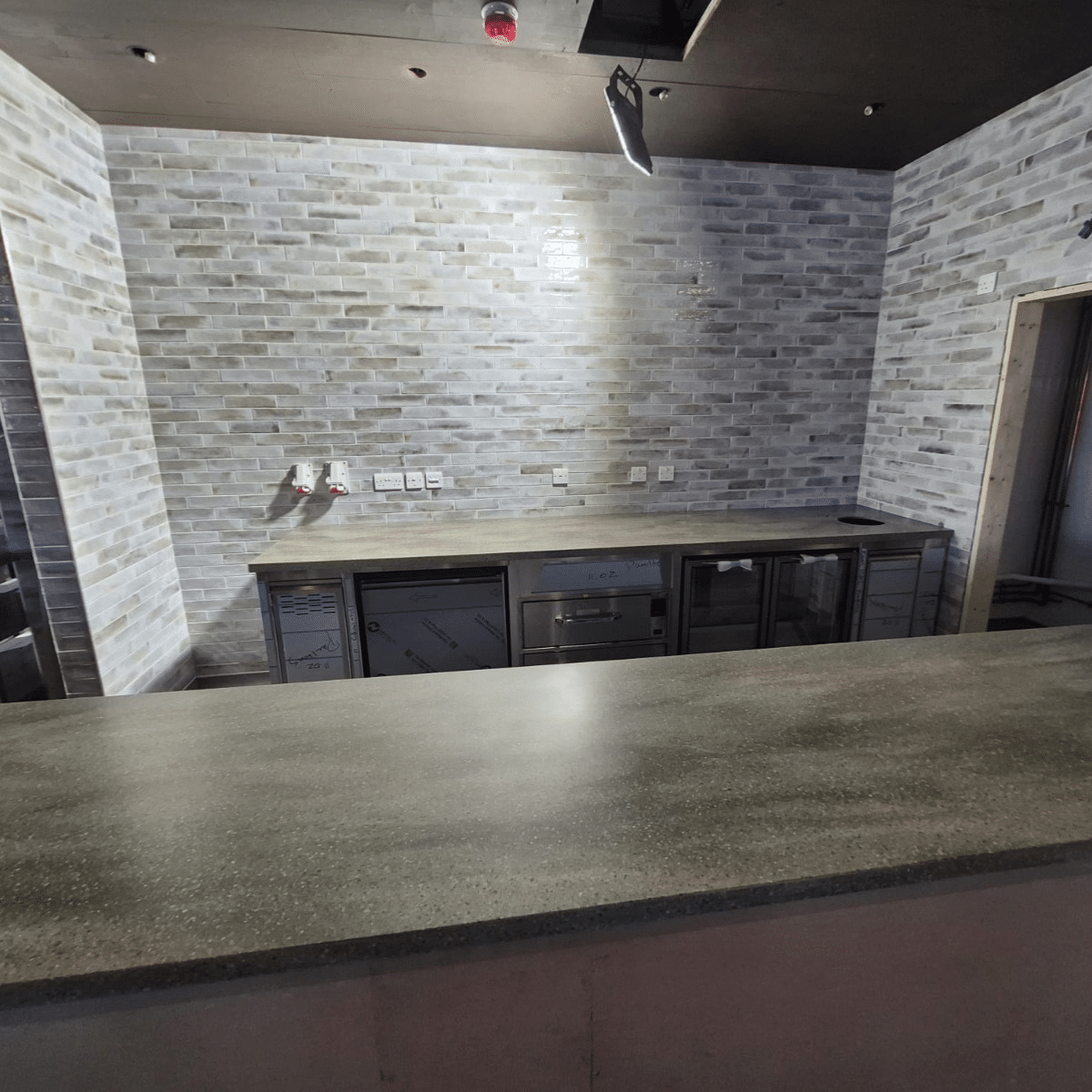
Solid Surface office teapoints have become a fundamental feature in modern workplace design, evolving from simple coffee and tea stations
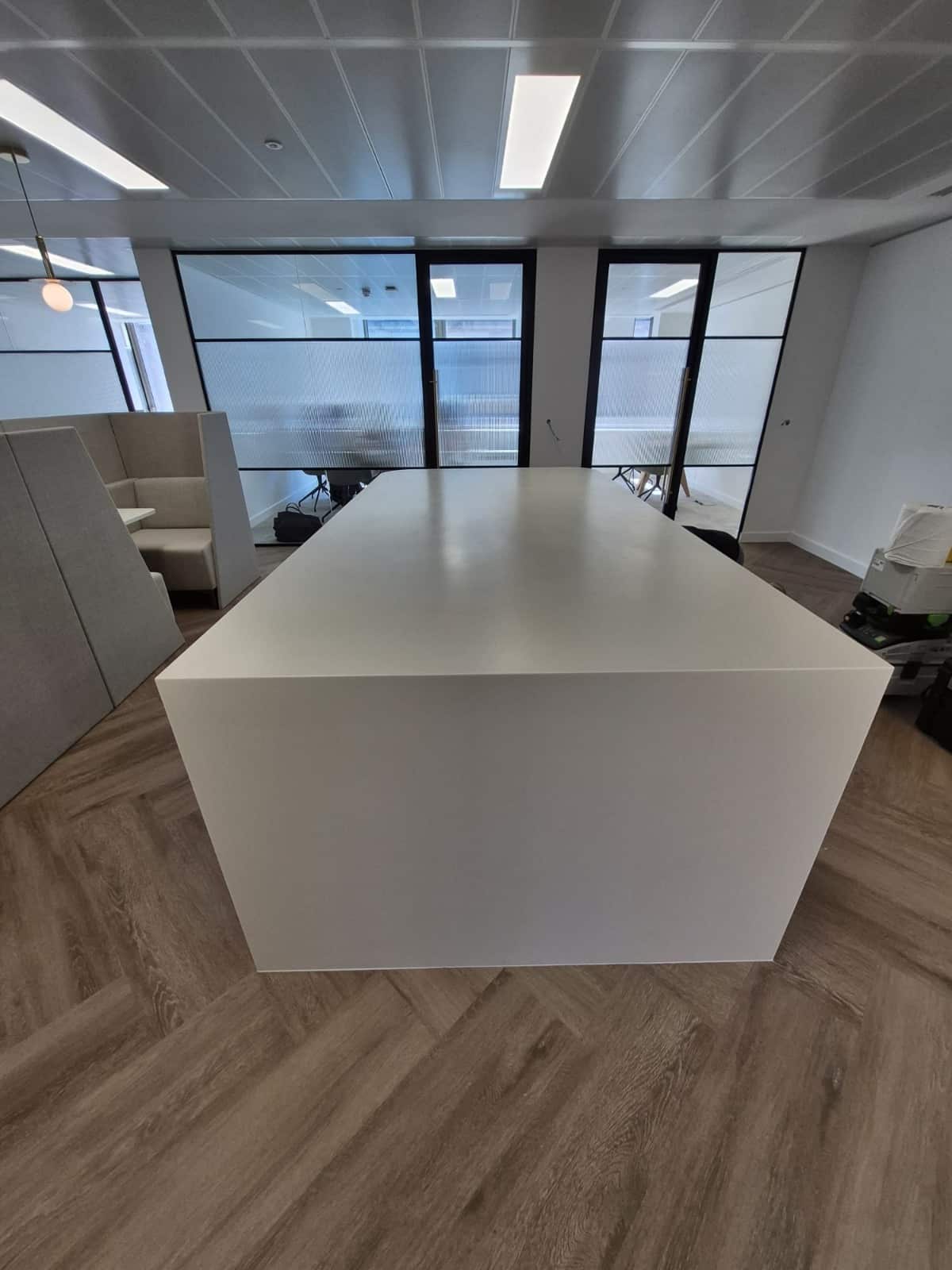
Why Solid Surface reduces snagging on fit out projects
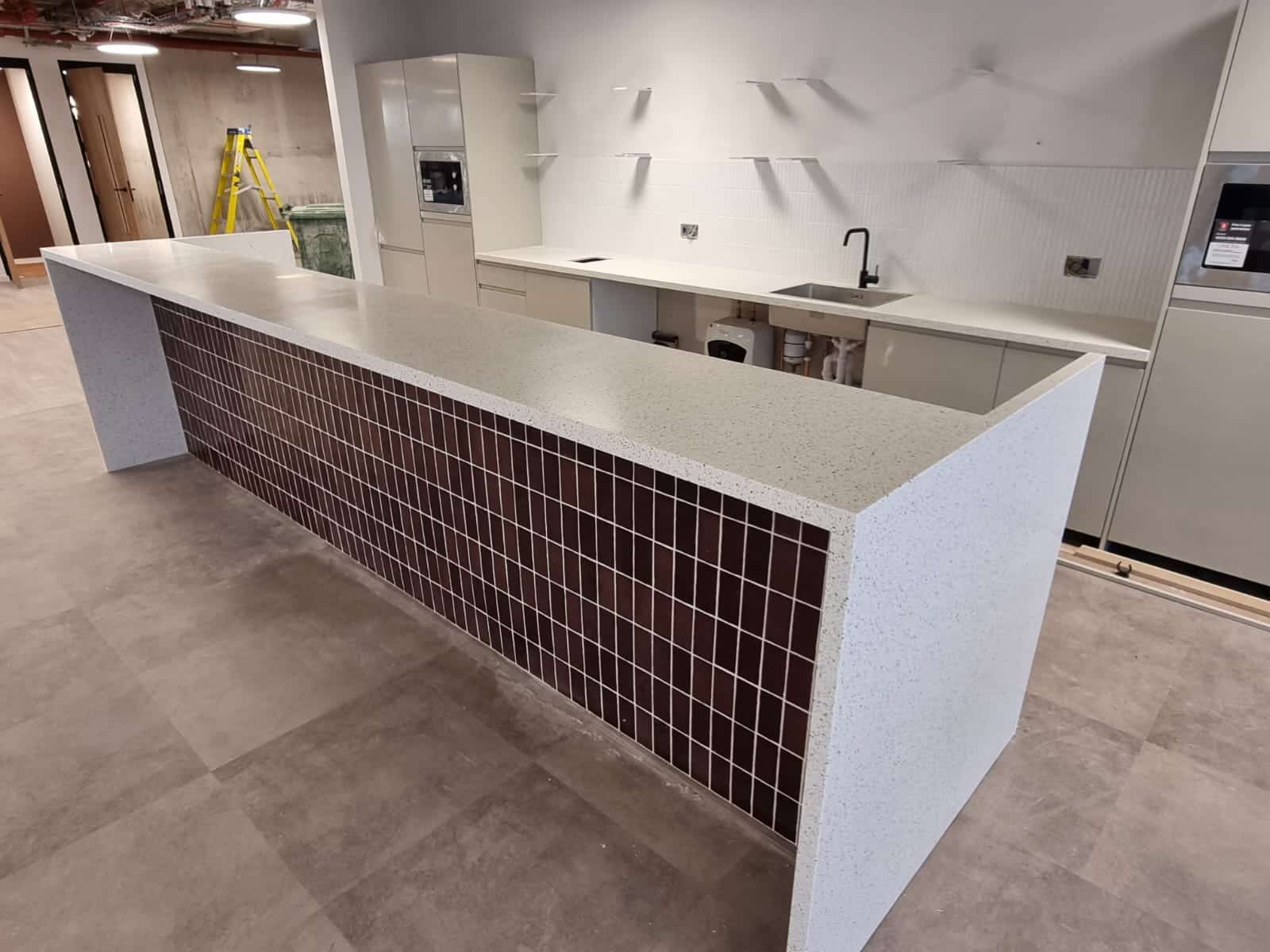
Hanex Solid Surface enhances commercial interiors with its versatility, durability, and sustainability, offering seamless, designs for diverse spaces.
Need help with a project? Contact us for more details.