Can Solid Surface be used outside? The honest answer for outdoor kitchens and al fresco spaces
Every summer, we get more enquiries about outdoor use than the year before. Outdoor kitchens, covered terraces, garden rooms with a teapoint tucked into the corner, al fresco dining surfaces that need to hold up through a British summer (and whatever follows it!)
The question that runs through almost all of them is the same: can Solid Surface be used outside?
The honest answer is that it depends.
Not all Solid Surface products behave the same way outdoors. Some perform well in sheltered and semi outdoor settings. Others are not suited to full external exposure, and no amount of good fabrication will change that.
This guide tells you what to look for and what to avoid when choosing Solid Surface for an outdoor setting.
Why outdoor specification has changed
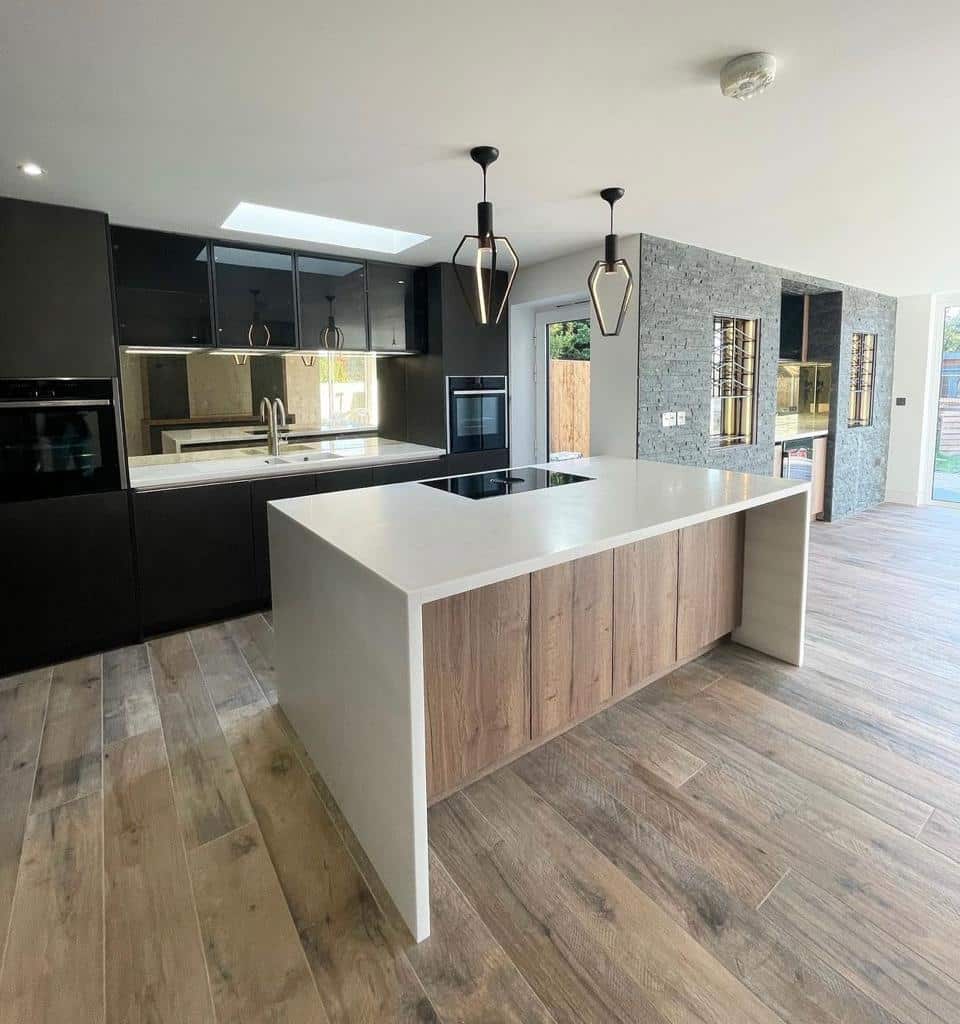
The outdoor kitchen used to be a gravel patio and a barbecue. What we are being asked to work on now looks quite different. Covered terraces with full cooking and sink runs. Garden rooms used as home offices five days a week, with a small teapoint and storage. Biophilic design schemes where the boundary between inside and outside dissolves, and where the surface inside and outside needs to feel the same.
According to the latest UK garden design research, 2026 is the year that outdoor spaces have fully become outdoor rooms. The garden is no longer something separate from the house; it is part of it. And as the brief changes, so does what the surface needs to do.
A surface that performs brilliantly inside a building faces a different set of demands the moment it moves outside. Understanding those demands is the starting point for getting the specification right.
What the outdoor environment actually asks of a surface
The difference between an indoor and outdoor surface brief is not simply about weather. It is about exposure to outdoor elements that indoor surfaces will never see.
UV exposure is the most important of these. Direct sunlight causes some Solid Surface products to fade, discolour or develop a slight chalky quality over time. This is not true of all products, but it is true of enough that it should be the first question you ask. The products that handle it well have UV stable formulations designed specifically for exterior or semi exterior use. Those are the ones to specify.
Temperature fluctuation is the second consideration. Surfaces that sit outside in the UK experience a range that indoor surfaces do not. Summer heat, cold winters, frost, and the expansion and contraction that goes with them. A surface that is not specified correctly, or not installed correctly, can develop micro cracks at joints or along edges over time.
Moisture is the third variable. Rain, condensation, and standing water will find their way into any unsealed edge or poorly finished joint. Solid Surface itself is non porous, which is one of its genuine advantages outdoors. But that advantage is only realised when installation is done properly. Edge sealing and joint finishing matter more outdoors than anywhere else.
And then there is cleaning. Outdoor surfaces get cleaned differently. Stronger products, pressure washing, more abrasive approaches. Most Solid Surface products handle normal outdoor cleaning well, but it is worth checking chemical resistance against what will actually be used on the surface in that setting.
|
Where Solid Surface works well outdoors
Covered and sheltered outdoor kitchens
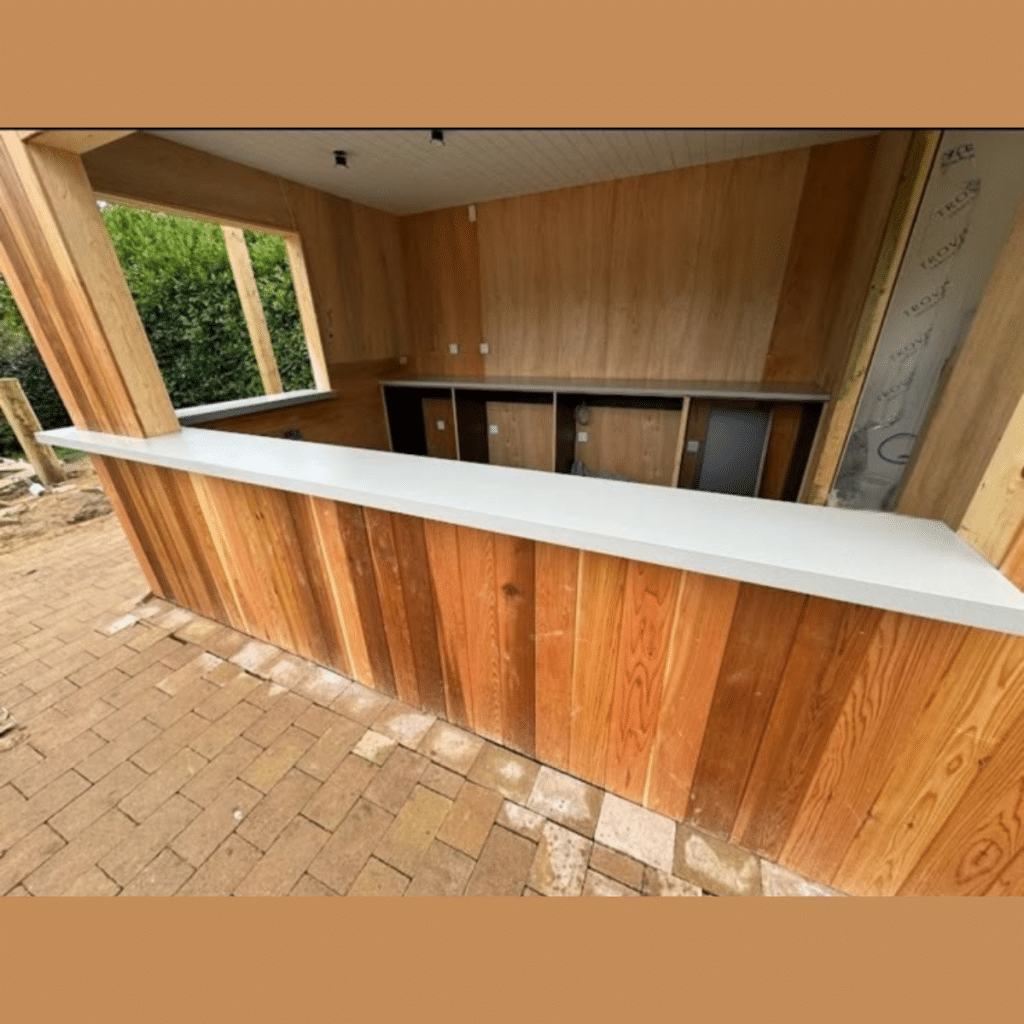
This is where Solid Surface shines outdoors. A covered terrace or pergola sheltered kitchen, where the surface is protected from direct rain and long periods of direct sunlight, is where Solid Surface performs well for years. The non porous surface means no joins around the sink to trap food residue. No grout. No sealant that perishes. An integrated sink and worktop in one continuous run is more valuable outdoors than in, because there is genuinely nowhere for anything to get in.
The seamless nature of Solid Surface also means it handles the varied demands of an outdoor kitchen better than most alternatives. Prep surfaces, cooking areas, sink runs and storage zones can all be fabricated as one continuous piece. The finish is interior quality in an outdoor setting, which is increasingly what clients want.
Garden rooms and home offices
The garden office is one of the most active residential briefs in the UK right now. With hybrid working firmly established, homeowners are investing properly in these spaces, and the interior specification is moving well beyond a flat pack desk and a kettle. We are seeing garden room teapoints, bars, built in storage, and work surfaces specified in Solid Surface to match the quality level of the main house.
These spaces are technically indoor, but they carry the full outdoor context: temperature fluctuation, potential condensation, and the need for a surface that can handle the transition. Solid Surface handles this setting without difficulty. The same product range and finish options available for interior use apply here. If the room is insulated and heated, you are not in exterior territory at all.
Outdoor bar and servery surfaces
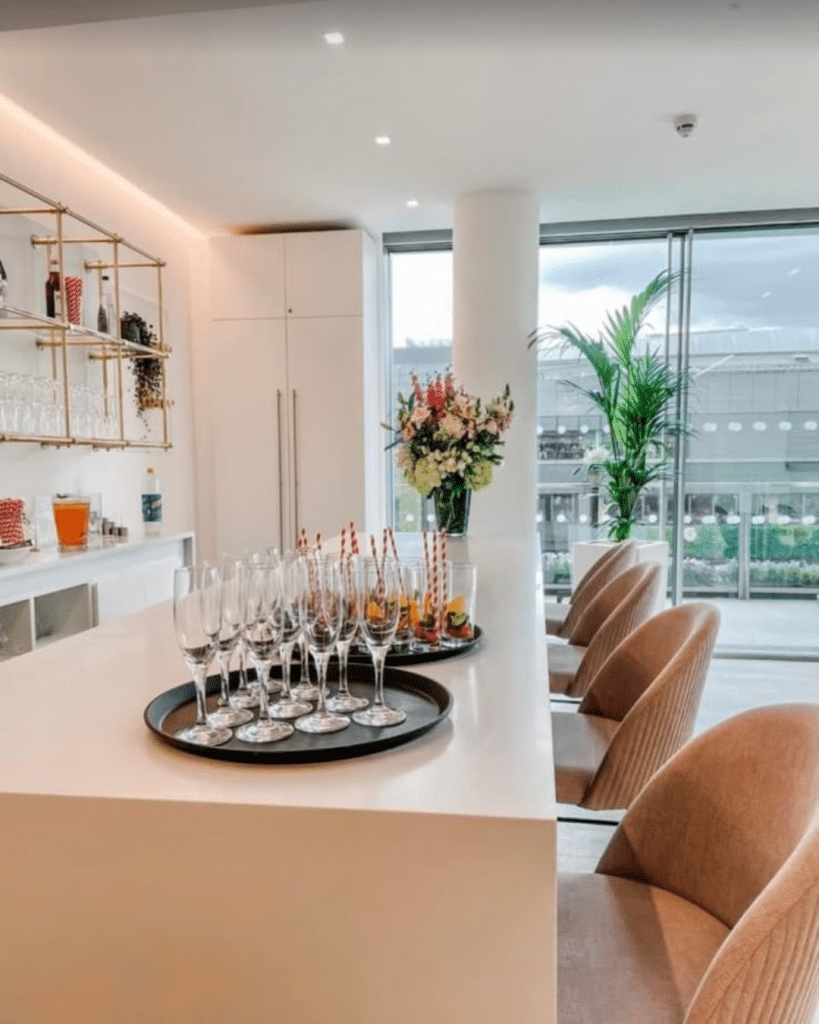
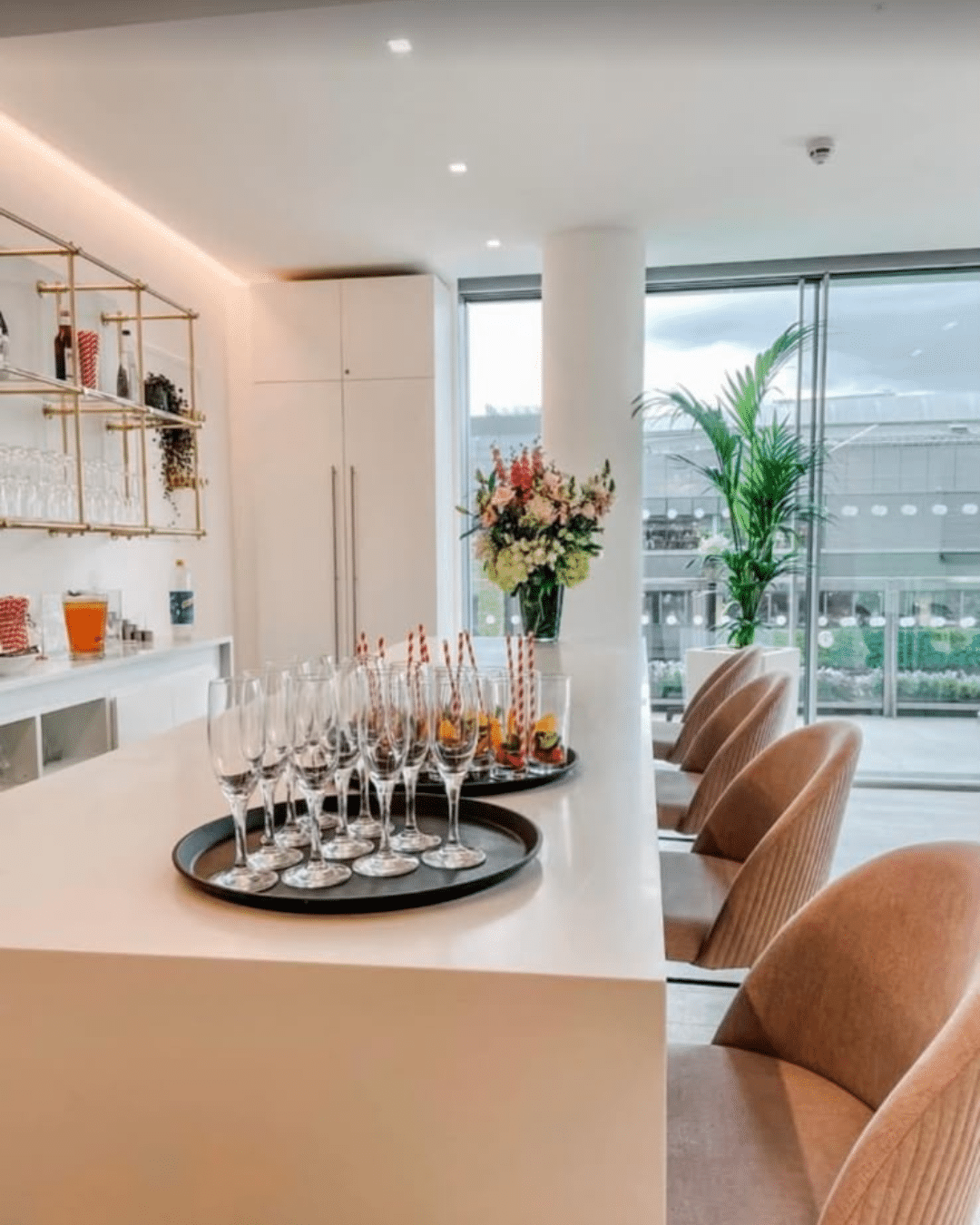
Hospitality clients are increasingly specifying Solid Surface for covered outdoor bars and servery areas. Summer terraces, pub gardens with covered service points, hotel pool bars. In a sheltered outdoor setting, Solid Surface delivers the same hygiene performance and visual quality that makes it a strong choice for indoor hospitality. The repairability factor matters here too. A surface that can be brought back to condition on site, without needing to close or replace, is a real advantage.
Planters, pods and biophilic features
This is a use we are seeing more of, and it fits the current direction of design. Biophilic design, which weaves natural elements and organic connection into built environments, has become one of the most active trends across both residential and commercial projects. Solid Surface is increasingly being used to fabricate custom planters, architectural plant pods, and the structural surrounds for living wall features.
The appeal is simple. Solid Surface can be thermoformed into curved, organic shapes that work with planting rather than against it. The non porous surface handles the moisture environment around plants well. And because it’s the same material, everything comes together, from the worktop to the wall panel to the planter.
For commercial projects in particular, this creates genuine design continuity. The same tone, the same surface, from the entrance lobby to the planted terrace outside. That matters to designers working on whole building briefs.
Where to take care
Full outdoor exposure, meaning a surface in an unprotected position with direct sun, rain, and frost, is a different proposition. Not every Solid Surface product is suitable for this, and we are straightforward with clients about that.
The risks in a fully exposed position include colour shift under sustained UV, edge degradation if installation is not done to an exterior standard, and joint failure over time as temperature cycling puts repeated stress on the seams. These are not reasons to dismiss Solid Surface for outdoor use; they are reasons to be specific about which product you choose and how it is installed.
Lighter colours perform better in full sun than dark ones. They absorb less heat, which reduces the thermal stress on joints. Matte and satin finishes tend to show weathering less than high gloss. These are small choices that make a real difference to how a surface holds up over years rather than months.
Colour in natural light: a note worth making
Outdoor light reads differently to the artificial and mixed lighting of an interior. Colours that look warm and grounded inside can feel cooler and more neutral outside. Light stone tones, sandy neutrals, and soft warm whites tend to look consistently good in natural light. Very dark colours can look striking but show surface marks and weathering more readily in an outdoor setting.
The warm earthy tones that are dominating 2026 residential briefs, the sandy neutrals, soft terracottas, and understated greens, work particularly well in outdoor and semi outdoor settings because they sit naturally within a garden context.
If you are at early colour stage for an outdoor or semi outdoor project, the BSF Colour Selector is a good place to start comparing options across brands and requesting samples. Seeing a sample in the actual light conditions of the space is important.
Explore colours for your outdoor project: bsfsolidsurfaces.com/colour-selector/
Repairability outdoors: the advantage that gets overlooked
One of the things Solid Surface does that most outdoor materials do not is repair. A scratch, a scorch mark, a small area of surface wear from seasonal use, these can be sanded and refinished on site. The surface is the same material all the way through, so there is no coating or veneer to break through. This is genuinely useful outdoors, where entertaining seasons, outdoor cooking, and variable weather create wear patterns that are harder to predict than in an interior.
A stone worktop that chips outdoors needs a filler repair that may or may not be colour matched. Solid Surface can be brought back to the original finish. For a long term outdoor installation, that can make a huge difference.
Before you specify Solid Surface outdoors: questions worth asking• Is the surface in a sheltered or covered position, or fully exposed? • Is the product you’re specifying rated for exterior or UV stable use?
• Has the fabricator worked with this product in outdoor settings before?
• Are you specifying lighter colours for positions with sustained direct sun?
• How will the surface be cleaned, and are those products within the manufacturer’s guidelines?
• Is a matte or satin finish specified rather than high gloss?
• Is the edge and joint finishing appropriate for an outdoor moisture environment?
The design requirement is changing, and so are the possibilities
The gap between inside and outside has narrowed significantly in residential and commercial design.
We have fabricated outdoor kitchen worktops, garden room teapoints, covered terrace surfaces and custom planters for biophilic schemes. Each one starts with an honest conversation about the setting, the product, and the brief.
If you have an outdoor or semi outdoor project coming and want to talk through whether Solid Surface is the right choice, we are happy to take a look at the brief. No obligation, just a straight answer.
Talk to us about your project: bsfsolidsurfaces.com/request-an-estimate/
Take a look at our commercial showcases
___________________________________________________________________________________
Frequently asked questions
A quick reference for the questions we hear most often about Solid Surface in outdoor settings.
Can Solid Surface be used outside?
Yes, in the right conditions. Corian, HIMACS and other acrylic based Solid Surface products can perform well in covered or sheltered outdoor settings. Full exposure to direct sun, rain and frost is a different question, and depends on the specific product specification. Always check with your fabricator before committing to a fully exposed outdoor position.
What is the best worktop material for an outdoor kitchen in the UK?
For a covered or pergola sheltered outdoor kitchen, acrylic based Solid Surface with a UV stable formulation is a strong choice. It is non porous, has no joins around the sink to trap moisture or food residue, and can be repaired on site if it is marked or scratched. For a fully exposed position, check product ratings carefully and specify lighter colours to reduce heat absorption.
Does Solid Surface fade in sunlight?
Some products do, some do not. UV stability varies between brands and product ranges. Products specifically formulated for exterior use carry UV stable ratings and are designed to hold their colour over time. Products without that formulation can develop a chalky or faded appearance under sustained direct sunlight. Ask your fabricator to confirm UV suitability before specifying for any outdoor position.
Can Solid Surface be used for outdoor planters?
Yes. Solid Surface can be thermoformed into curved, organic shapes that work well for custom planters and architectural plant pods. The non porous surface handles the moisture environment around plants well, and the material can be colour matched to interior surfaces for design continuity across a whole building scheme.
Is Solid Surface suitable for a garden room or home office?
A garden room is technically an indoor space, so the full range of Solid Surface products applies. If the room is insulated and heated, you are not in exterior territory at all. The same worktop, teapoint and storage surfaces we fabricate for interior use work perfectly in a garden room setting.
___________________________________________________________________________________
Nicola Barden is the Managing Director of BSF Solid Surfaces Ltd, with over 25 years of experience under her belt. She is also a wife, mother to her autistic son, and has three crazy cats and one loopy dog. She enjoys training at the gym, dancing, reading, nature walks and being out and about.

Bespoke interiors play a critical role in how modern commercial spaces look, function, and perform over time. In sectors such as healthcare, education, hospitality, and offices, interiors must support daily workflows, meet hygiene standards, and remain durable under heavy use.
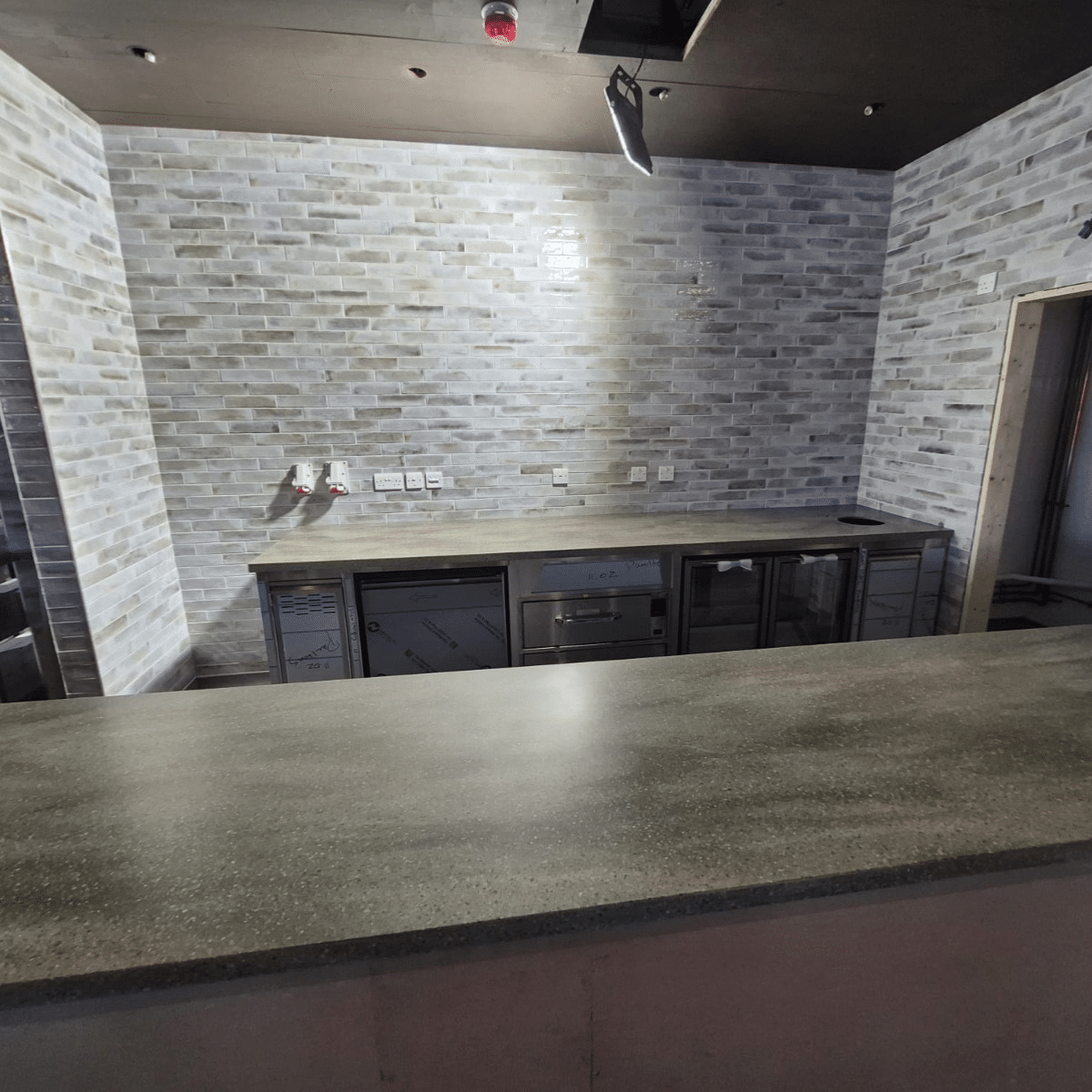
Solid Surface office teapoints have become a fundamental feature in modern workplace design, evolving from simple coffee and tea stations
Need help with a project? Contact us for more details.