Solid Surface, Quartz, Laminate, Porcelain: Which Worktop Material Should You Choose?
Solid Surface vs Quartz vs Laminate vs Porcelain – If you’re choosing surfaces for a kitchen, teapoint, reception desk or washroom, it can feel like everyone has a strong opinion, and half of them contradict each other.
The truth is that there isn’t one “best” worktop material. There’s only the best material for your space, your budget, and how the surface will be used day-to-day. Basically there is only what is best for you.
So here’s a short comparison of Solid Surface vs Quartz vs Laminate vs Porcelain, what each one is great at, what to watch out for, and which one we would lean towards in different settings.
Solid Surface, at a glance
Solid Surface is the “design freedom and practical performance” choice.
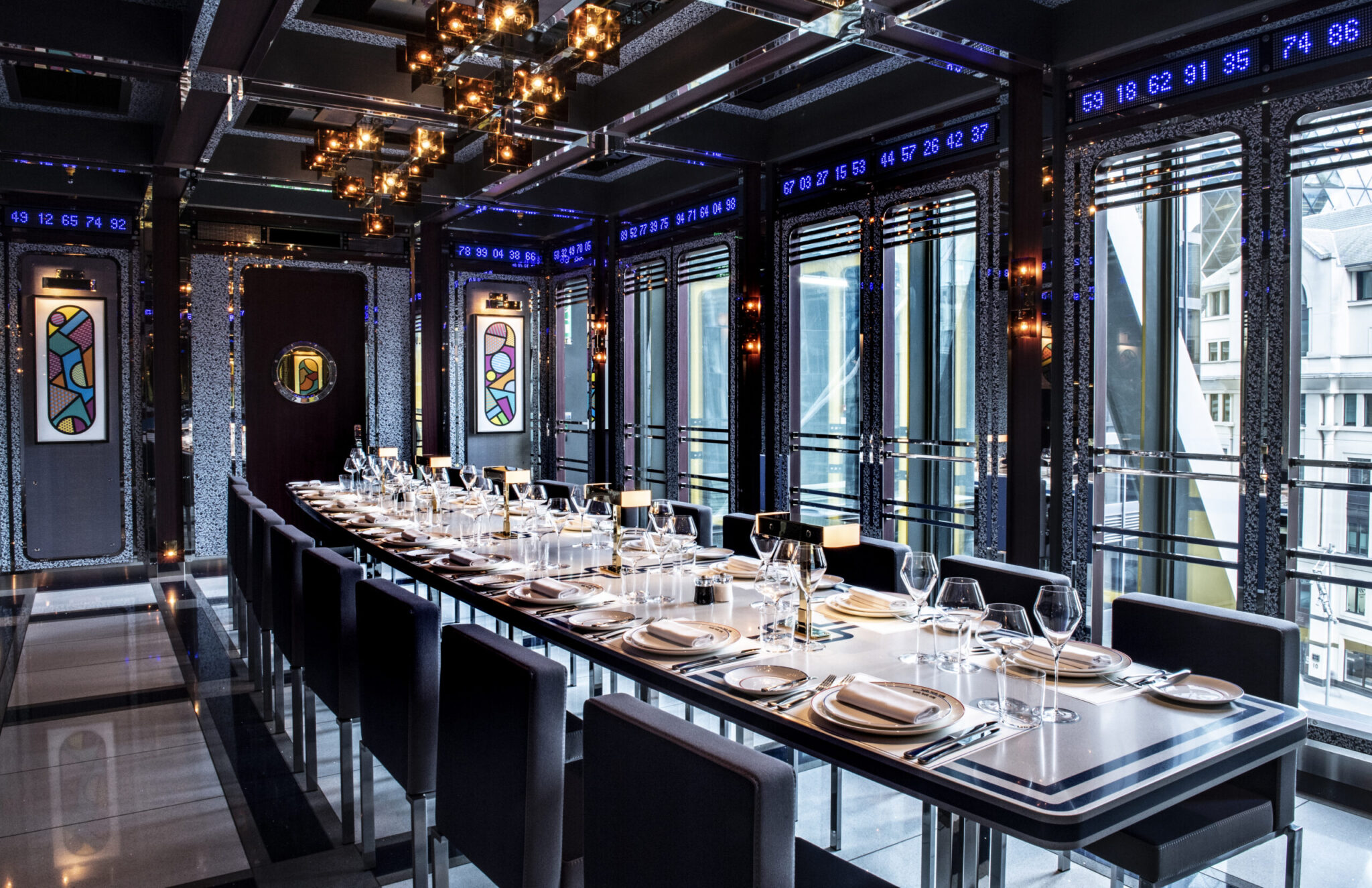
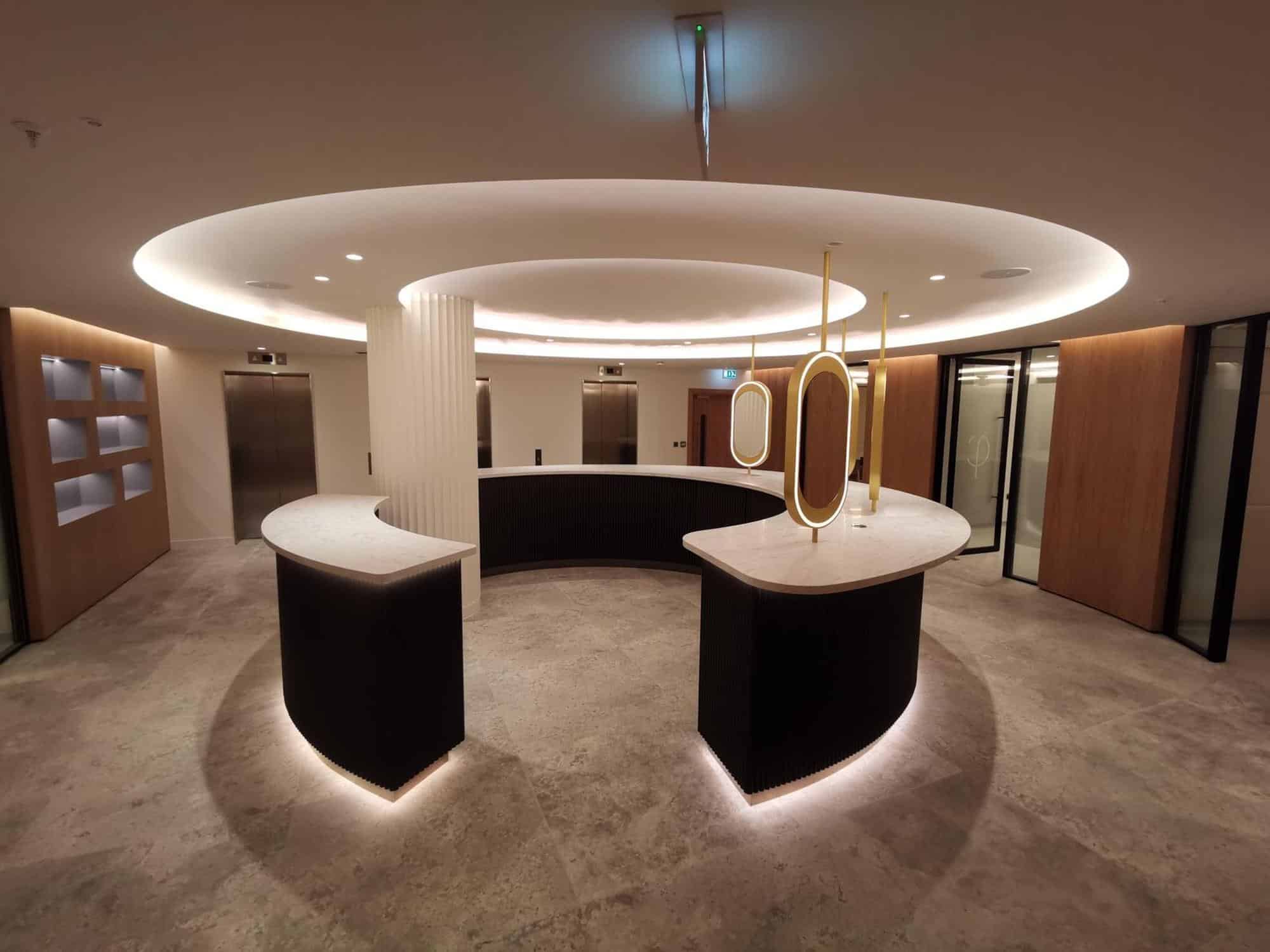
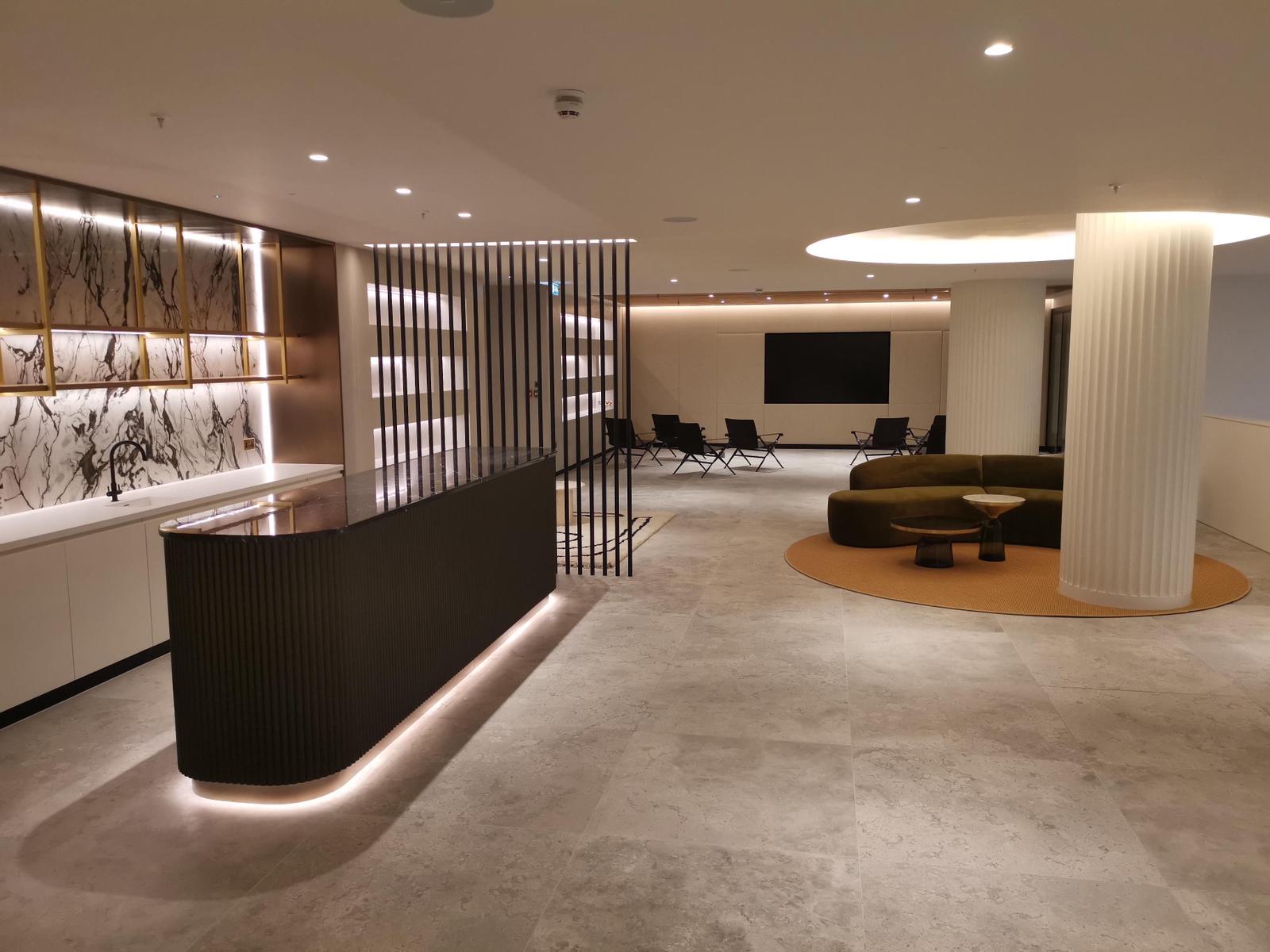
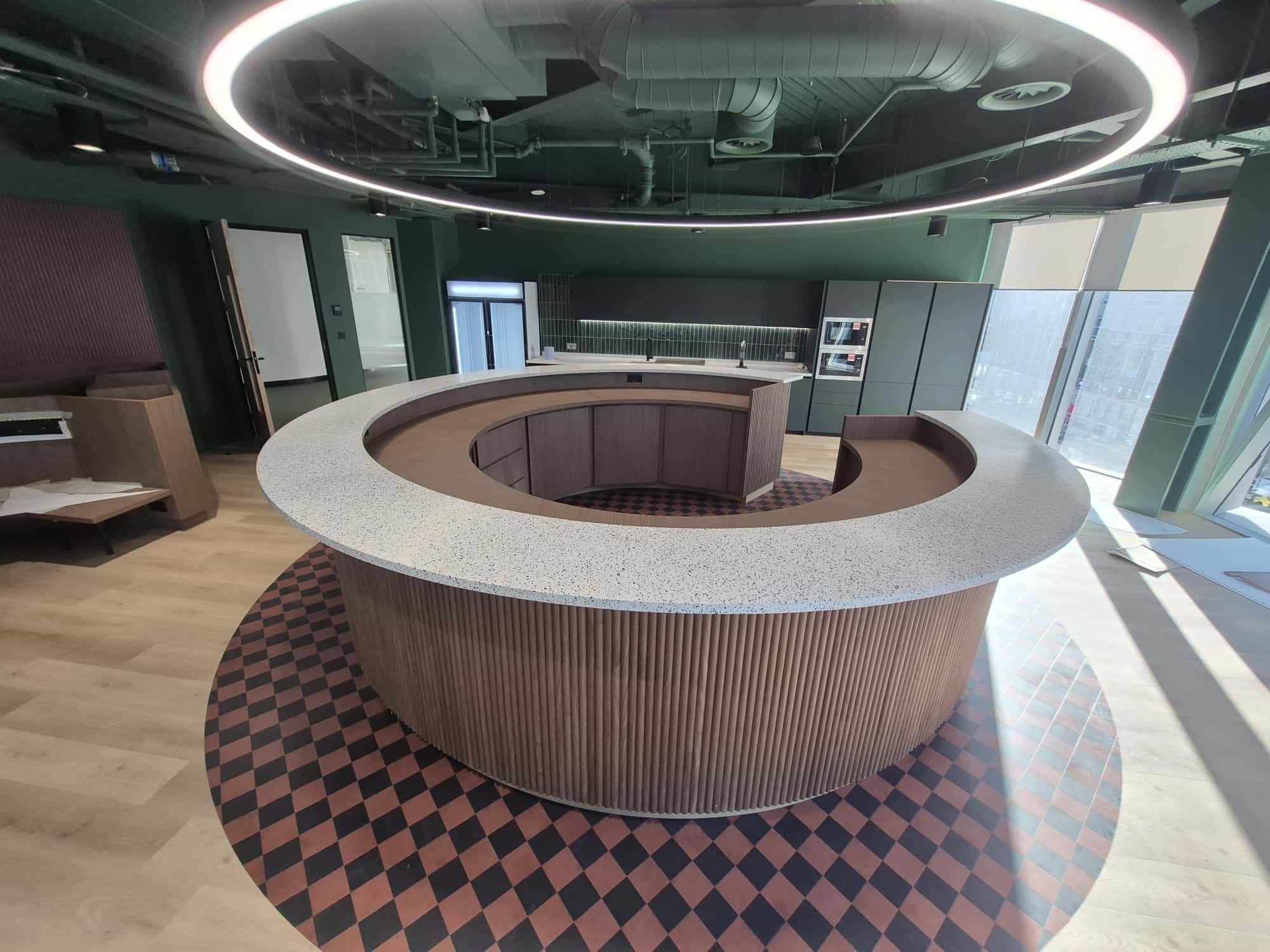
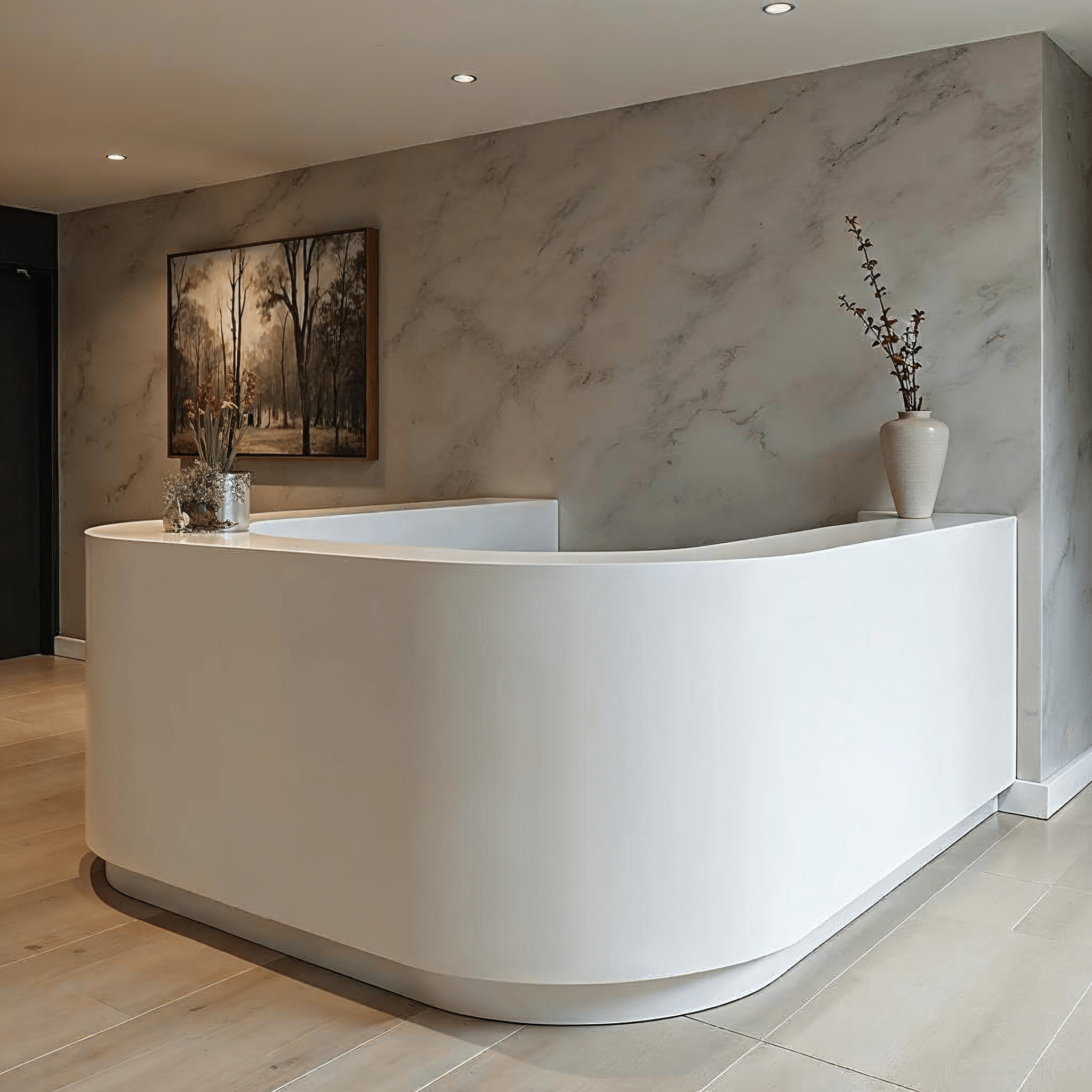
It’s non-porous, seamless, repairable, and brilliant for curved or bespoke detailing, which is why it’s so popular for reception desks, healthcare-style wash areas, hospitality counters, high-end residential, nurses stations, infection control, retail units, kitchen worktops and many other places.
If you want to see colours across multiple brands in one place, our Colour Selector is here:
➡️ BSF Solid Surface Colour Selector
Quick comparison table – Solid Surface vs Quartz vs Laminate vs Porcelain
| Material | Best for | Key strengths | Watch-outs |
|---|---|---|---|
| Solid Surface | receptions, wash areas, bespoke counters, premium kitchens | seamless joins, non-porous, repairable, thermoformable/curves | heat + direct cutting will mark it; dark colours show wear more |
| Quartz (engineered stone) | modern kitchens, heavy daily use | hard, strong, consistent patterns | seams are visible; chips can be unforgiving; cutting creates silica dust risks |
| Laminate | budget-led projects, quick refurb, rentals | affordable, loads of decors, easy to replace | can swell if water gets into joints; not great with heat; edges can show wear |
| Porcelain (sintered/ceramic slabs) | ultra-modern kitchens, heat-heavy cooking zones | very heat resistant, stain resistant, UV stable | edges can chip; fabrication/handling needs expertise; can feel “cold/hard” in use |
1) Solid Surface (Corian®, HIMACS, Staron, Hanex, Tristone, Durat, Durasein, Velstone…)
When people choose Solid Surface, they usually want one (or more) of these things:
that seamless, premium look
non-porous hygiene performance
something that can be repaired/refinished
the ability to do curves, moulded shapes, integrated splashbacks/upstands
Where Solid Surface really shines
Reception desks and feature counters (it gives proper “wow factor” without looking fussy)
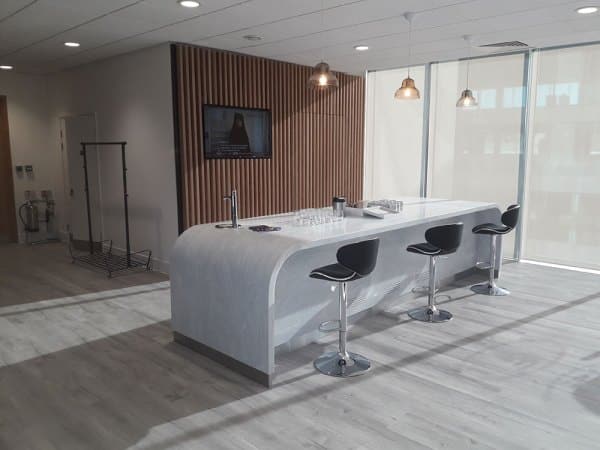
Teapoints and office kitchens (easy-clean and practical)
Wash troughs and vanity tops (seamless, hygienic detailing)
Healthcare and care environments (non-porous and easy to keep on top of)
The honest bits
Heat and direct cutting, please don’t do it. Use trivets and chopping boards.
Dark colours look stunning, but they show fine scratches and wipe marks more easily than pale tones (that’s “real life”, not a defect).
If you want a deeper dive, we’ve got a full guide here:
➡️ Complete Guide to Solid Surface Worktops
External reference (brand overview):
➡️ Corian® UK – official site
2) Quartz (engineered stone)
Quartz worktops are everywhere, and for good reason. They’re hard, consistent, and give you that stone look with reliable patterning.
Where quartz works well
Busy kitchens where you want a tough surface
Projects where you want a natural stone look without the variation of real stone
Watch-outs with quartz
Seams are visible (especially on long runs / islands)
Chips can be noticeable, and repairs aren’t always “inconspicuous”
Dust exposure in fabrication: cutting/sanding materials that contain silica can create respirable crystalline silica (RCS) dust, which is a serious health risk without the right controls
External reference (UK safety guidance):
➡️ HSE: Control of exposure to silica dust (RCS)
(Worth saying: good fabricators manage this properly, it’s just important that it’s taken seriously.)
3) Laminate
Laminate is often unfairly judged, because modern laminate can look really good. If the brief is budget, speed, and decent design, laminate can be a sensible choice.
Where laminate works well
Quick refurbishments
Rental properties
Back-of-house areas
Projects where cost control matters more than “forever material”
Water ingress at joints/edges is the big one, if moisture gets in, it can swell
Heat (hot pans) will damage it
It won’t give you seamless or moulded detailing in the way Solid Surface can
4) Porcelain (sintered/ceramic slabs)
Porcelain surfaces have become really popular for sleek, contemporary kitchens and statement worktops, especially where people cook a lot and want maximum heat resistance.
Where porcelain works well
Heat-heavy cooking zones
Minimal, ultra-modern designs
Areas where you want strong stain resistance and UV stability
Watch-outs with porcelain
Edges can chip if knocked (it’s strong, but not “forgiving” at corners)
Fabrication and installation need proper experience (handling, cut-outs, edge finishing)
It can feel “hard” in use, drop a glass, and the glass usually loses
Which should you choose? Real-world scenarios
If you want seamless, premium and easy clean (and maybe curves)
✅ Solid Surface
Especially for receptions, teapoints, wash areas, feature counters, and luxury residential details.
If you want a hard-wearing stone look for a busy family kitchen
✅ Quartz
Great day-to-day toughness, but accept visible seams and be mindful of chip risk at edges.
If you’re refurbing fast and cost matters most
✅ Laminate
Just detail it well (especially around sinks) and manage heat expectations.
If you’re all about heat resistance and a crisp, modern look
✅ Porcelain
Brilliant around hobs and for contemporary schemes, just protect corners and use skilled installers.
A simple “decision checklist” – Solid Surface vs Quartz vs Laminate vs Porcelain
Before you choose anything, ask these five questions:
Is this a wet zone (sink, wash area, healthcare, heavy cleaning)?
Do you need seamless joints (long runs, islands, reception fronts)?
Will the design include curves or 3D shaping?
Is the surface going to be abused (high traffic, public use, trolleys, constant cleaning)?
What matters most, price, performance, or wow factor?
If you answer “yes” to seams/curves/hygiene-led detailing, Solid Surface usually becomes the front-runner.
A helpful next step
If you’re specifying Solid Surface and you want to shortlist colours quickly (across Corian®, HIMACS, Staron, Hanex, Tristone, Durat, Durasein and more), use our tool here:
➡️ BSF Solid Surface Colour Selector
And if you’re still weighing things up, our longer read is here:
➡️ Complete Guide to Solid Surface Worktops
Choosing between Solid surface, Suartz, laminate and porcelain, and other hard surface materials such as marble and granite isn’t really about what’s “best”, as that comes down to perception, it’s about what you and your space needs to cope with every day.
Do you want seamless joins and curves, or maximum toughness, or serious heat resistance, or just the smartest budget option?
If you need any advice on the Solid Surface front, please get in touch.
________________________________________________________________________________________________________________
Nicola Barden is the Managing Director of BSF Solid Surfaces Ltd, with 26 years of experience under her belt. She is also a wife, mother to her autistic son, and has three crazy cats and one loopy dog. She enjoys training at the gym, dancing, reading, nature walks and being out and about.
Solid Surface materials like Corian and HIMACS enhance care home hygiene with non-porous, seamless surfaces, meeting healthcare standards and improving resident safety.
Montelli Polyester Solid SurfaceWhen it comes to Solid Surface materials, not all are made the same, and that is where Montelli stands out.
Need help with a project? Contact us for more details.