Solid Surface in schools: what to specify before the summer window closes
Schools are harder on surfaces than almost any other environment. Not because of any one dramatic event, but because of everything that happens every day, across every room. Staffroom worktops that haven’t been replaced since the last refurbishment. Washroom troughs with grouting that never quite comes clean. Science lab benches where the laminate has started to lift at the edges. Reception desks that looked professional on day one but show every scratch and mark a year later.
By the time a school gets to the summer window, these areas can look tired, chaotic and unclean, even with the best efforts.
If you’re planning a school refurbishment this summer, or pricing one up now, this guide covers where Solid Surface makes sense, what to think about before you specify, and why getting the detail right matters as much as the material choice.
Why schools are a different kind of challenge
Surfaces in a school face something most commercial environments don’t. A clinic or hotel will clean carefully. A school will clean thoroughly and quickly, with whatever’s to hand, by a team that’s responsible for the whole building. The material needs to hold up to that reality without requiring special treatment.
The other pressure specific to schools is the timeline. Meaningful surface work has to happen in the summer window, which in practice means six to eight weeks from the last day of term to the first day back. Everything has to be templated, fabricated, delivered and installed in that window. Materials that require complex site work, long lead times, or that create unpredictable snagging don’t fit that rhythm.
Solid Surface works well specifically because it’s fabricated off site to precise templates, arrives ready to install, and doesn’t leave a trail of problems behind it. The joins are inconspicuous, integrated sinks have no rim or seal to lift, and the surface holds up to years of daily cleaning without degrading.
Where Solid Surface works in schools
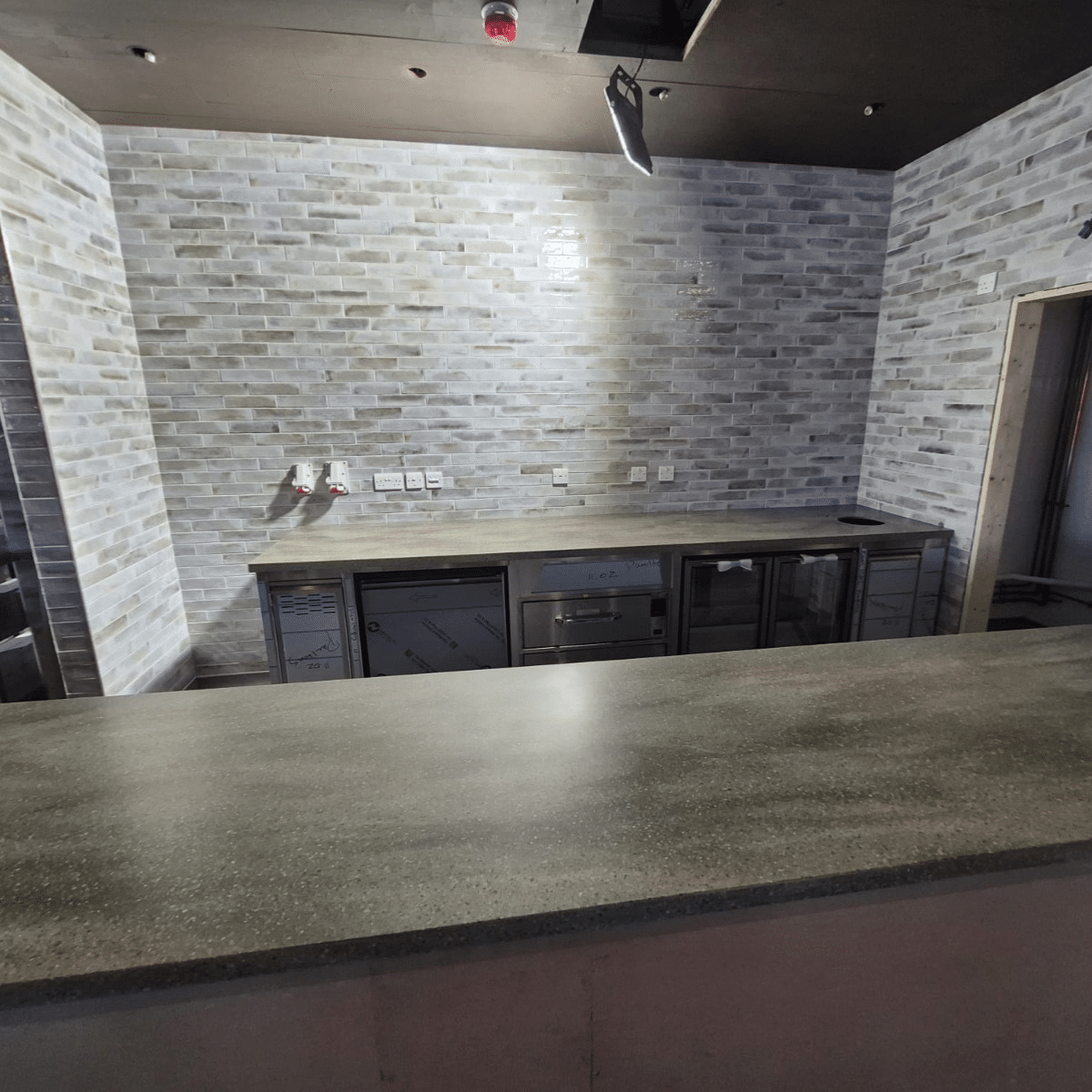
Staffroom kitchens and teapoints
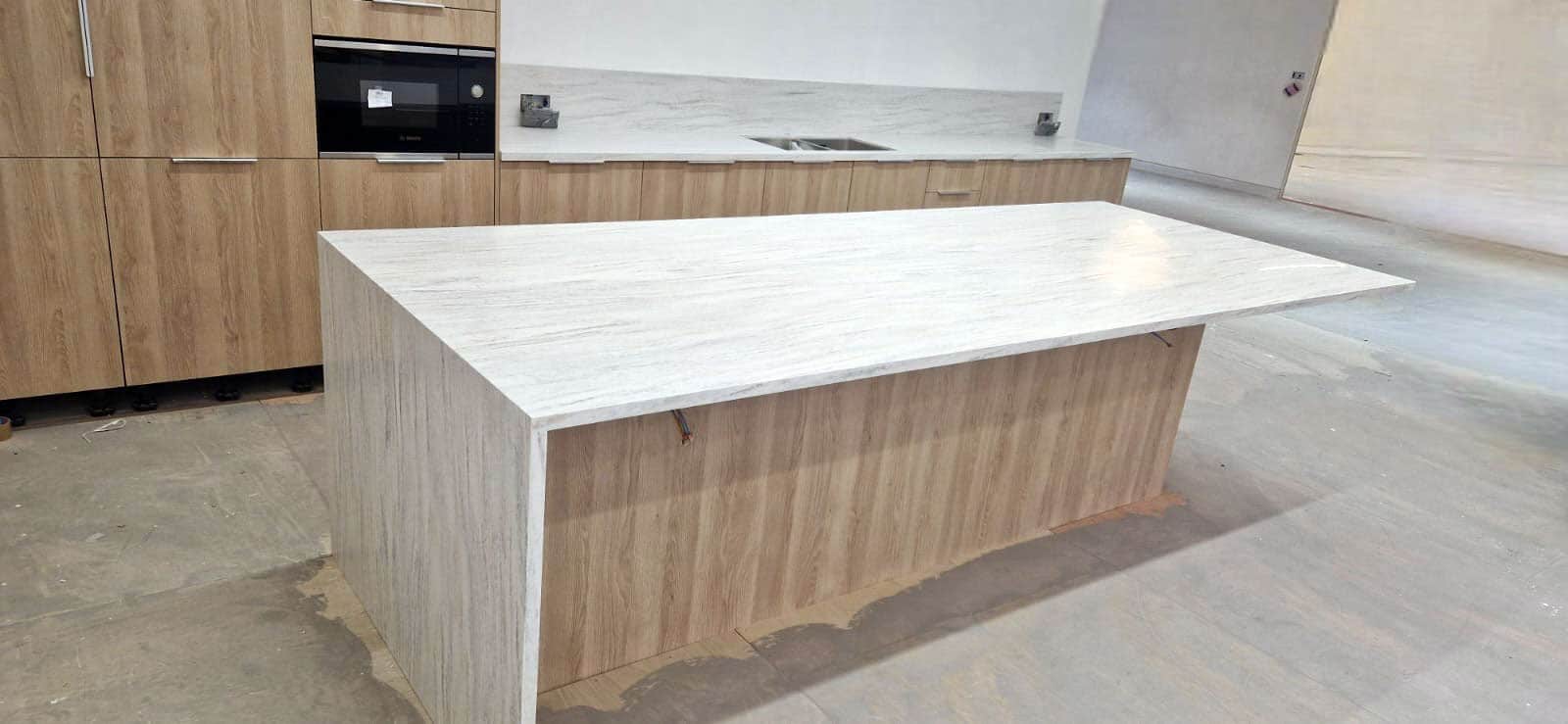
These are the most heavily used surfaces in the building. They get the kind of treatment a commercial kitchen would, without a dedicated cleaning protocol behind them. Worktops need to handle heat, moisture, repeated wipe downs and the occasional spill that sits longer than it should.
An integrated sink removes the rim seal entirely, which is the most common failure point in a kitchen worktop. A coved upstand at the back wall brings the surface up smoothly, removing the right-angle join where moisture collects. These details reduce the maintenance load and extend the life of the surface well beyond what most schools get from standard materials. The difference is felt before it’s noticed: a staffroom that just looks right, year after year, rather than one that starts accumulating small problems.
Washrooms and trough sinks
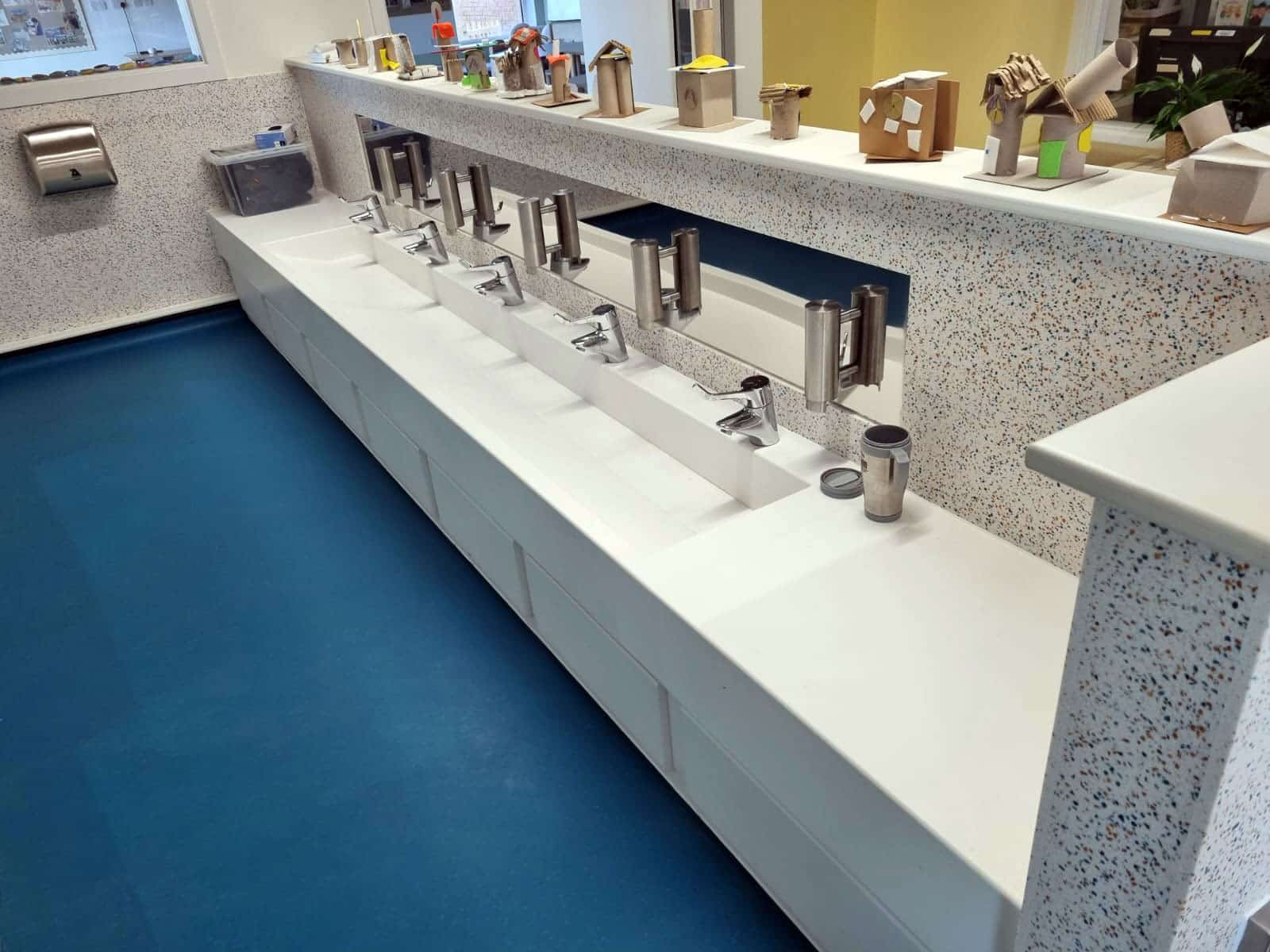
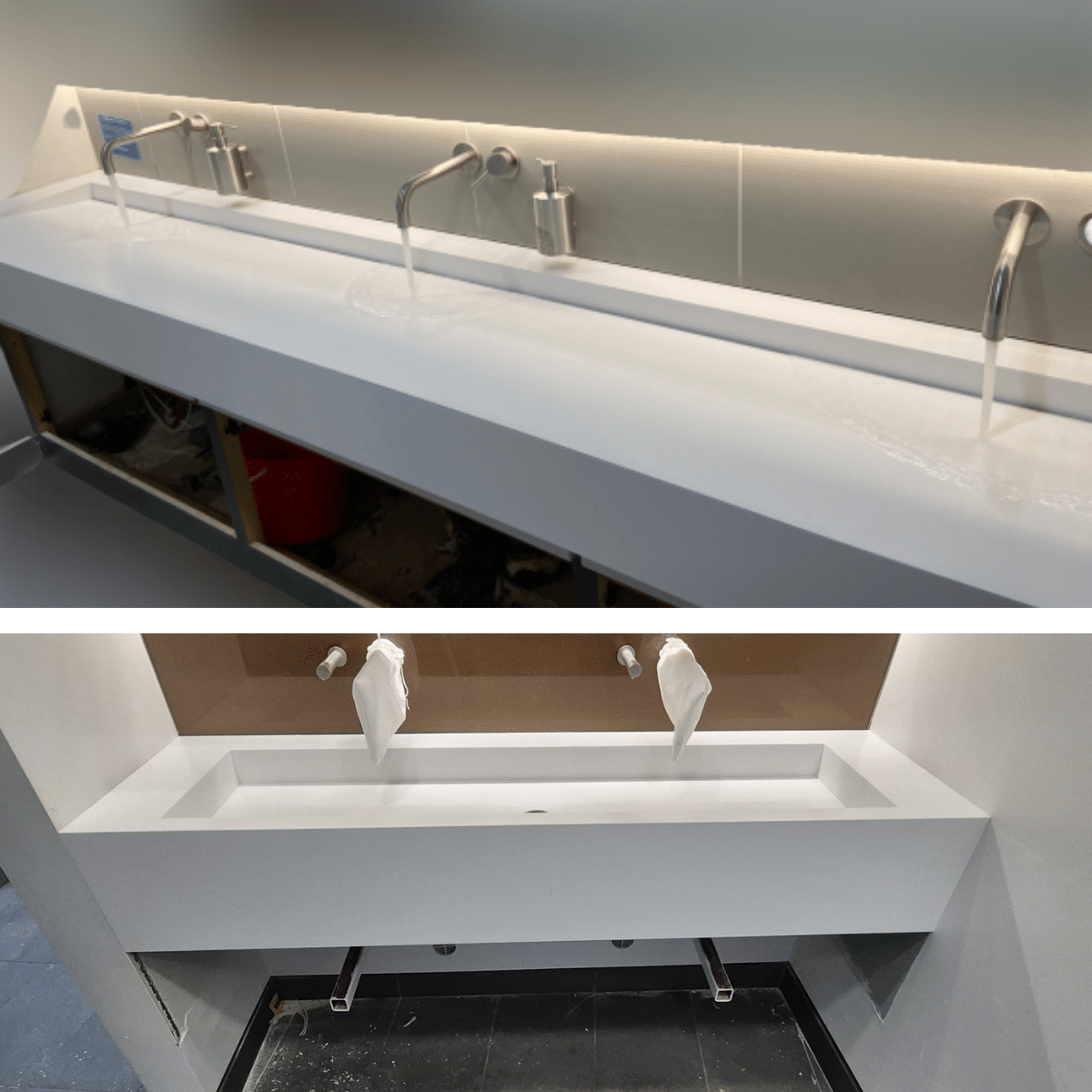
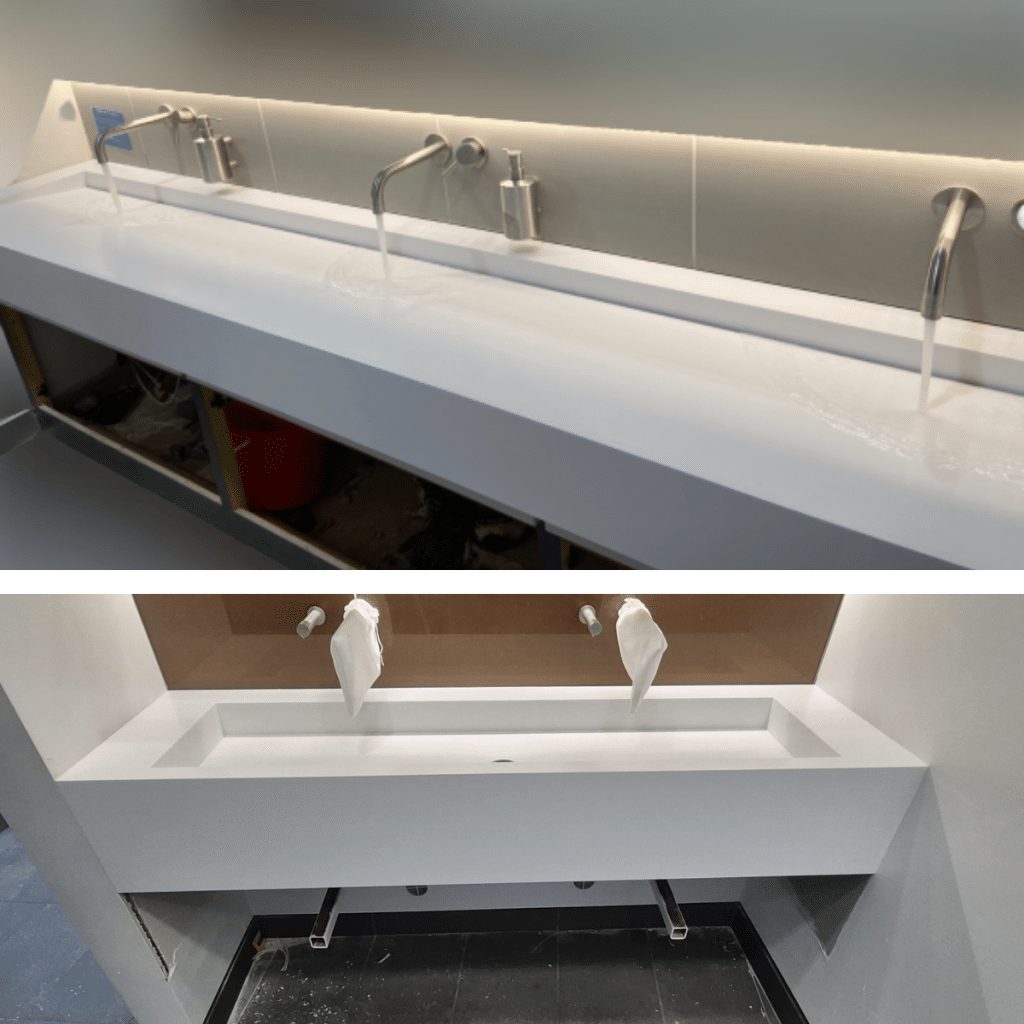
Trough sinks fabricated in Solid Surface are a single continuous piece, with no joins, no seals, and nowhere for bacteria or residue to settle. A seamless trough still looks clean and intentional several years in, rather than like something that’s been repeatedly patched around the edges. They can be specified with integrated drainer sections and wall returns to keep the whole area genuinely easy to maintain, not just easy to clean on a good day.
Science labs
Lab benches need a surface that resists a reasonable range of chemicals, handles constant cleaning and doesn’t show wear after a few terms of practical sessions. Solid Surface resists most common lab chemicals under normal conditions. The practical rule, as with any environment, is prompt wipe up rather than prolonged contact, but for day to day school science use it performs well. Light colours work best here: they reflect light, make it obvious if a surface needs attention, and hold up to repeated cleaning better than darker tones.
Reception desks and entrance areas
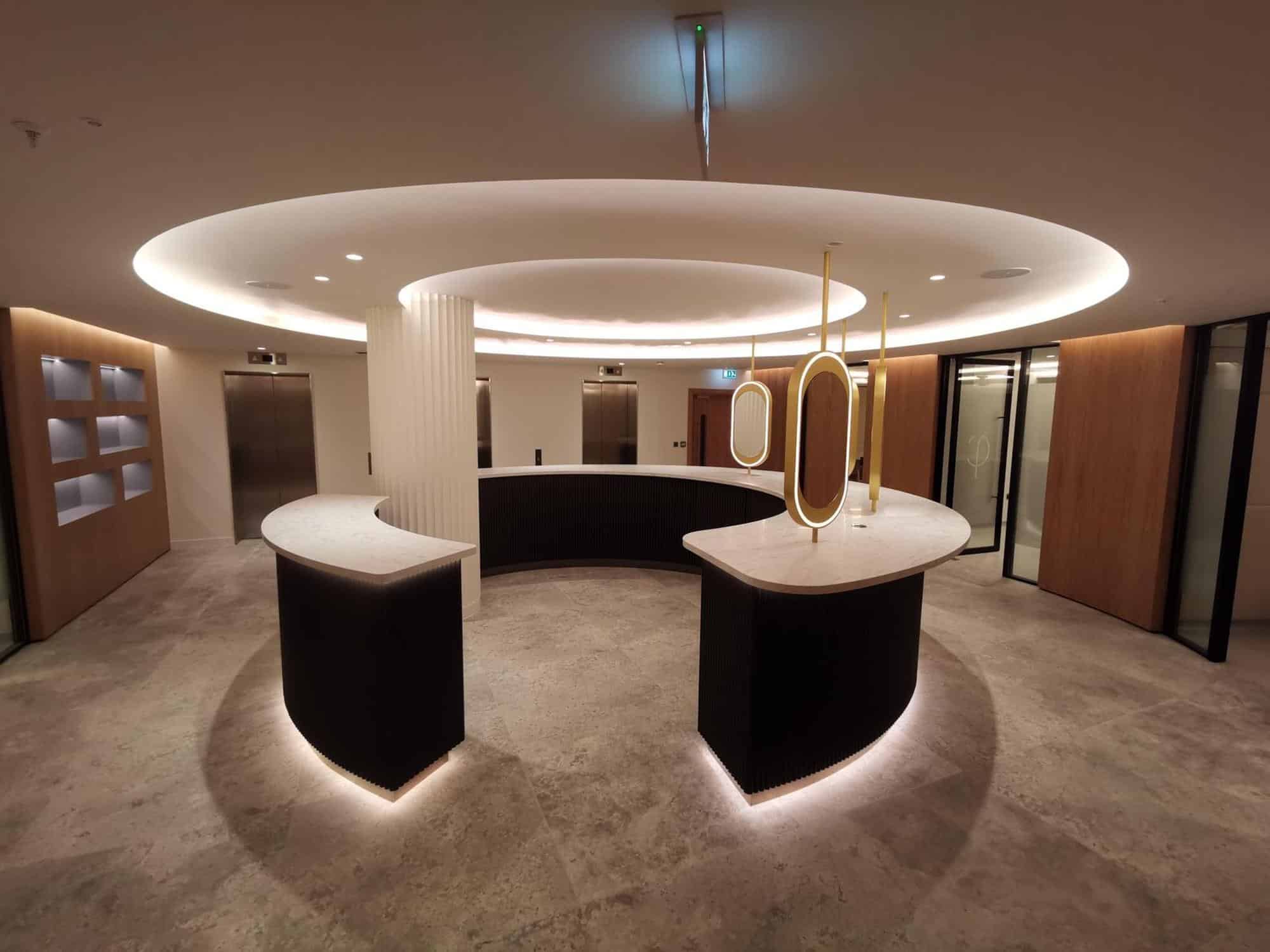
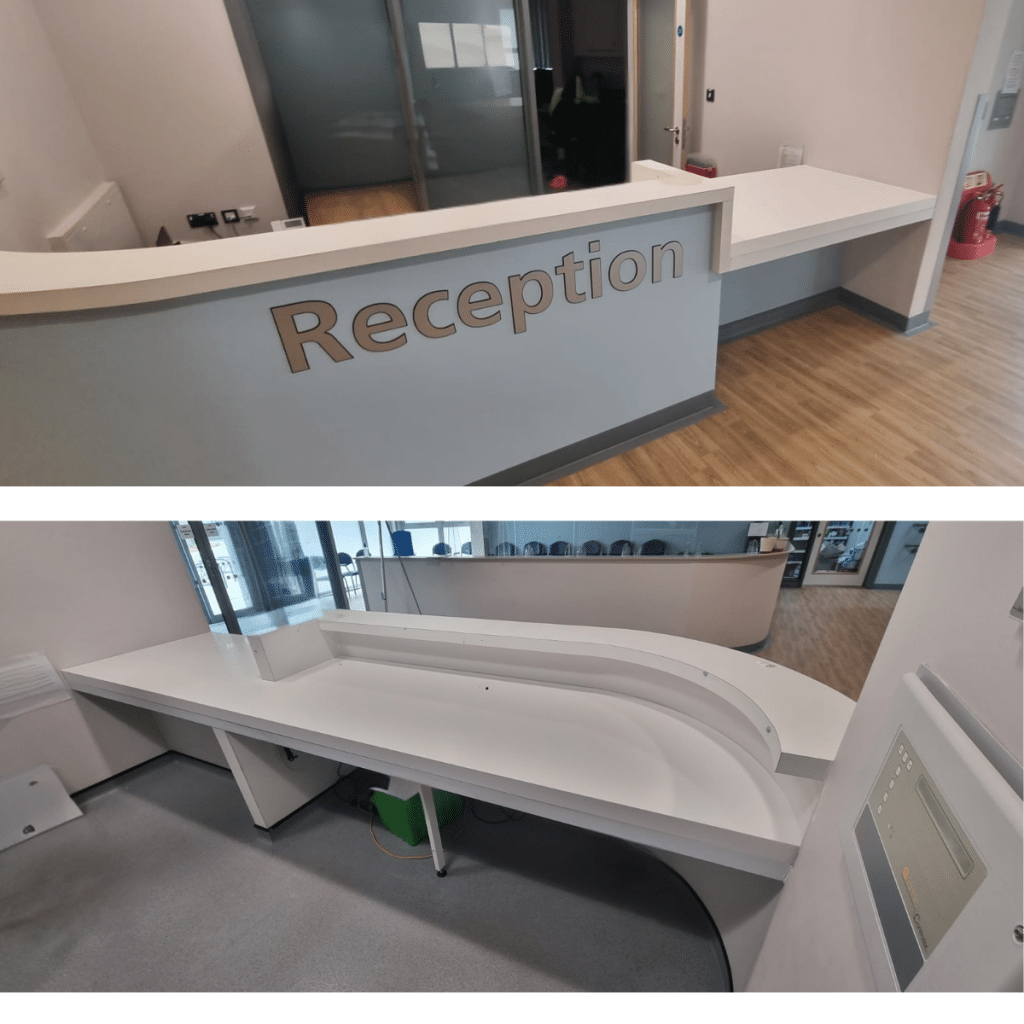
First impressions matter in schools, whether that’s for prospective parents, inspections or the daily welcome the front of house team provides. The right reception desk changes the feel of a front entrance immediately, and Solid Surface can be shaped and colour specified to a brief without the visible joins that give away a tighter budget. These surfaces get constant contact and need to look professional through years of daily cleaning. Specifying the same material through into the adjacent area keeps the space feeling calm.
Repairability: worth asking about
One of the strongest practical arguments for Solid Surface in a school setting is that it can be repaired in place. Minor damage, scratches or surface marks can be sanded and refinished on site without replacement. In a school, where pulling out a whole worktop mid term is genuinely disruptive, being able to address damage in a single visit is a real benefit.
It also changes the lifecycle conversation. Schools often spec on purchase cost and end up paying more in maintenance and replacement over ten years than if they’d specified something more durable to begin with. Solid Surface holds up, and when it does get marked, it can be brought back. That’s worth factoring into the budget thinking, not just the initial quote.
What to think about before you specify
A practical note on timing
The school refurbishment projects that run most smoothly are the ones where we’re involved before the decisions are locked in. Not because we need to be, but because even if layouts aren’t finalised yet, early conversations usually prevent the scheduling headaches that arrive later in the summer. Fabrication slots in June and July fill quickly, particularly for contractors working across multiple projects, and early conversations tend to make the difference.
If you’ve got a refurbishment planned for this year and want to talk through the specification, get some advice or request samples, we’d be really happy to help.
Or contact us: info@bsfsolidsurfaces.com
Please see below for other resources:
________________________________________________________________________________________________________________
Nicola Barden is the Managing Director of BSF Solid Surfaces Ltd, with over 25 years of experience under her belt. She is also a wife, mother to her autistic son, and has three crazy cats and one loopy dog. She enjoys training at the gym, dancing, reading, nature walks and being out and about.
Solid Surface office teapoints have become a fundamental feature in modern workplace design, evolving from simple coffee and tea stations
Need help with a project? Contact us for more details.