The surfaces shaping summer 2026: what the trends actually mean for specification
Solid Surface trends in 2026
Every summer the same conversation starts. Mood boards arrive full of references. Clients have seen something on Instagram or in a hotel bar and want it on their project. And then the project lands and the real question begins… can this actually be built, and if so, what does it take?
The most popular Solid Surface trends we’re seeing in 2026 are warm earthy tones, continuous end panels, integrated sinks, curved and flowing forms, and fluted vertical panels. Each one asks something specific of the fabricator, and getting it right starts with understanding what that is.
This blog is for designers and specifiers who want to go beyond how a trend looks and understand what it actually requires. Because the gap between a beautiful render and a beautiful installation is almost always closed – or opened – at specification stage.
The 2026 colour direction: warm, grounded and worth thinking about carefully
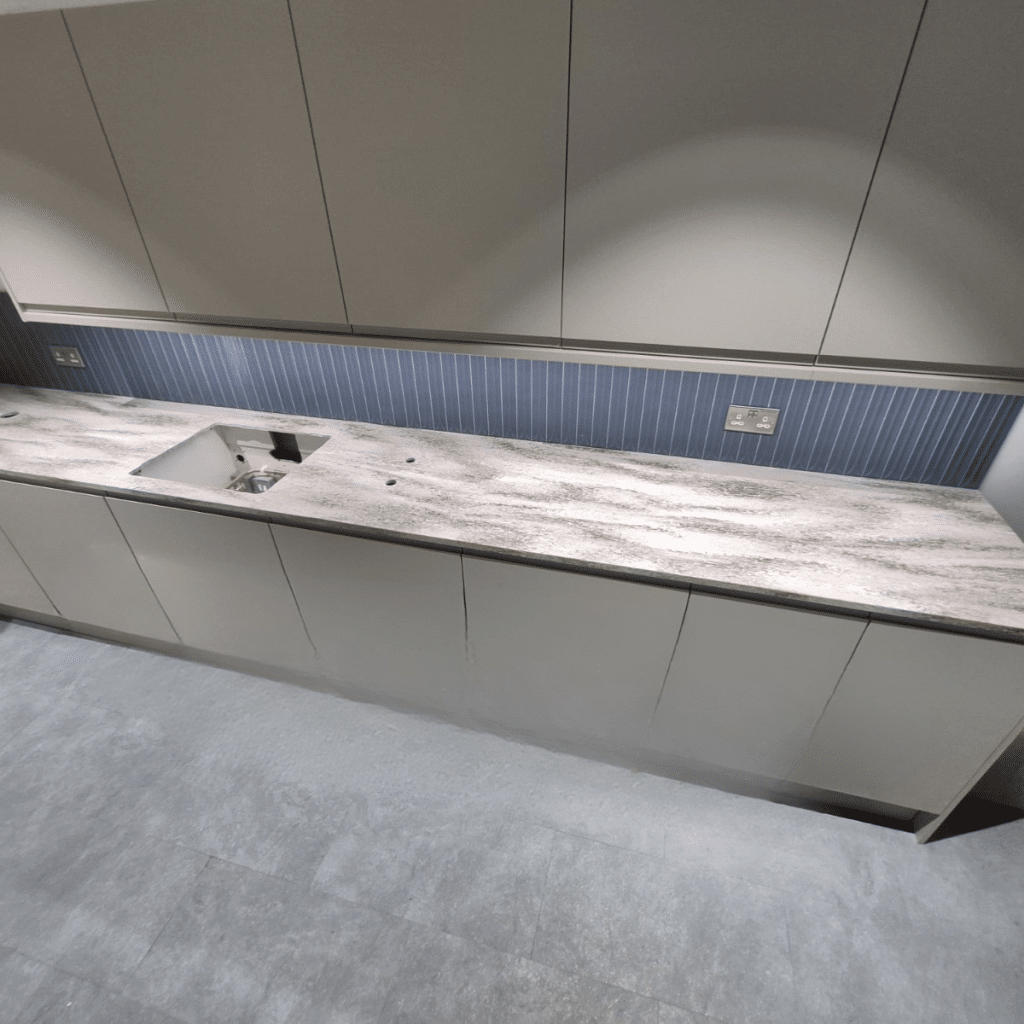
The cooler greys and bright whites that dominated commercial interiors for the last decade are giving way to something earthier. Sandy neutrals, marble looking white with a vein aesthetic, swirly patterns, Terrazzo colours, warm stone tones, dusty taupes, pinky tones and greens are appearing across hospitality, high end residential, and commercial fit out designs in roughly equal measure. It is a shift that moves toward surfaces that feel calmer and more intentional in a setting.
Solid Surface handles this direction well. The range of colours available across the brands we work with is wide, and the warmer tones in particular tend to read beautifully in the satin finishes that suit this aesthetic. The thing to know, though, is that warm tones behave differently in different light conditions. A sandy neutral that looks grounded and warm in a south facing showroom can feel flat or slightly cold in a north facing commercial space. It is one of the reasons we always recommend ordering physical samples and viewing them on site before committing.
The other thing to flag on colour: matte finishes show fingerprints and surface contact more visibly than satin, particularly in high contact environments like kitchen worktops and bar tops. That is not a reason to avoid them, but it is important to build cleaning expectations into the brief early.
If you are in the early stages of a colour decision, the BSF Colour Selector lets you compare tones across brands and request physical samples before committing to a specification.
Is a counter with side panels hard to fabricate in Solid Surface?
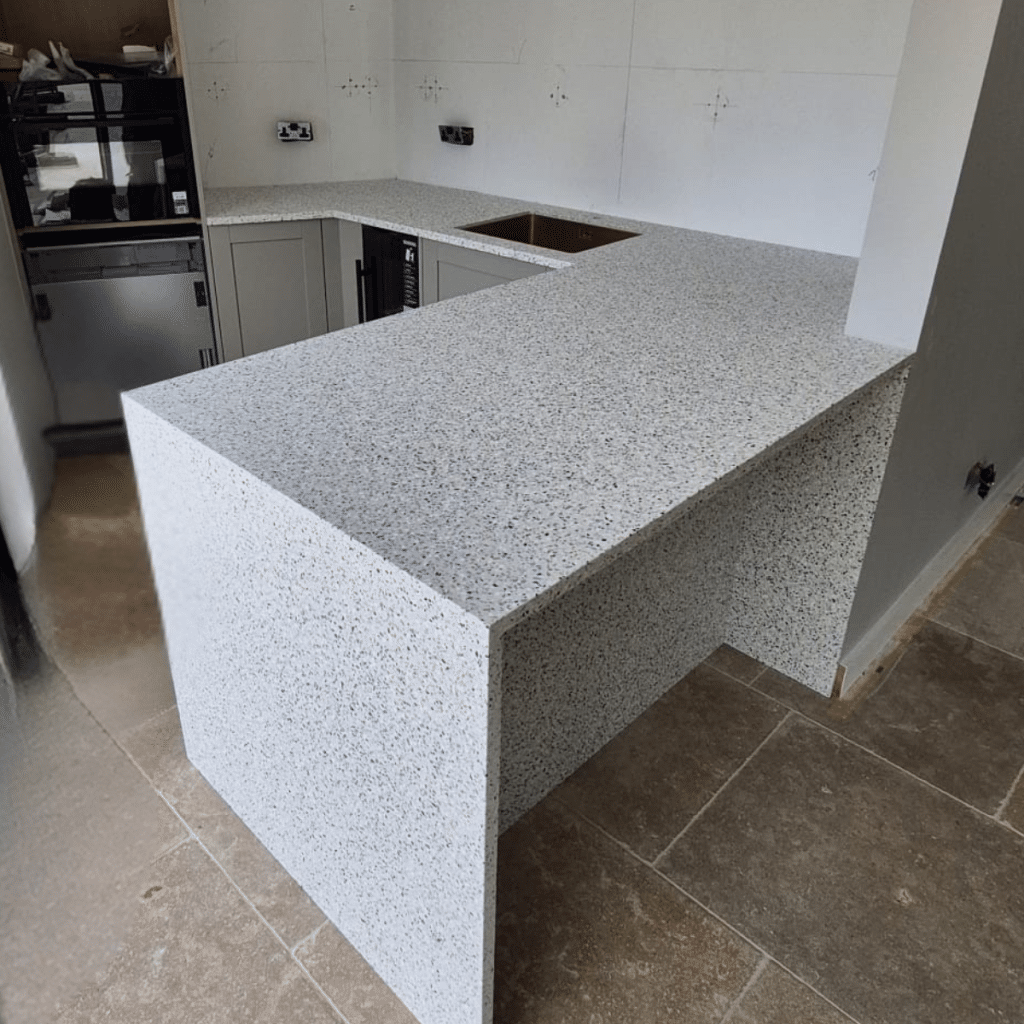
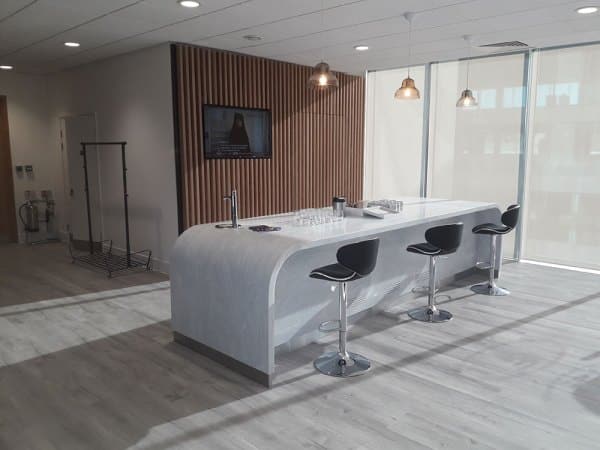
The waterfall island is probably one of the most requested features we see in residential and high end hospitality briefs right now. The aesthetic is simple: the worktop surface continues vertically down the sides of the island, creating a continuous flowing edge from top to floor.
In Solid Surface this looks genuinely good, and we do it a lot. But it is worth understanding what it requires, because this is one of those details where the fabrication quality either makes it or lets it down completely.
The key challenge is the join between the horizontal worktop and the vertical drop. In Solid Surface, this joint is bonded and finished to be virtually indiscernible. When the colour is solid or has a fine, non directional pattern, this is relatively straightforward. When the colour has strong directional veining or movement, the joint needs to be planned carefully to ensure the pattern flows correctly across the transition – mirroring, matching, or complementing depending on the design intent.
The earlier this is discussed with the fabricator, the better. It is the kind of detail that changes how material is templated, cut, and joined. Getting a fabricator involved at brief stage, rather than at drawing issue, means these decisions are made once rather than unpicked on site.
What does Solid Surface actually do differently with integrated sinks?
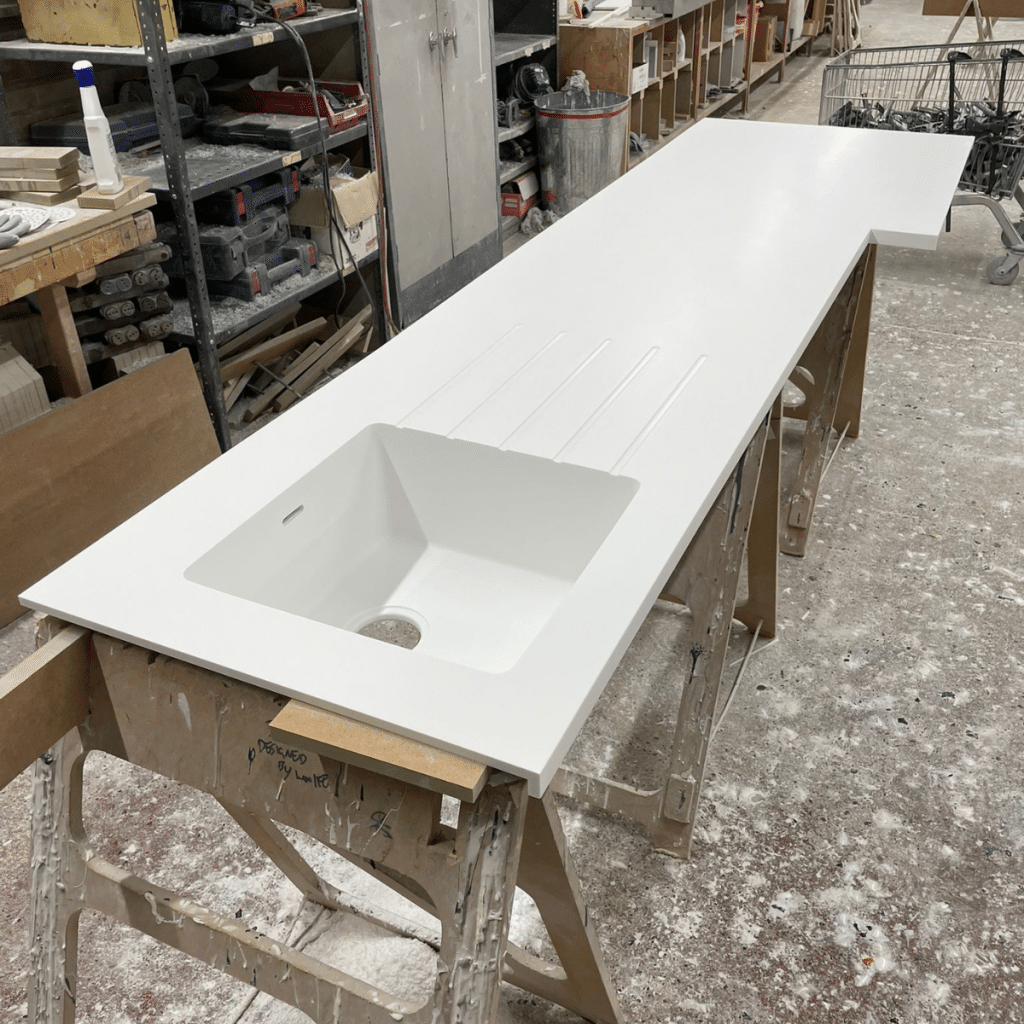
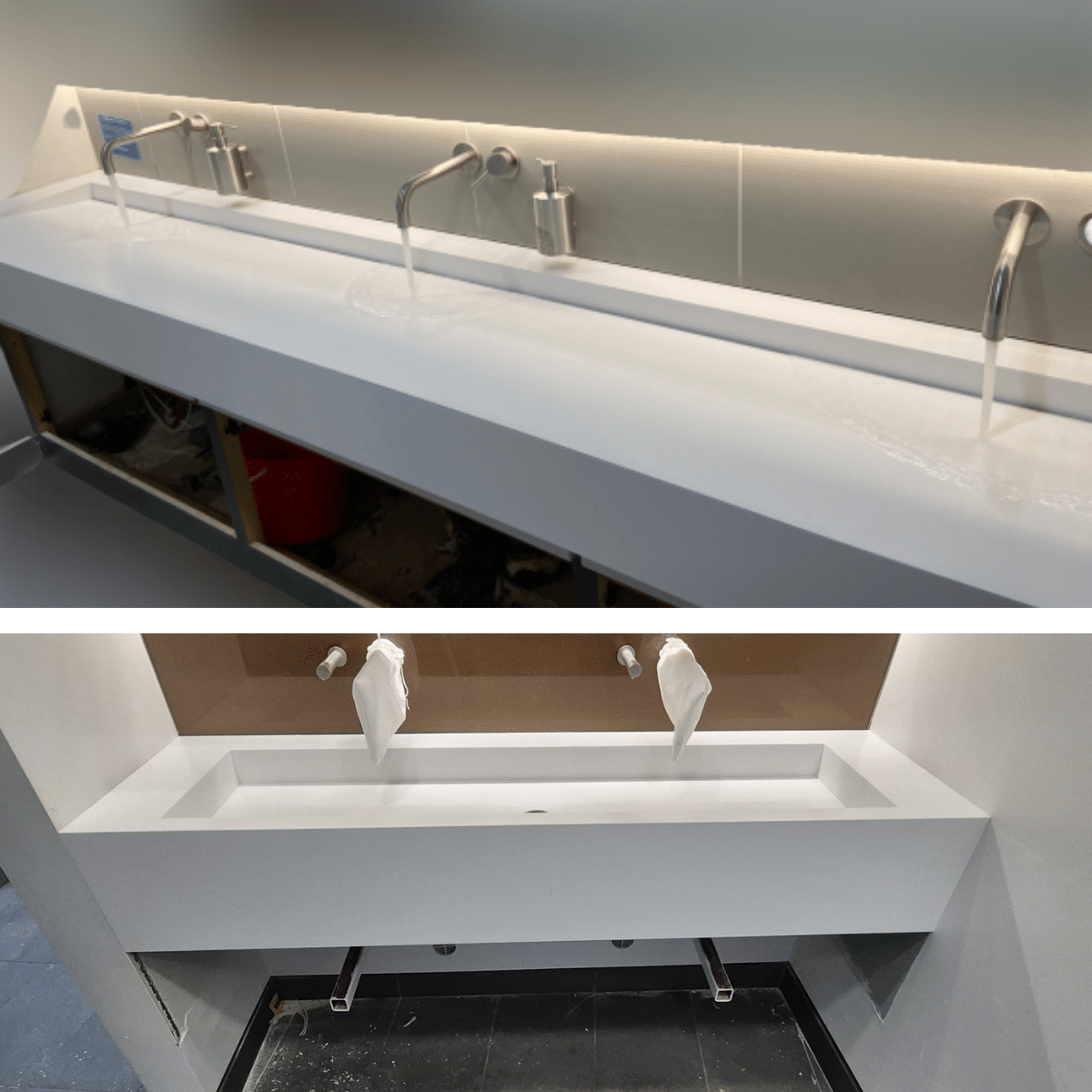
Integrated sinks (where the sink bowl is fabricated as one continuous piece with the worktop, with no visible joins, no rims, and no edges) are appearing everywhere in 2026 residential and hospitality briefs. They suit the clean, uninterrupted surfaces that define this aesthetic.
This is one of the areas where Solid Surface has a genuine functional advantage. Because Solid Surface is a homogenous material – the same composition all the way through – a bowl can be formed directly from the sheet and bonded to the worktop surface in a way that leaves no visible transition. The result is a single, completely watertight surface from worktop to basin to wall return, with nowhere for water to sit and nothing to clean around.
What this means practically is that integrated sinks in Solid Surface are not just a visual choice. They reduce cleaning time, they eliminate the grout and sealant lines that typically harbour bacteria and go grey over time, and they are repairable if they get damaged.
The main consideration for specifiers is depth and profile. Solid Surface bowls are availabe in a wide range of shapes and sizes, but the wall thickness of the material puts some constraints on very deep or steeply walled forms. It is worth discussing the design intent with the fabricator early, particularly on hospitality and residential projects where the aesthetic details are non negotiable.
Curved and flowing forms: what thermoforming makes possible
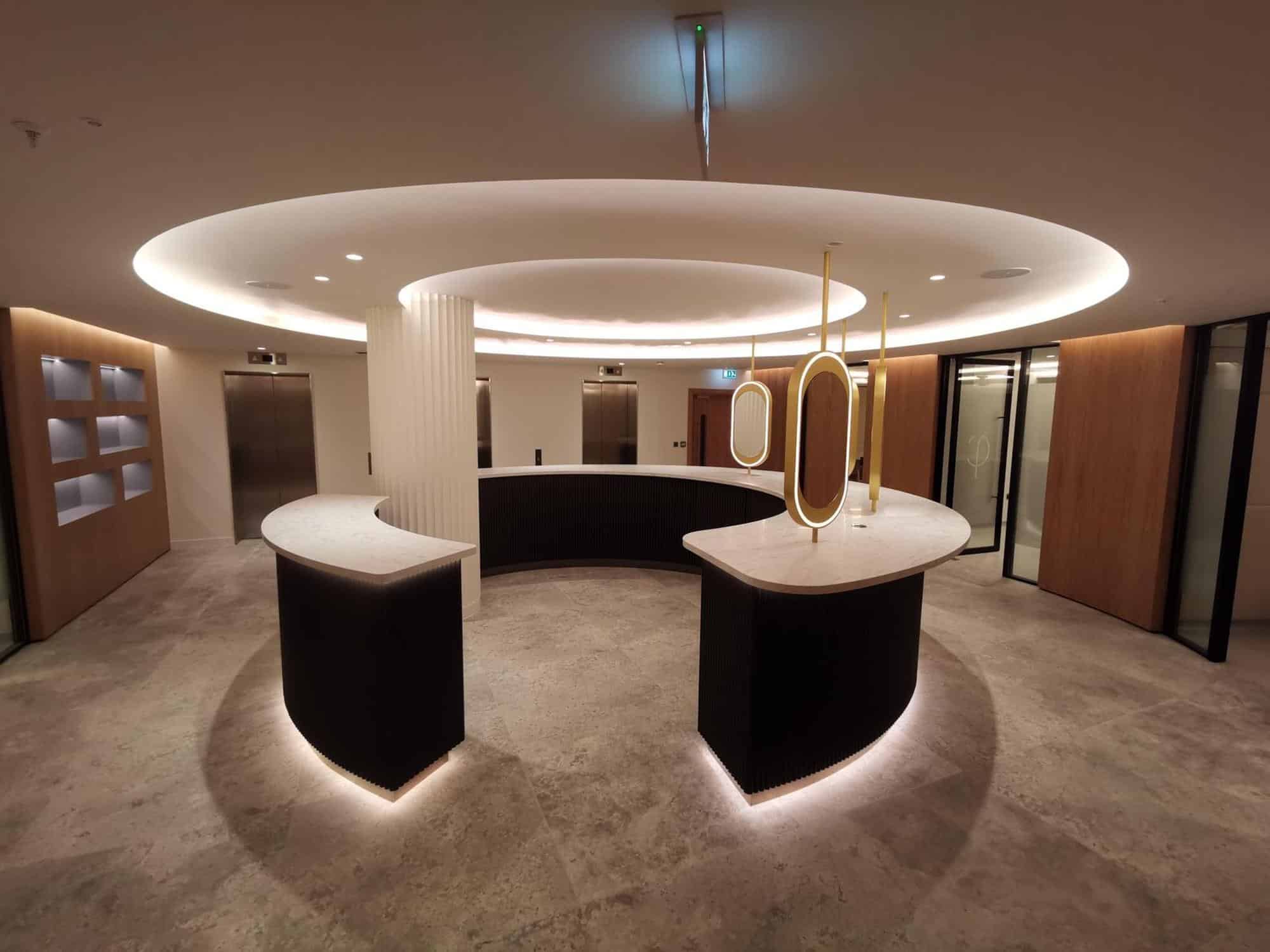
Curves are everywhere in 2026 briefs. Soft radius kitchen islands, curved reception counters, flowing bar fronts, sculpted vanity units. The reaction against sharp right angles that started a few years ago has settled into something more permanent, and designers are specifying forms that would have been considered ambitious five years ago as standard.
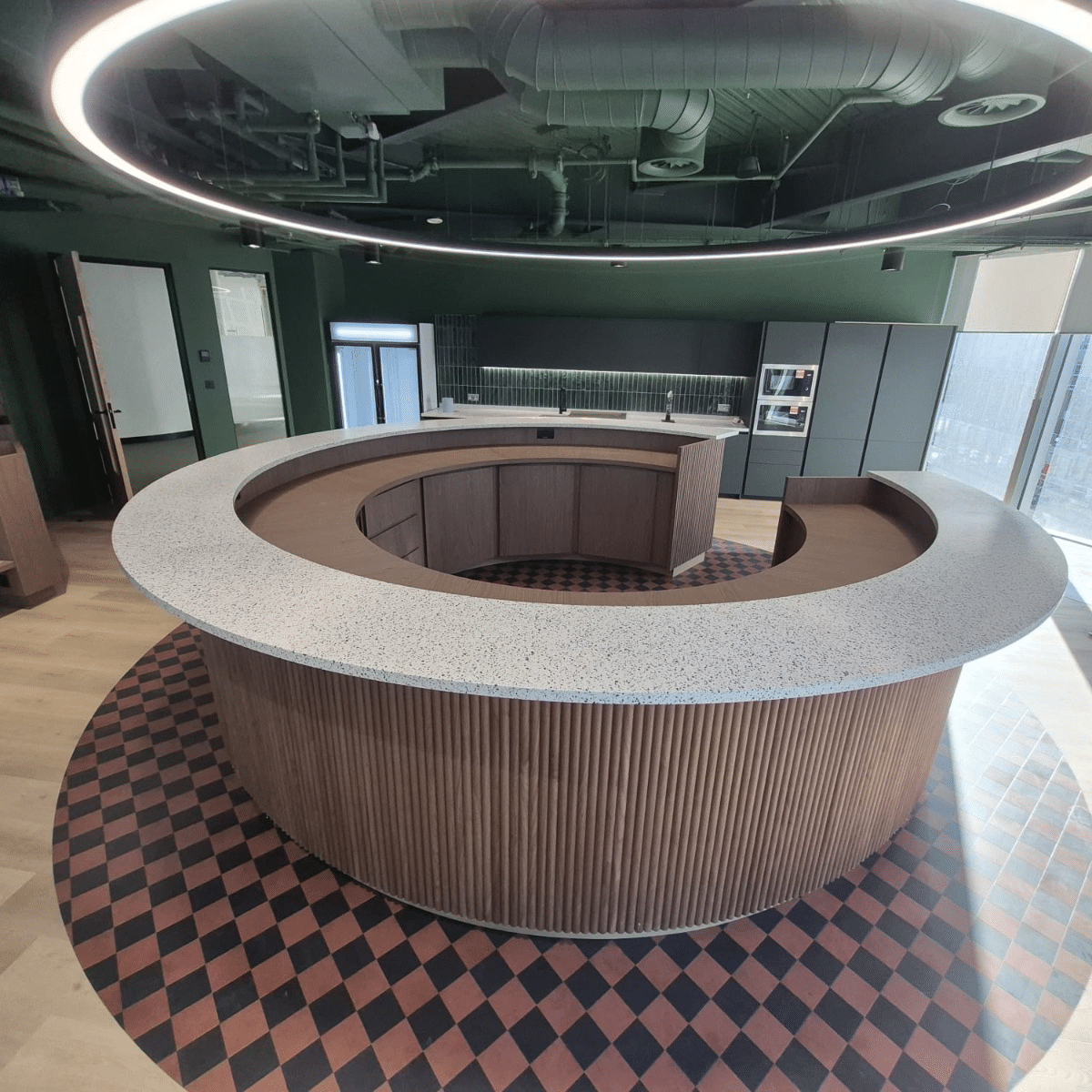
Solid Surface is one of the few worksurface materials that can genuinely deliver on this. Thermoforming (the process of heating the sheet to a workable temperature and forming it over a mould) allows Solid Surface to be shaped into curves, soft corners, coved upstands, and complex three dimensional forms. The result keeps the same colour and material consistency throughout, with no joins at the curve.
What this means for specifiers: the radius you specify matters. Very tight curves (short radii on a relatively thick section) require more careful fabrication and more time, and there are practical limits that depend on material thickness and colour. Solid tones and fine patterns typically thermoform more predictably than heavily veined or striped colours. These are not reasons to avoid curves – they are reasons to discuss the design with the fabricator early, so there are no surprises when it comes to feasibility or lead time.
The other advantage of thermoforming is the coved wall junction. Rather than a sharp join between worktop and wall, the surface curves upward into the wall return, creating a smooth continuous profile. In healthcare and hospitality settings in particular this is not just an aesthetic detail, it eliminates the horizontal ledge where water, debris, and bacteria would otherwise collect.
Fluted panels: texture, consistency, and what to plan for
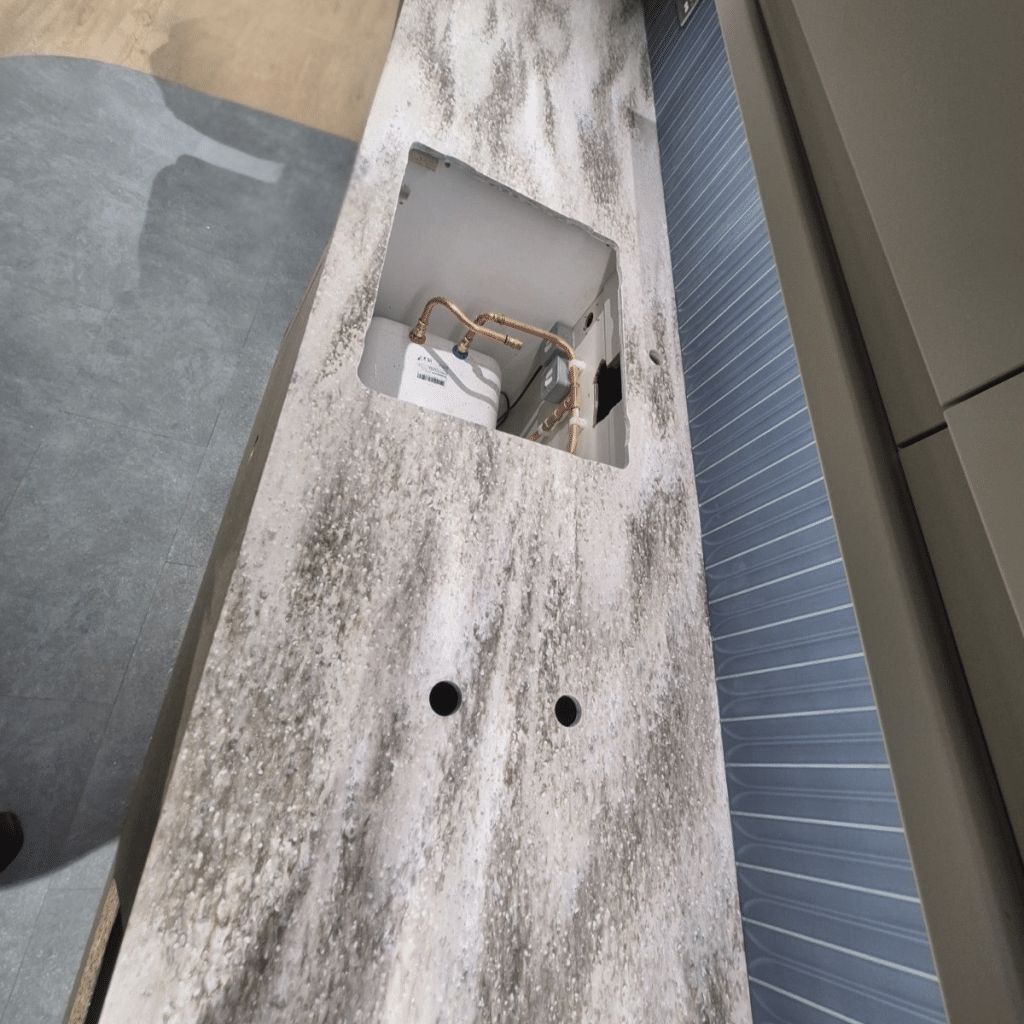
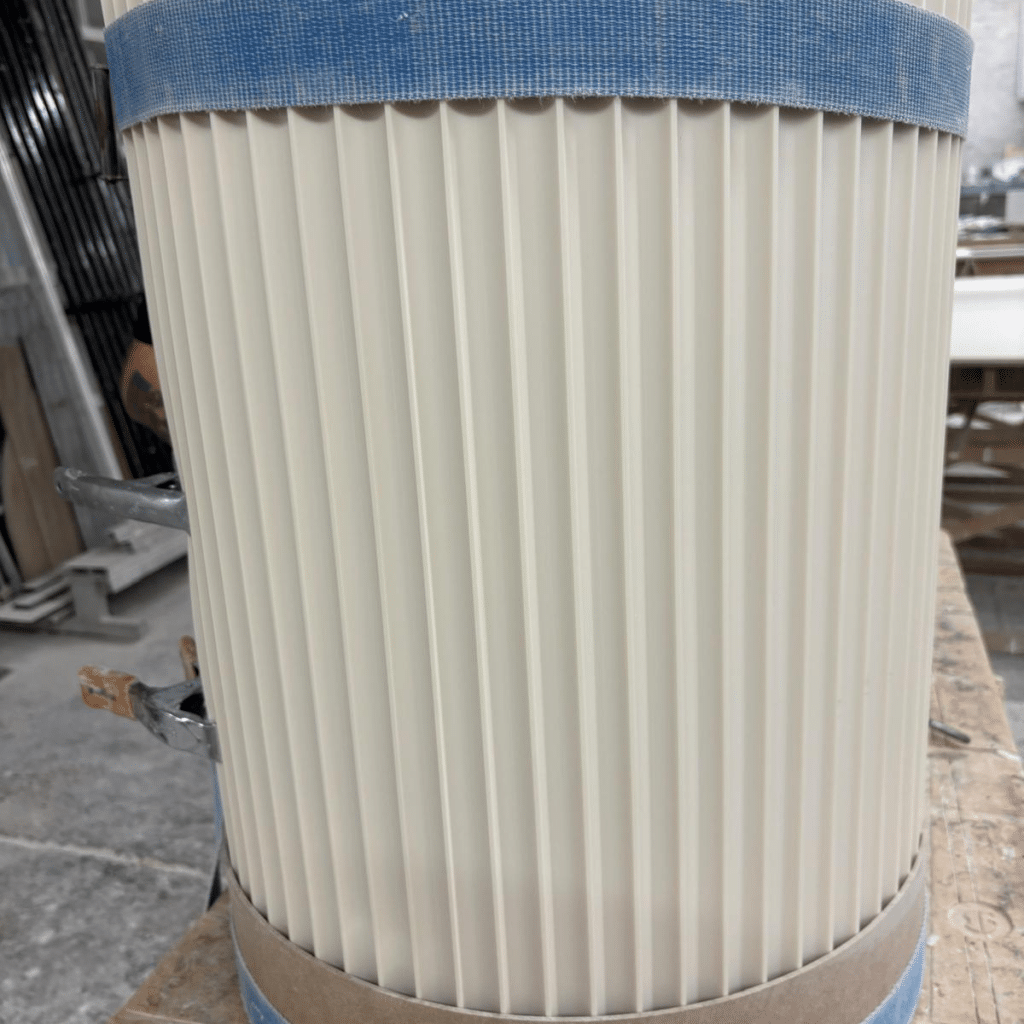
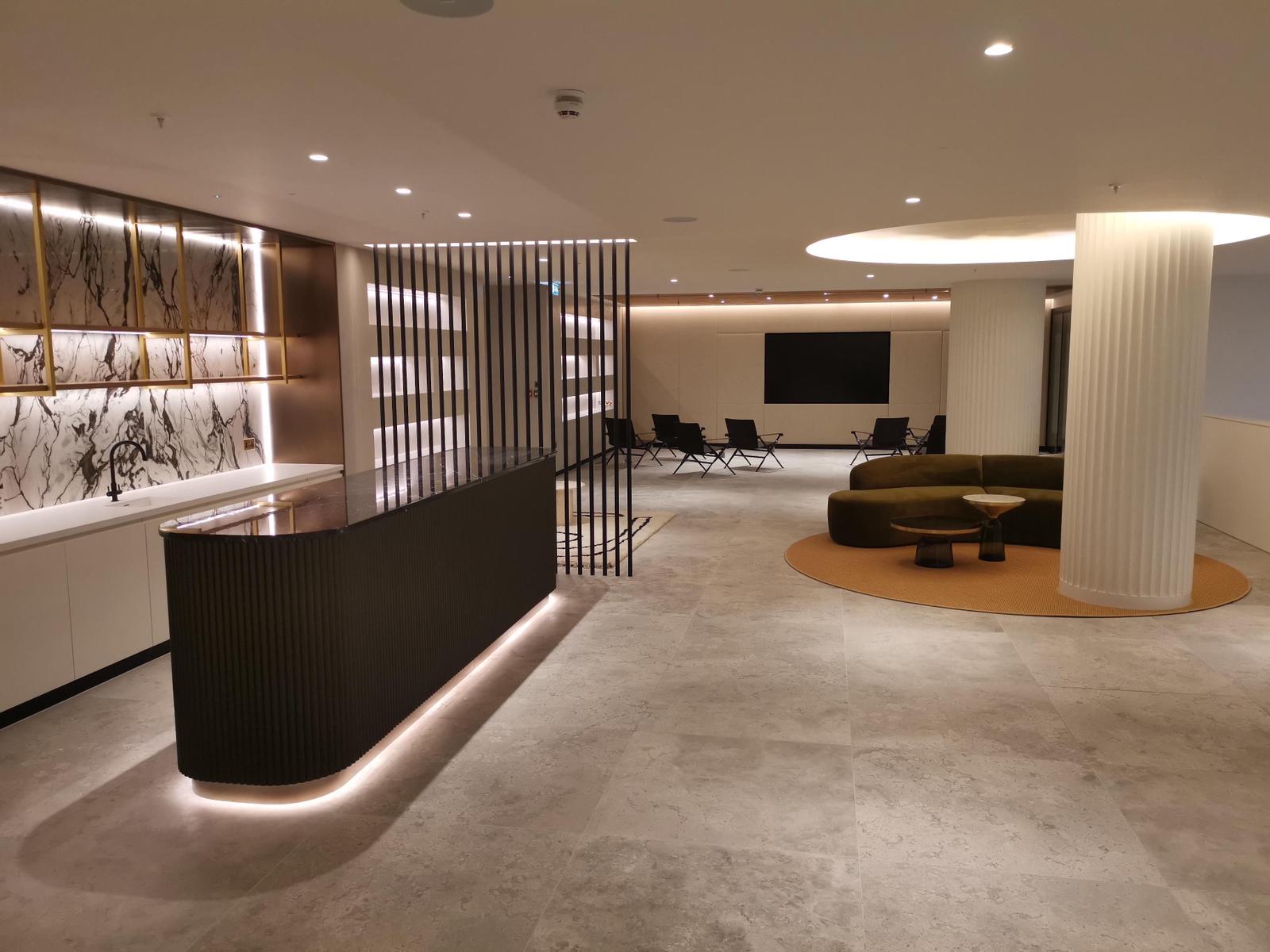
Fluting on vertical surfaces has moved from a niche detail to a mainstream specification request. We are seeing it across hospitality, retail, high end residential, and commercial reception areas.
Solid Surface handles fluting well. The profile is CNC cut directly into the sheet, giving consistent depth and spacing across every panel. This is one of those details where fabrication precision matters enormously, because fluted panels are typically installed across long runs of cabinetry or across multiple panels side by side. Any inconsistency in the profile spacing or depth becomes visible immediately across the installed surface.
There are a few things you should plan for. First, fluting reduces the effective thickness of the panel at the channel point, which affects the structural specification and how panels are supported or bonded. Second, the profile holds dust and surface residue more than a flat panel, so the cleaning regime is worth discussing with the client at brief stage. Neither of these are problems, but both are details that are much easier to resolve before fabrication than after installation.
[Note for Nicola: space reserved here for additional technical detail on fluting, and for project photo(s).]
Why getting the fabricator involved early makes a real difference
There is a pattern we see on projects that go smoothly and projects that do not, and it almost always comes back to the same thing: when the fabricator is part of the conversation at brief stage, the detail gets resolved before it becomes a problem on site. When they arrive at drawing issue or later, they are often working around decisions that have already been made.
With the trends above, this matters more than usual. Directional veining across a waterfall joint, the radius on a thermoformed curve, the profile depth on a fluted panel run – these are not small details. They affect material cost, lead time, and the quality of the finished installation. A quick conversation with the fabricator before the drawings are issued costs nothing. A revision after templating costs significantly more.
We are happy to talk through any of these details at brief stage, with no obligation. If you are specifying Solid Surface for a project this summer and want to sense check the design before it goes any further, you can request an estimate or ask a question here, and we will come back to you quickly.
Other resources –
___________________________________________________________________________________
FREQUENTLY ASKED QUESTIONS
Can Solid Surface really deliver the warm earthy tones that are trending in 2026?
Yes. The colour range across the brands we work with is extensive, and warm stone tones, sandy neutrals, and softer greens are well represented. We always recommend ordering physical samples and viewing them on site before committing. Colour reads differently in different light conditions, and matte and satin finishes in particular behave differently to what you see on a screen or in a showroom.
Is a waterfall island difficult to fabricate in Solid Surface?
Not if it is planned properly. The joint between the horizontal worktop and the vertical drop is bonded and finished to be virtually indiscernible. Where it requires more care is with directional veining or strong pattern movement – the joint needs to be planned so the pattern flows correctly across the transition. That is exactly the kind of thing to discuss with the fabricator before drawings are issued, not after.
What is the difference between an integrated sink and an undermount sink in Solid Surface?
An integrated sink is fabricated as one continuous piece with the worktop – same material, no discernible joint, completely watertight from worktop to bowl to wall return. An undermount sink is a separate bowl fitted beneath the worktop surface. Both are possible in Solid Surface, but the integrated version is the one most specifiers are choosing right now for exactly the reason you would expect: there is no edge to clean around, no sealant to maintain, and the finish is cleaner.
Can all Solid Surface colours be thermoformed into curves?
Not all Solid Surface brands can be due to their chemical composition and there are some colours that thermoform more predictably than others. Solid tones and fine, non directional patterns are typically the most straightforward. Heavily veined or strongly directional colours need more careful planning, and in some cases the curve radius may need to be adjusted to achieve the right result. This is exactly the kind of thing worth discussing with the fabricator at brief stage.
How do fluted panels in Solid Surface compare to fluted timber or MDF alternatives?
The main advantage of Solid Surface for fluted panels is consistency and durability. Because the profile is CNC cut from a homogenous sheet, every channel is identical across the run. The surface is also non porous, which means no swelling, no water damage, and no maintenance concerns in environments where humidity or cleaning regimes would affect timber. It is most popular in hospitality and high end residential settings where both the detail and the longevity matter.
How early should I get a fabricator involved on a project with these features?
As early as possible – ideally at brief stage, before drawings are issued. For standard features this is more about lead time than anything else. For directional veining across a waterfall joint, tight thermoformed curves, or a long run of fluted panels, it is about making sure the design is achievable as drawn and that material is ordered with enough time to allow for batch matching and careful fabrication. A short conversation at brief stage saves a lot of time later.
Nicola Barden is the Managing Director of BSF Solid Surfaces Ltd, with over 25 years of experience under her belt. She is also a wife, mother to her autistic son, and has three crazy cats and one loopy dog. She enjoys training at the gym, dancing, reading, nature walks and being out and about.
Solid Surface in schools: what to specify before the summer window closes
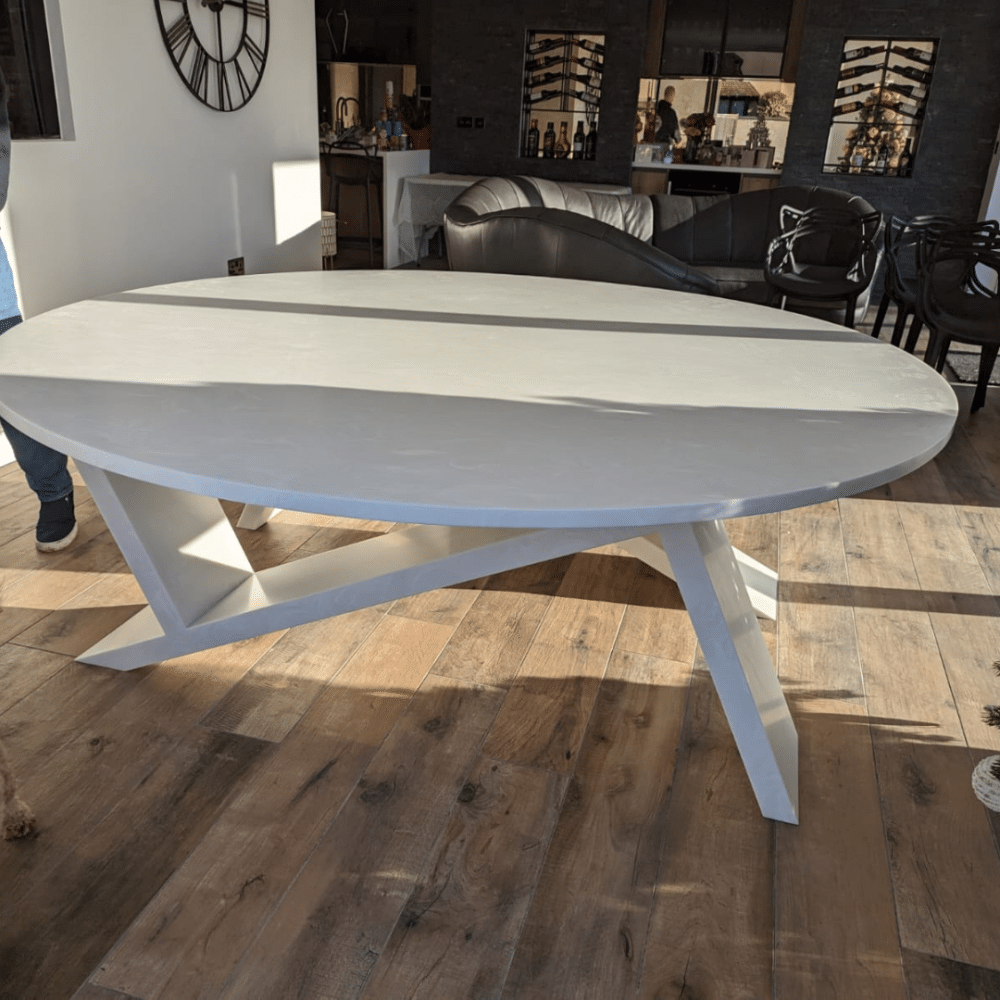
Autumn-Winter 2026 interior design trends include Solid Surface materials for durability, Dulux and Pantone earthy colour palettes, and RAL seasonal decor shades. Add cosy textures, natural elements, fluting and layered lighting.
Need help with a project? Contact us for more details.