Solid Surface in Dental Practices: A Practical Guide
Solid Surface has been specified in dental practices for decades. And it keeps getting chosen for the same reasons. It is hygienic, seamless, durable, and practical in a way that most other materials simply are not.
Whether you are fitting out a new practice from scratch or refurbishing an existing one, the surfaces you specify will be cleaned multiple times a day, every day, for years. They need to perform without fail, look professional, and give your infection control team nothing to worry about.
This guide covers where Solid Surface works best in a dental setting, what to think about before you specify, and why the detail matters as much as the material.
Why Solid Surface works in dental settings
Dental practices are demanding environments. Surfaces face constant exposure to water, clinical cleaning products, and high-frequency use across every room.
Solid Surface handles all of this well because of a few properties that genuinely matter here:
It also looks and feels clean. In a setting where patients are already paying close attention to their surroundings and often already anxious, that reassurance is important.
Solid Surface specification in new Dental Clinics
Specifying Solid Surface at the design stage of a new build gives you the most flexibility and creative control. Layouts can be planned around the material from the start. Integrated sinks, coved upstands, and colour-zoned Decontamination Rooms can all be designed in rather than retrofitted.
Getting a fabricator involved early means the clinical workflow, compliance requirements, and design intent are all understood before a template is taken. It removes the guesswork and means what arrives on site is ready to install. The result is a practice that feels intentional.
Refurbishing an existing Dental Practice
Refurbishment is a different challenge. The practice is often still running, timelines are tighter, and the fabrication has to work around existing layouts and structures.
Solid Surface is well suited to refurbishment for exactly these reasons. It can be templated accurately to fit existing spaces, fabricated off-site, and installed with minimal disruption. We recently completed a full refurbishment for a Dental Practice in Essex, treating the whole building as one material brief rather than tackling it room by room. The result was a practice that felt calm and purposeful throughout, which is harder to achieve when each room is specified separately.
Room by room: where Solid Surface really makes the difference
The Surgery
The Surgery takes more punishment than any other room in the practice. Surfaces are wiped down with clinical cleaning products multiple times a day, so the material needs to handle that without breaking down.
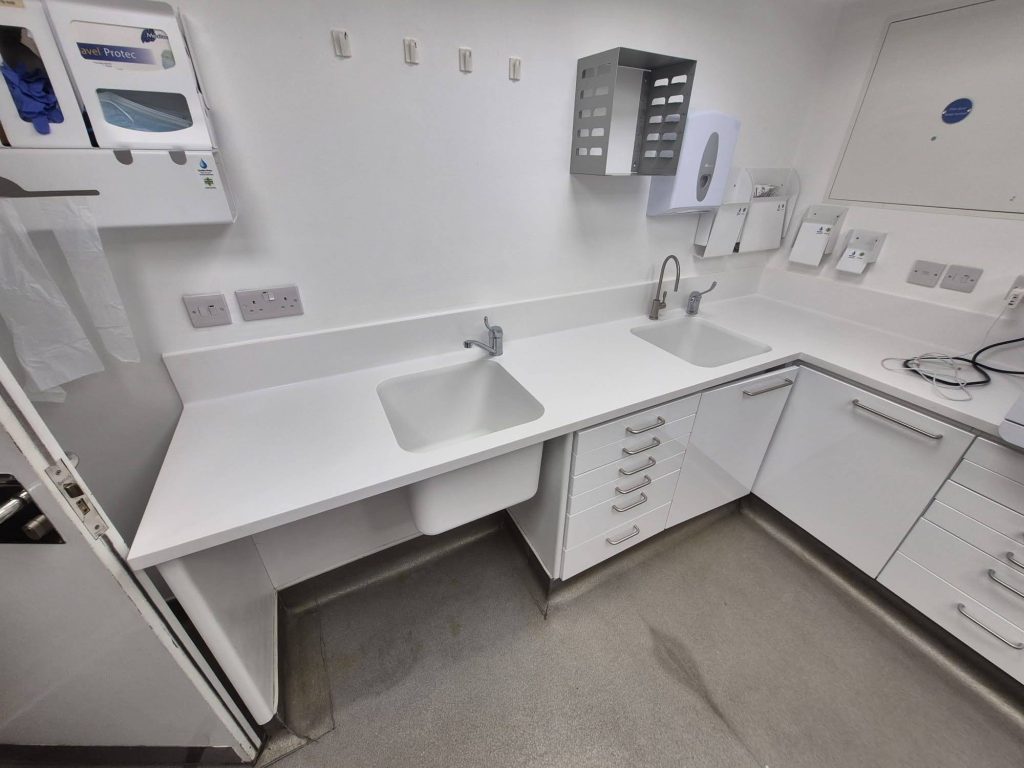
The two details that matter most are the joins and the upstands. Any join left in a surgery worktop is a future hygiene risk. Sealed joints open over time with repeated cleaning. A properly fabricated Solid Surface worktop removes that problem entirely. The worktop, upstand, and sink become one continuous surface with nowhere for moisture or debris to collect.
The difference is felt as much as it is seen. A Surgery where the surfaces are seamless and smooth has a different quality to one where joins are beginning to fail or edges are lifting. For the clinician working in that room every day, it matters. For the patient sitting in the chair, it matters too.
White and light tones are the most popular choice in surgeries. They reflect light, keep the space feeling clean and calm, and make it immediately obvious if a surface needs attention. A satin finish tends to hold up better than gloss under daily clinical cleaning.
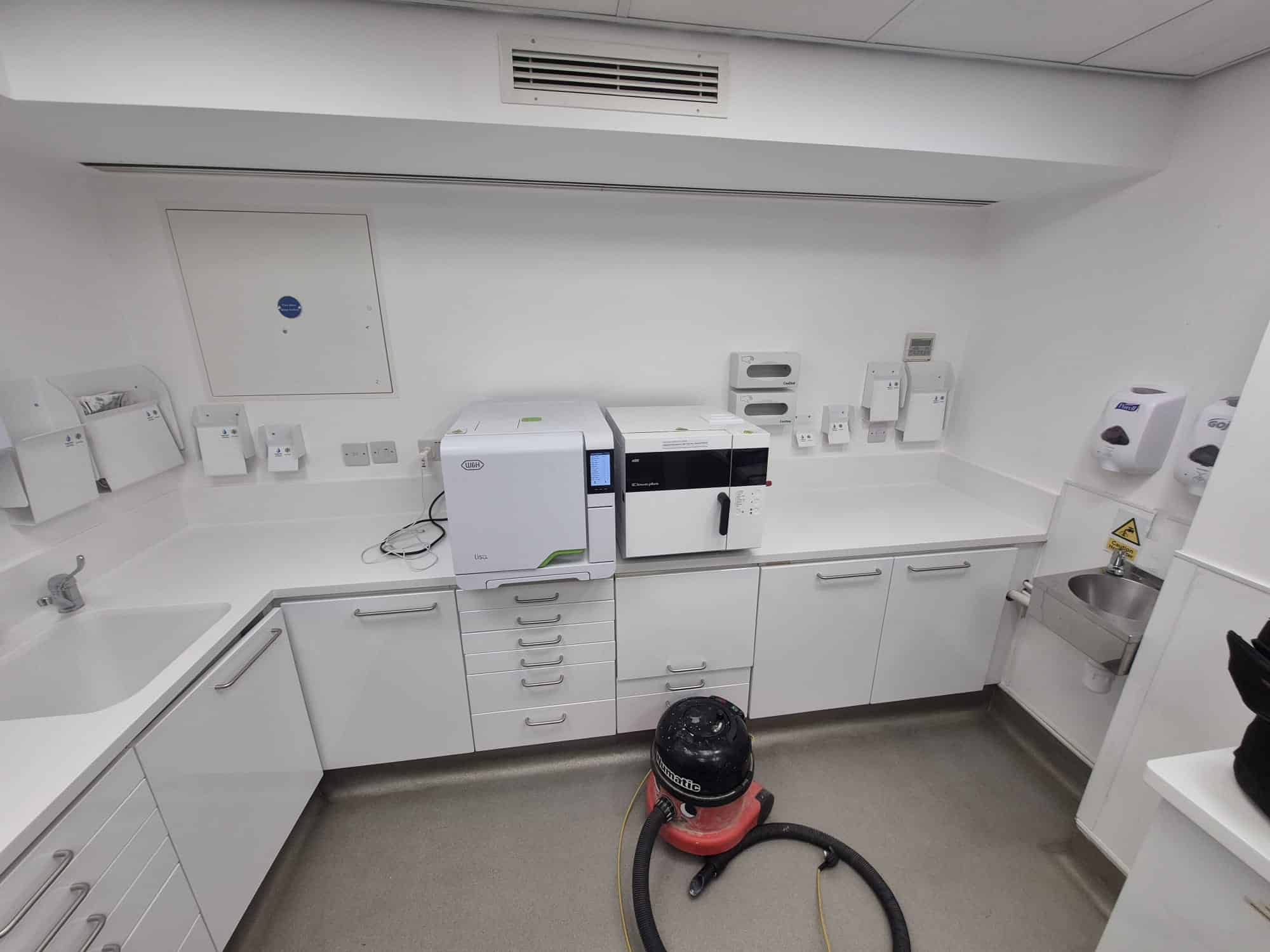
The Decontamination Room
This is the room most often underspecified in a dental fit-out, and the one where getting it wrong has the most direct compliance implications.
HTM 01-05 requires a clear physical separation between the dirty and clean sides of the instrument workflow. One practical way to achieve this through the material itself is to specify two different Solid Surface tones, one for each side. The visual distinction is built in, without additional signage. It is a detail that makes the room work better and gives anyone using it a quiet confidence that the workflow is right.
The Decontamination Room also needs multiple integrated sinks and typically deeper worktop runs to accommodate equipment. These are details worth raising with your fabricator before layouts are fixed, not after.
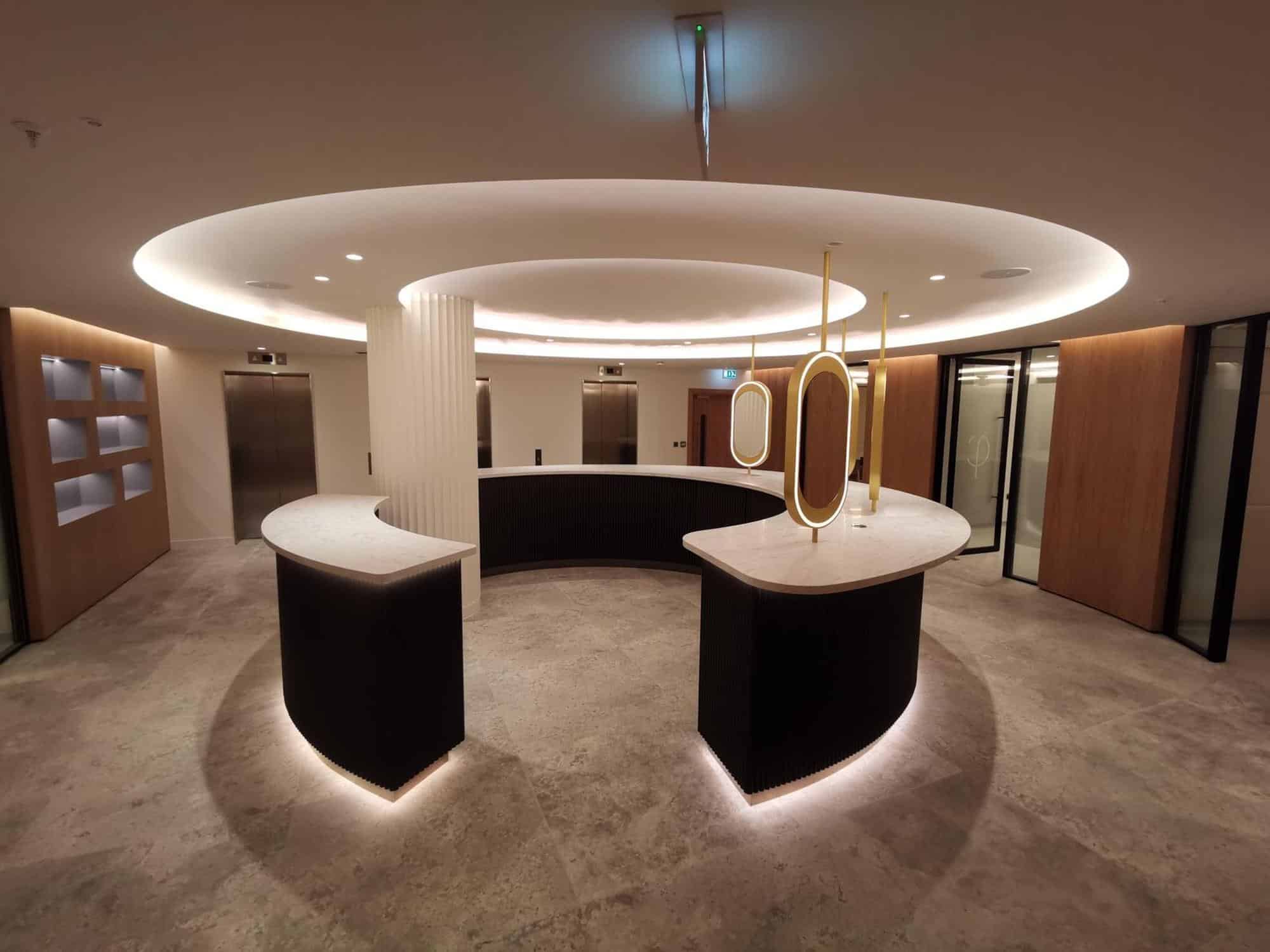
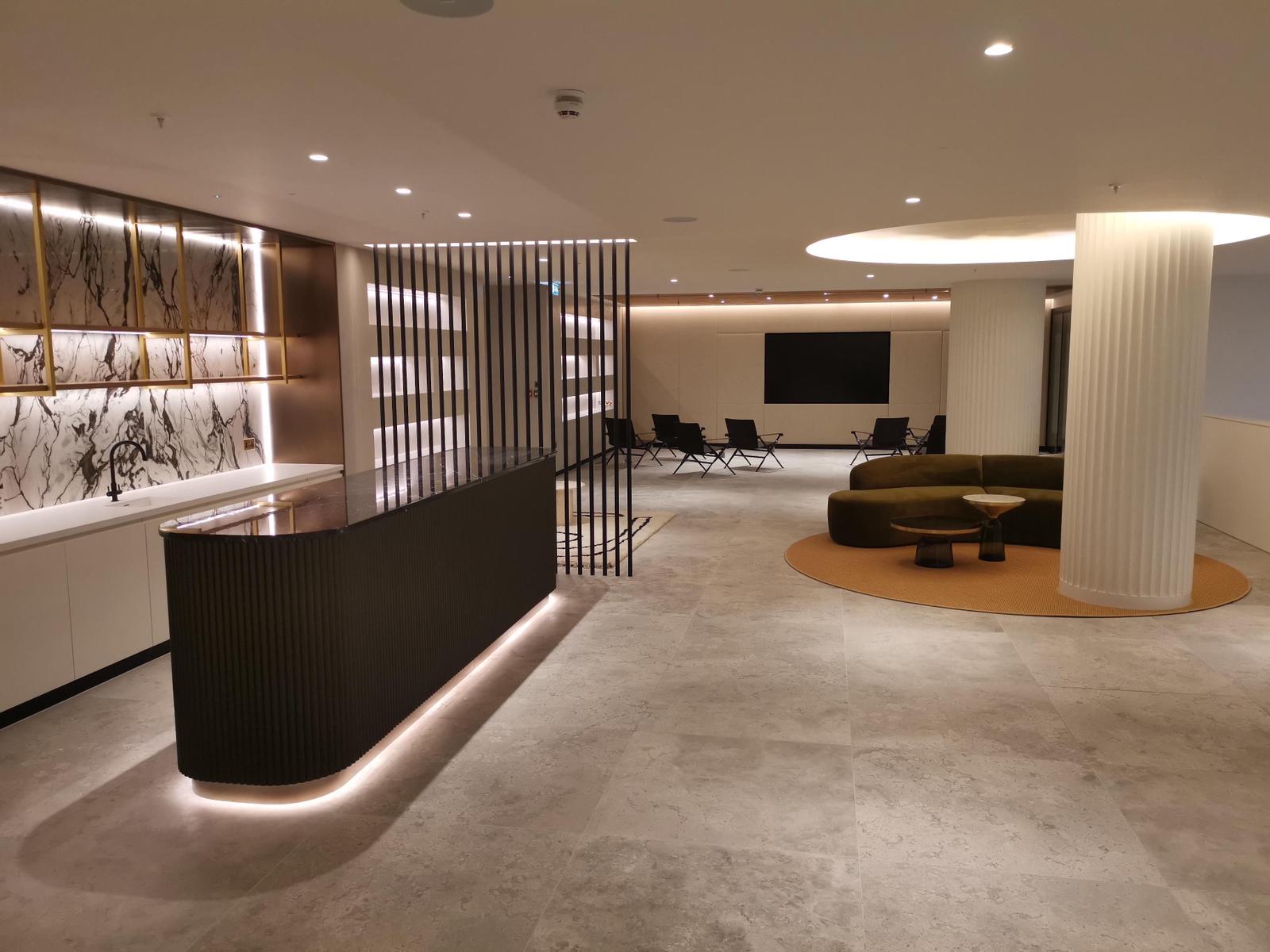
Reception and Waiting Areas
First impressions matter. A patient who walks into a reception that feels cohesive and calm sits down in a better state of mind than one who walks into a space that feels mismatched. That distinction starts with the surfaces.
These spaces are cleaned just as regularly as the clinical areas, so they need to be hard wearing but also need to look good. There is a strong case for carrying the same material through from the surgeries to the front of house. It simplifies maintenance and creates a professional, unified look throughout the practice.
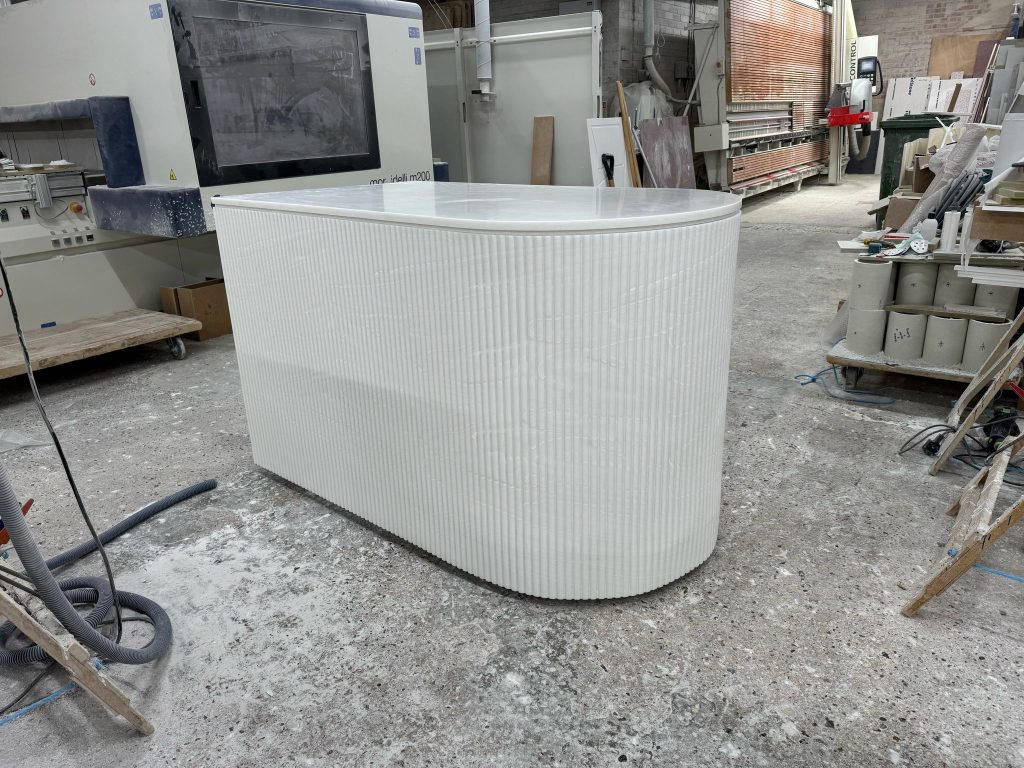
Reception desks in Dental Practices have constant contact. Solid Surface handles daily wipe-downs without degrading, and integrated features can be built in without the joins and gaps that other materials leave behind.
Considerations before you specify
Colour has consequences beyond aesthetics. White and light tones work best in clinical areas. Slightly warmer tones suit Reception and Waiting Areas well. The key is treating the whole practice as one material decision, not a series of separate ones.
Fabrication quality matters as much as material choice. Solid Surface is only as good as the execution behind it. A poorly fabricated seam or upstand undermines everything the material is supposed to do. Ask to see work from clinical environments specifically before committing to a fabricator.
Early involvement saves problems later. Whether it is a new build or a refurbishment, the earlier your fabricator understands the layout and compliance requirements, the fewer decisions end up being made under pressure on site.
Working with BSF
We work on dental projects both directly with practices and alongside fit-out contractors and joinery companies. Either way, our role is the same: fabricating the Solid Surface elements, coordinating with the wider project team, and making sure what arrives on site is right the first time.
We find that the projects which run most smoothly and finish best are the ones where we are involved before the decisions are locked in. Not because we need to be, but because the earlier those conversations happen, the less gets left to chance on site.
So if you are in the early stages of a dental fit-out and want to talk through how Solid Surface could work across the project, we are always happy to have that conversation.
Download our free Dental Solid Surface Technical Guide for detailed specification guidance, compliance notes, and a pre-installation checklist here
Or contact us: info@bsfsolidsurfaces.com
Please see below for other resources:
________________________________________________________________________________________________________________
Nicola Barden is the Managing Director of BSF Solid Surfaces Ltd, with over 25 years of experience under her belt. She is also a wife, mother to her autistic son, and has three crazy cats and one loopy dog. She enjoys training at the gym, dancing, reading, nature walks and being out and about.
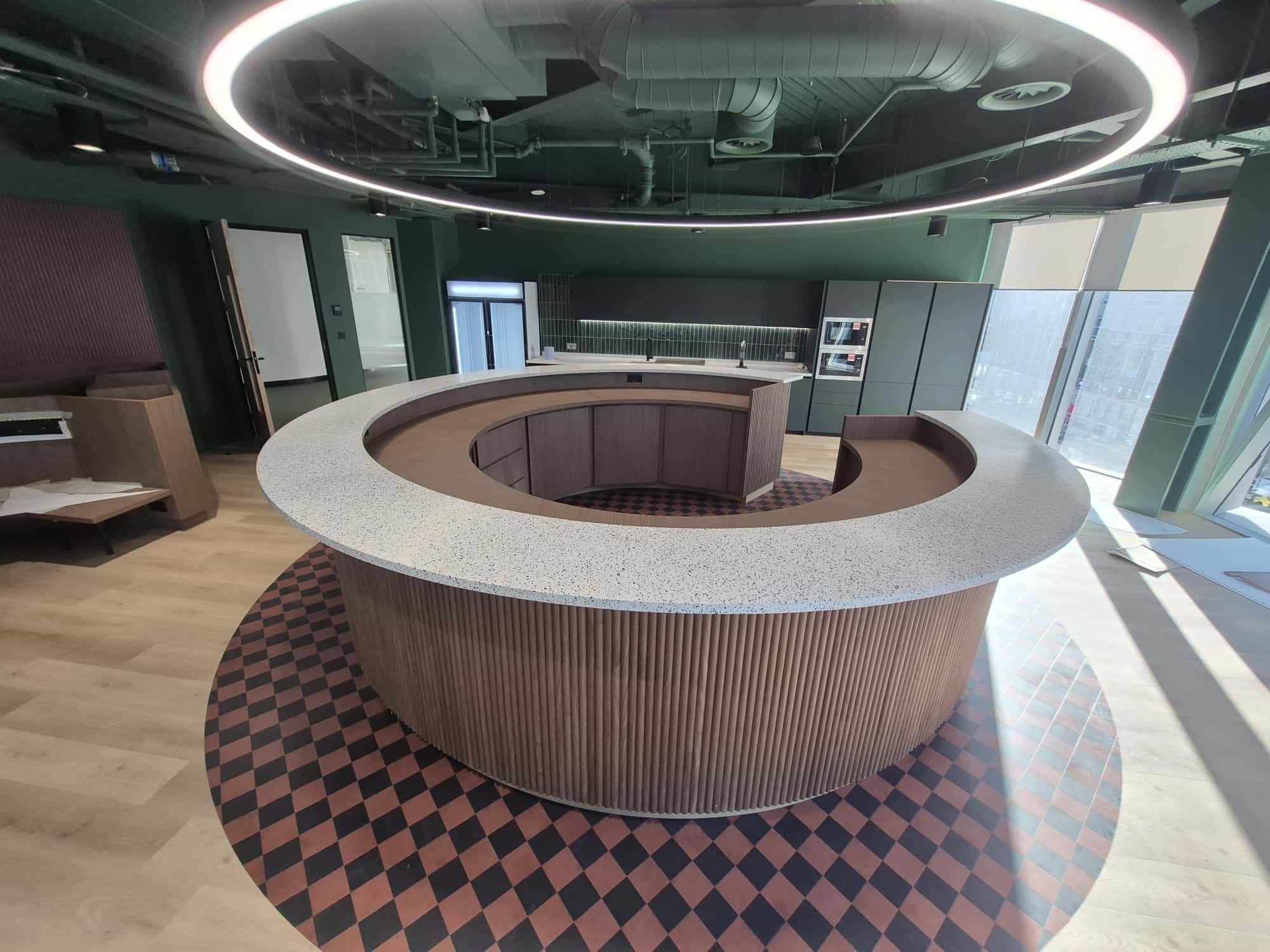
Colour is often the decision that gets left in a commercial project...
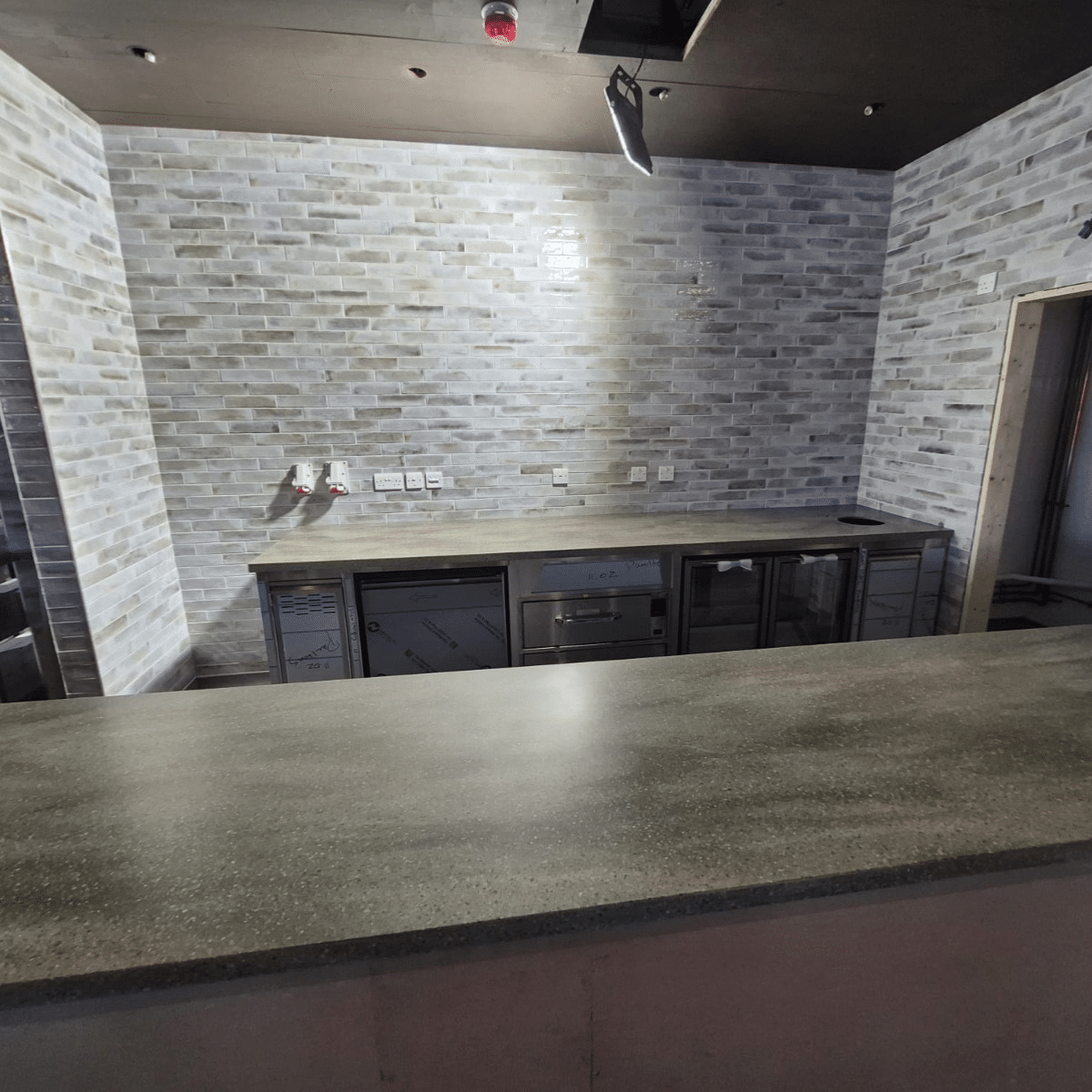
Solid Surface office teapoints have become a fundamental feature in modern workplace design, evolving from simple coffee and tea stations
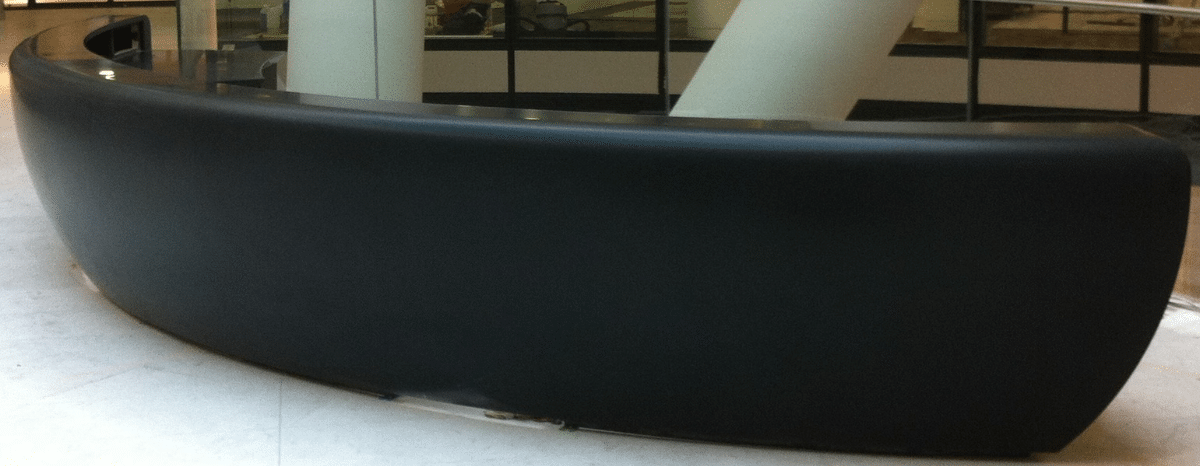
Understanding disclaimer colours in Solid Surface is important because, when it comes to Solid Surface, not every colour behaves the same way. While the full spectrum of shades allows incredible design freedom, some colours, particularly the darker, high-pigment options, require a little more care and understanding. These are often referred to as “disclaimer colours.”
Need help with a project? Contact us for more details.