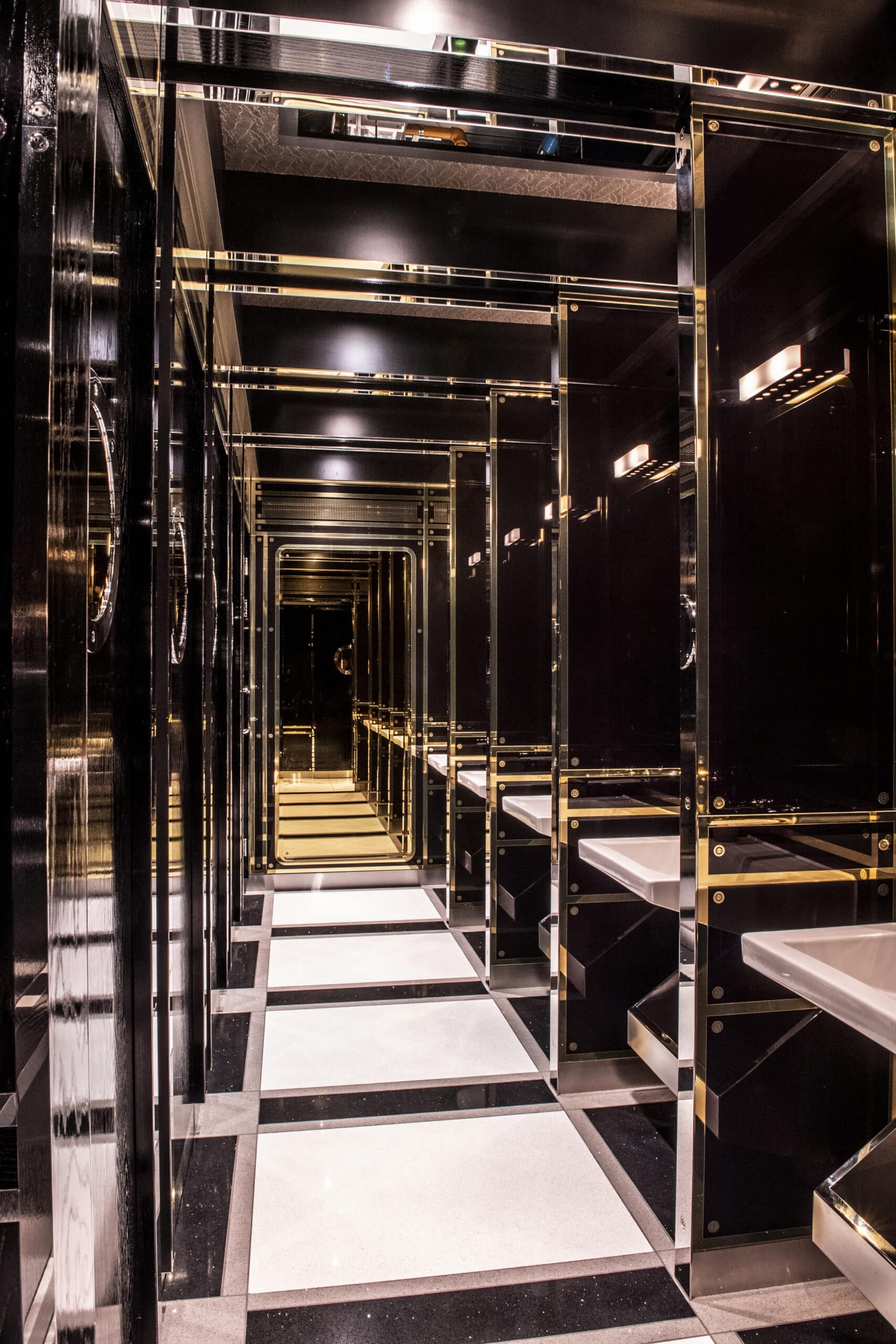
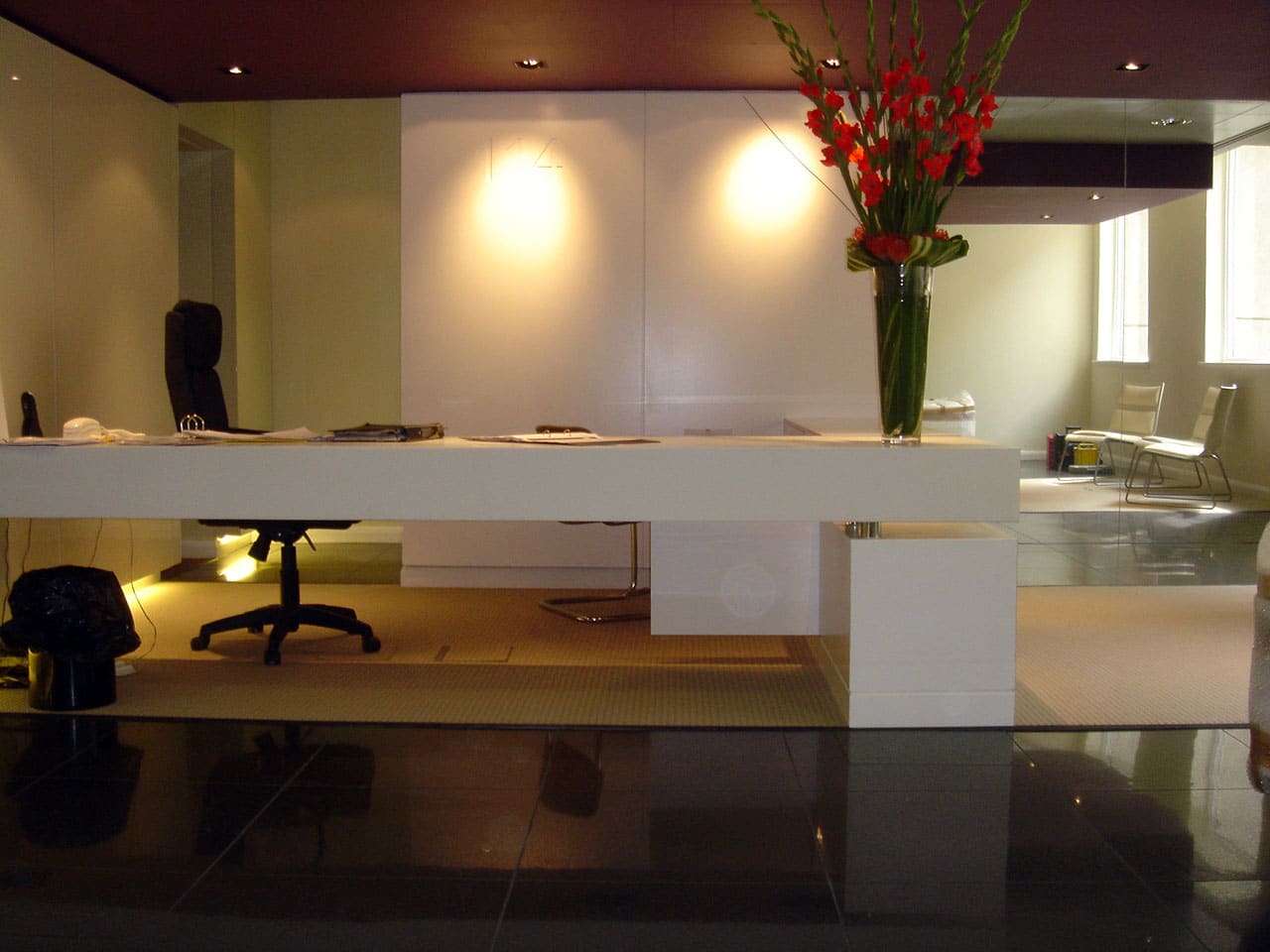
Solid Surface is one of those materials that just works. It looks sleek, it’s non-porous and hygienic, and it can be fabricated seamlessly, which is why you see it everywhere from reception desks to washrooms, teapoints and high-end residential interiors.
If you’re new to it (or you just want a simple refresher), here’s a proper “What Is Solid Surface? Back to Basics Guide”.
Solid Surface, at a glance
Best for: receptions, teapoints, wash areas, wall cladding, bespoke counters
Key benefits: seamless joins, hygienic non-porous surface, repairable finish, curves
Good to know: dark colours show more wear; avoid direct heat + cutting
So… what actually is Solid Surface?
Solid surface is a non-porous, man-made sheet material that can be fabricated into seamless worktops, counters, wall cladding and fully bespoke shapes.
It’s used a lot in:
reception desks and feature counters
teapoints and office kitchens
vanity units and wash troughs
splashbacks, upstands and wall cladding
bathrooms and wet areas
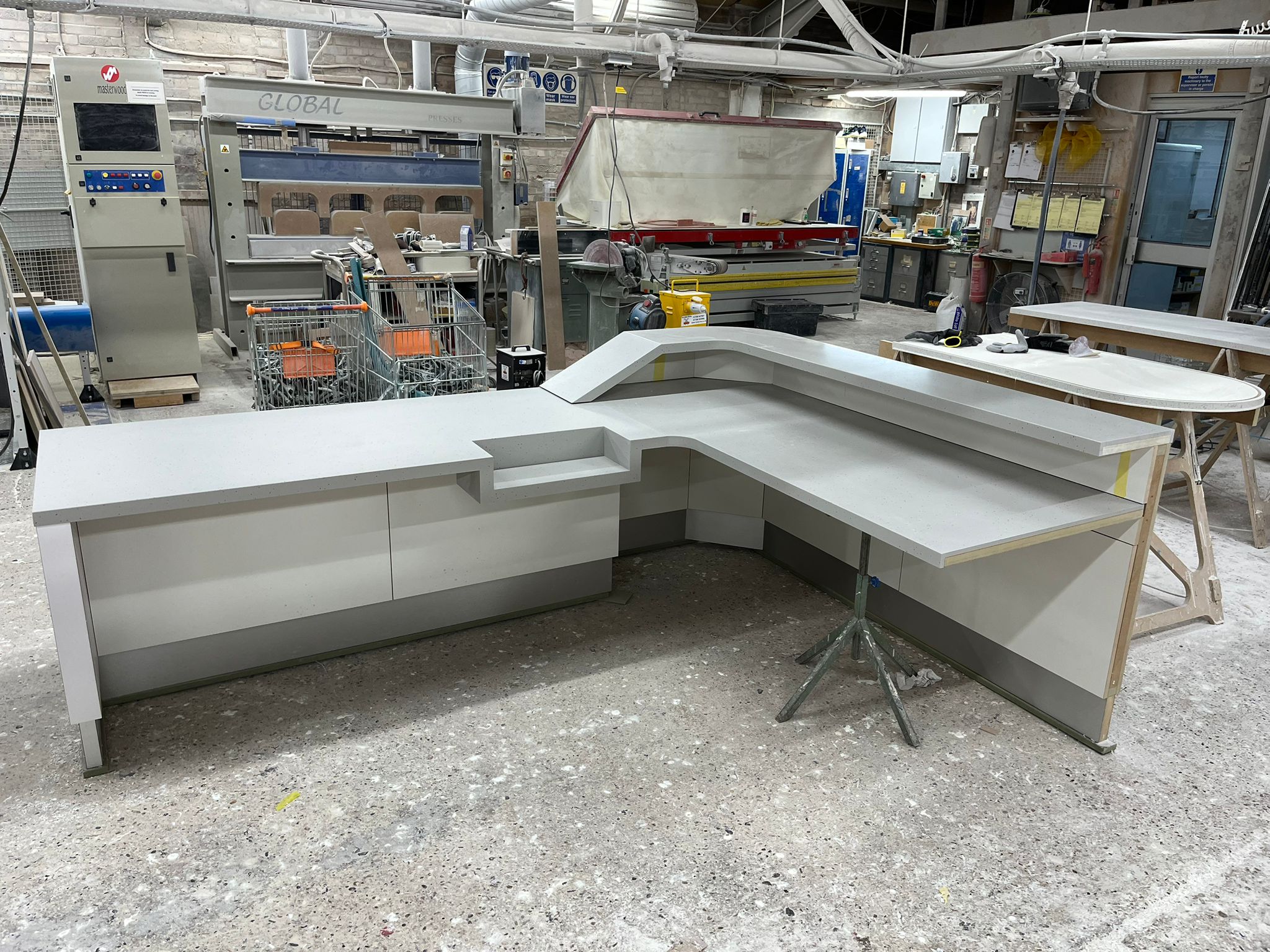
The reason it’s so popular is simple: you get a premium finish with practical performance, and it can be fabricated in ways other materials just can’t.
What is Solid Surface made from?
Most Solid Surface brands are made from a blend of minerals and resin, with pigments added to create the colour and pattern.
Different brands have different formulations (some are more acrylic-based, some use other blends including polyester, and a polyester/ acrylic hybrid), which affects things like thermoforming and finish options, but the key performance benefit remains the same:
✅ It’s non-porous
✅ It’s workable
✅ It’s made for seamless fabrication
Why Solid Surface is such a favourite (and not just because it looks good)
Solid Surface can be joined and finished so the seams are minimal, and in many cases, almost invisible. That’s why it’s brilliant for long runs, feature desks, counters and areas where you want a clean, continuous, sleek look.
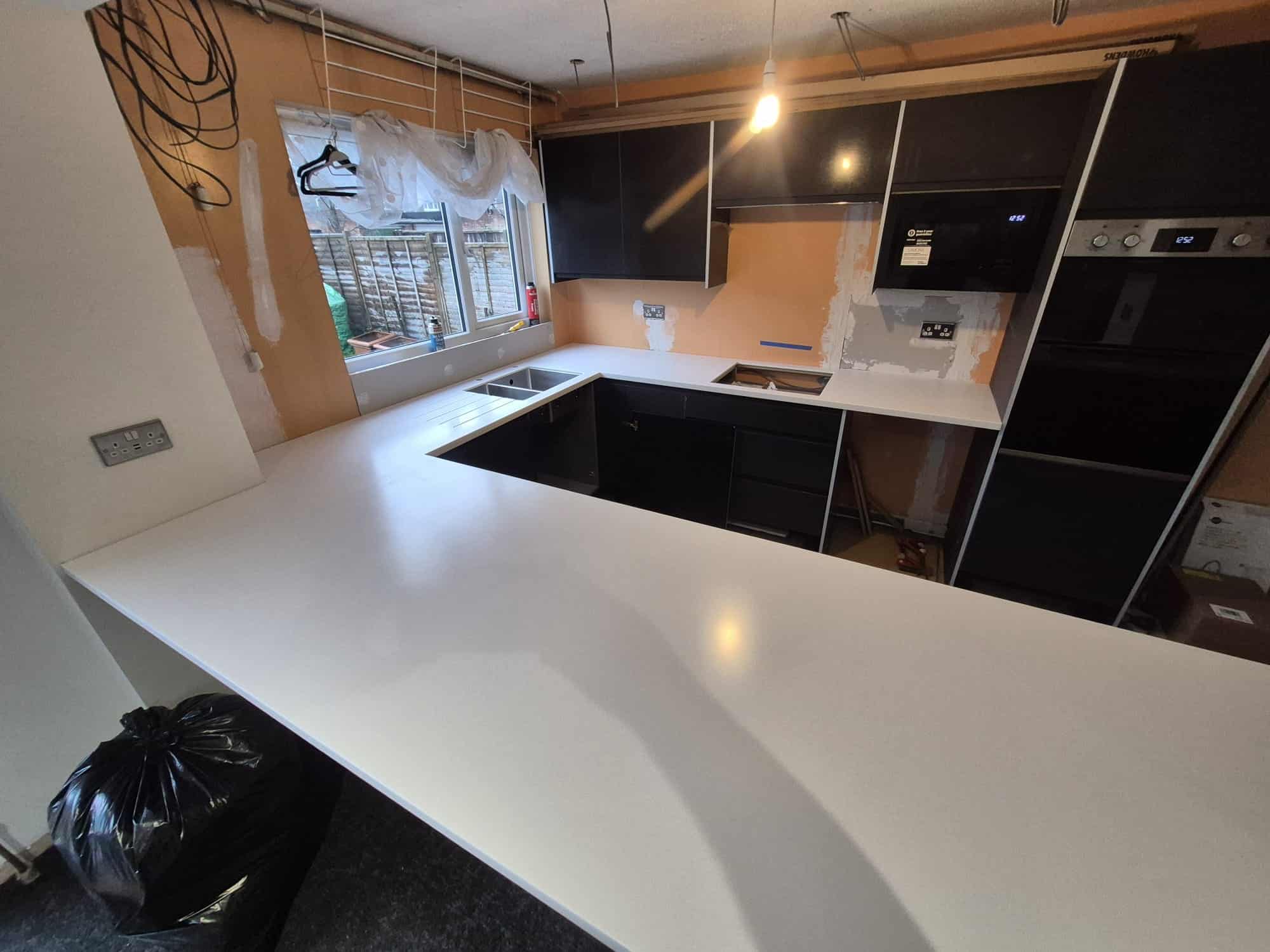
Because it’s non-porous, it doesn’t absorb spills like some natural materials can if they’re not maintained properly. That’s one of the big reasons it performs so well in healthcare, washrooms, food-adjacent spaces and care environments.
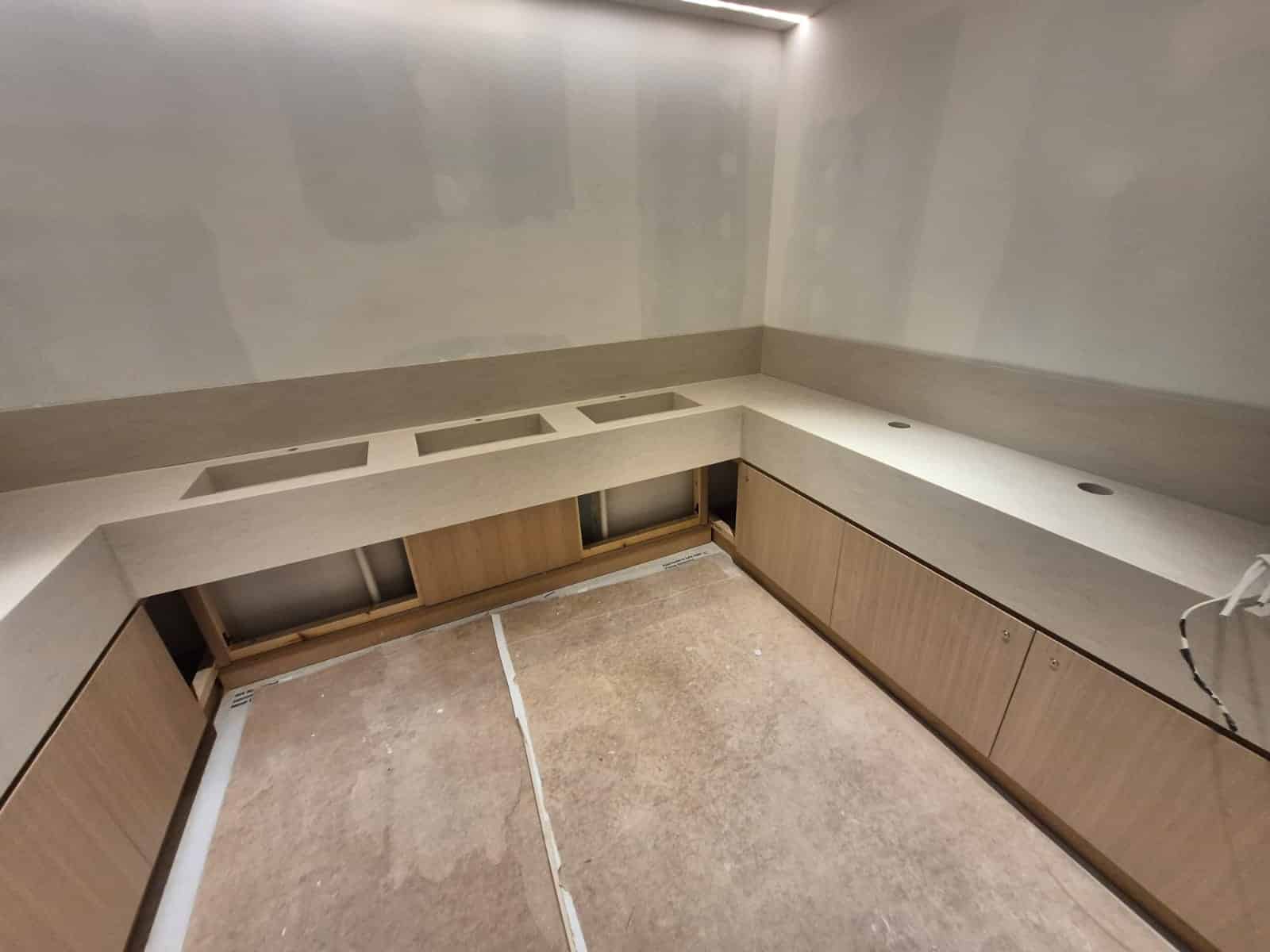
Real life happens. People use things. Stuff gets knocked. The upside with solid surface is that many everyday marks and scratches can often be refinished and refurbished, rather than the whole surface needing replacement.
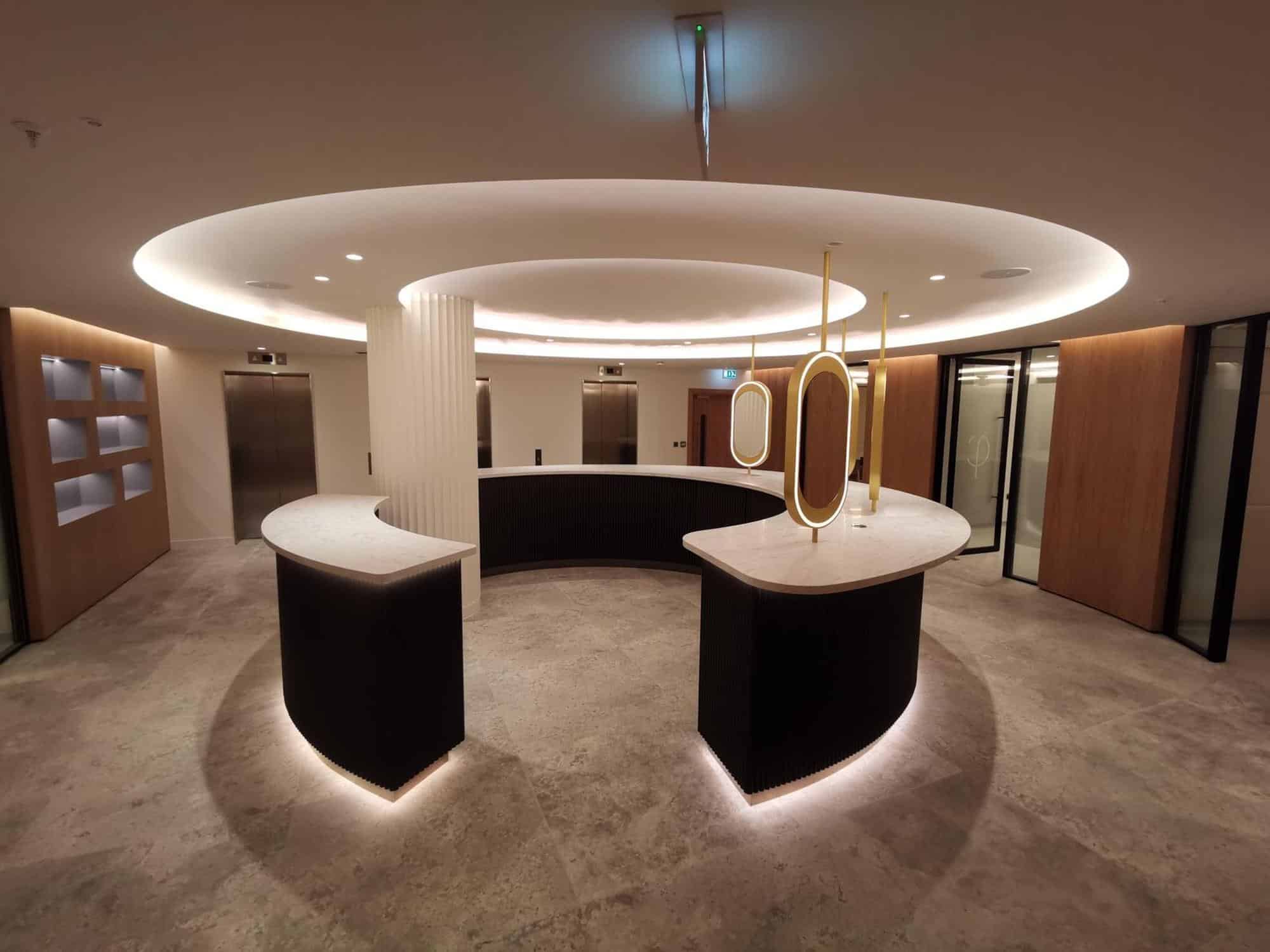
This is where Solid Surface really shines: it can be fabricated into curves and 3D forms, not just straight lines. That’s why you’ll see it specified in statement receptions, sculptural vanities and bespoke commercial interiors.

Why Solid Surface works so well:
Non-porous, seamless, repairable, and brilliant for curves, a genuinely practical spec that still looks premium.
Where Solid Surface works best
Here are the most common “sweet spot” applications we see:
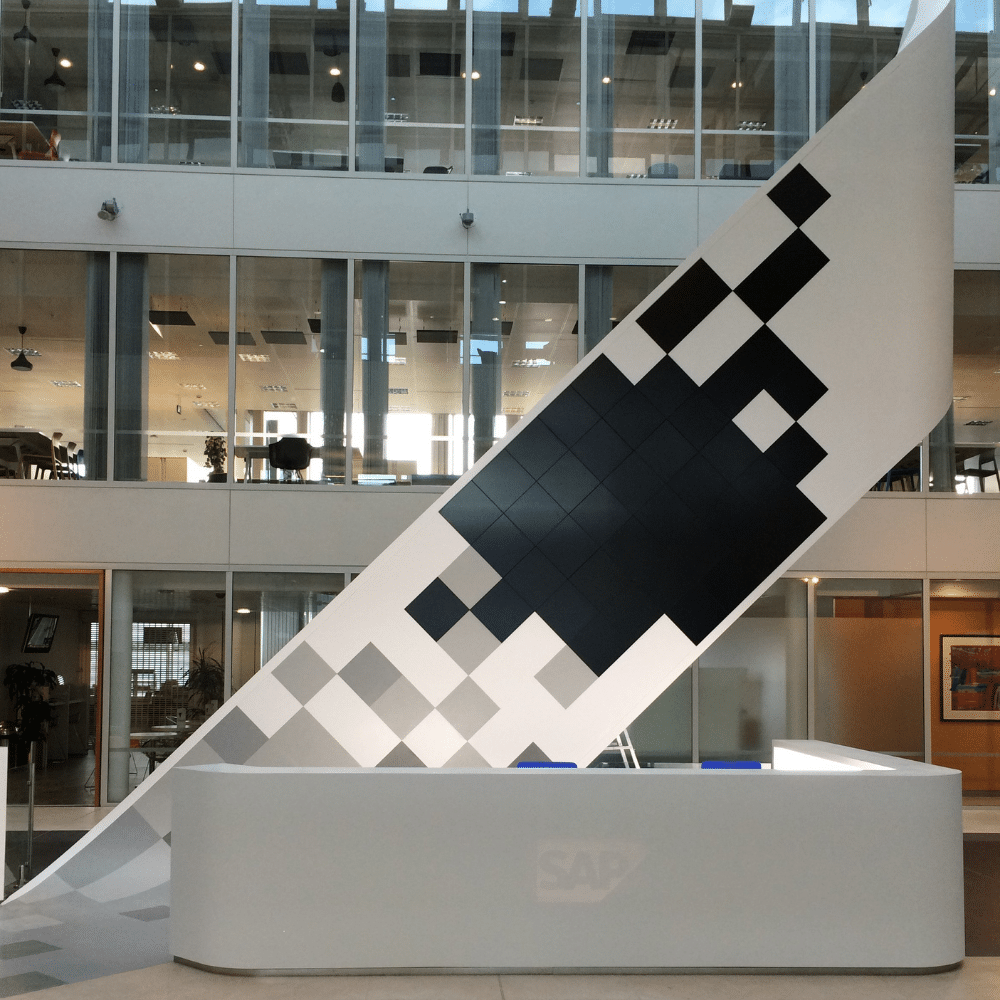
Reception desks & feature counters (high impact, high traffic)
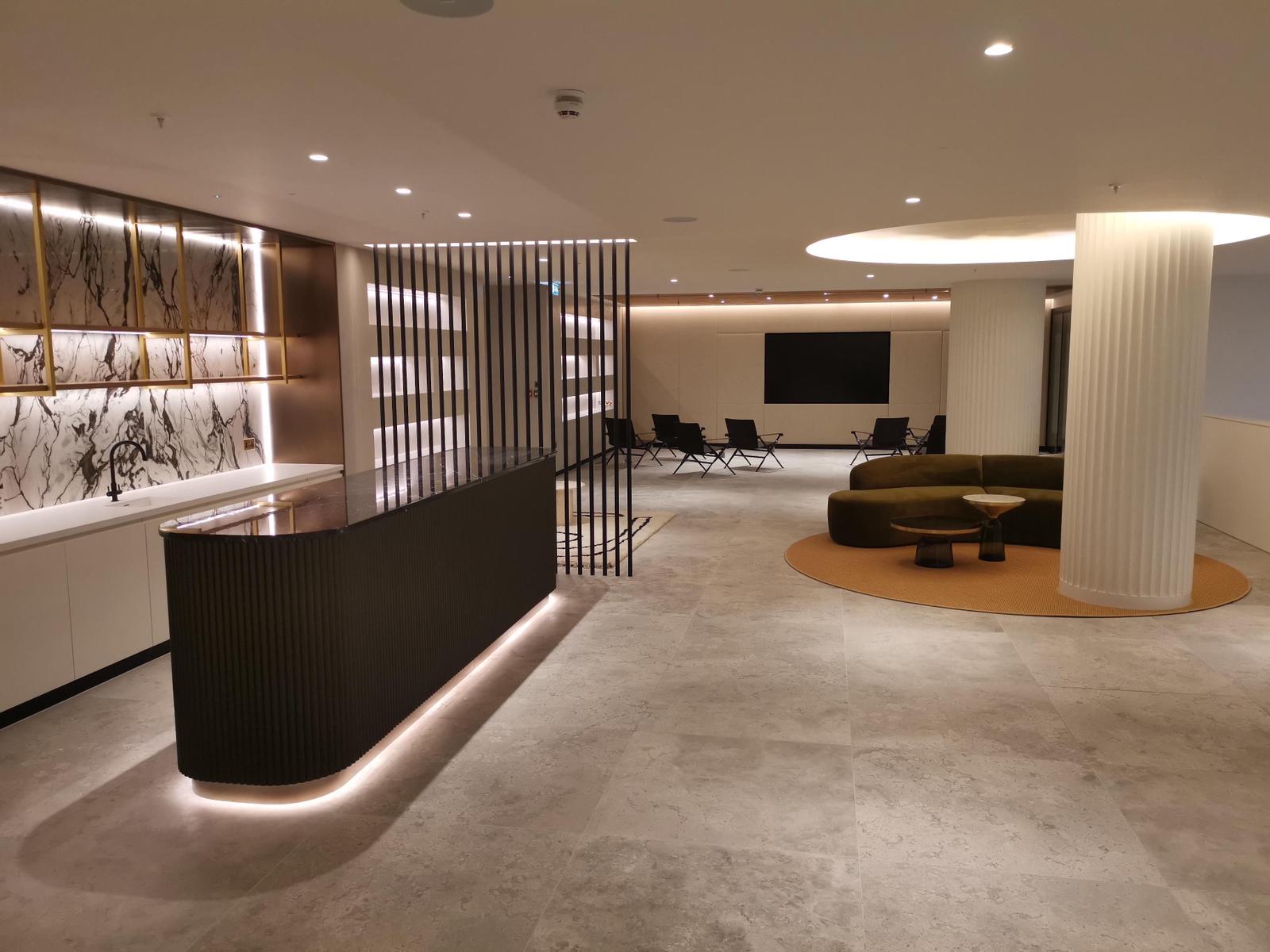
Office teapoints & kitchens (durable, practical, easy-clean)
Wash troughs & vanity units (hygienic detailing and seamless fabrication)
Wall cladding & splashbacks (wipeable, modern finish)
Shower areas & bathroom walling (especially in care environments)
Brands you’ll see in the UK
There are lots of Solid Surface brands available, and different projects suit different products. In the UK you’ll commonly come across:
Corian®, HIMACS, Durasein, Hanex, Staron, Tristone, Durat, Velstone (and others).
If you want to browse directly from the source:
The honest bits (what you should know before specifying)
Dark colours can be higher maintenance (but still worth it)
Deep tones can show fine scratches, wipe marks and day-to-day wear more easily than pale shades. They’re stunning, you just want to set the right expectation from the start and pair them with the right care plan.
Heat and cutting: don’t test it
Solid Surface is hard-wearing, but it’s not designed to take hot pans straight off the hob or be used as a chopping board. Use trivets, use boards, and you’ll keep it looking lovely for longer.
Dark colours: stunning, but expect ‘real life’ to show
Deep tones can show fine scratches and wipe marks more easily than pale shades. Totally doable, just worth pairing with the right expectations and care plan.
Cleaning & maintenance (the simple version)
Day to day, it’s genuinely straightforward:
warm soapy water or a mild cleaner
for stubborn marks, use the right cleaner properly (and always test a small area first)
buff dry to avoid water marks and bring back the finish
Full guidance here → https://www.bsfsolidsurfaces.com/solid-surface-cleaning-advice/
A quick note on silica-free and why it matters
There’s a growing focus across the industry on dust exposure and safer material choices, and rightly so.
The HSE highlights construction dust as a serious long-term health risk, and silica exposure is a key part of that conversation. Many specifiers are now considering silica-free routes as part of a safer, more futureproof specification strategy (alongside proper fabrication controls, of course).
What we do at BSF (in plain English)
At BSF Solid Surfaces Ltd, we fabricate bespoke, made to order Solid Surface pieces, from straight runs through to complex curves and integrated solutions.
We work across multiple brands depending on what the project needs, and everything is built around the same thing: quality fabrication, proper detailing, and creating pieces that look incredible and perform brilliantly.
If you’re looking at front-of-house areas, start here:
https://www.bsfsolidsurfaces.com/reception/
A go-to for hygiene led interiors
Because Solid Surface is non-porous and can be detailed with smooth transitions and minimal joints, it’s widely used in washrooms, healthcare-style environments and busy public areas.
Quick FAQs
Is Solid Surface the same as quartz?
No, quartz is typically an engineered stone product; Solid Surface is a different category with different fabrication benefits (especially shaping and seamless joins).
Can Solid Surface be repaired?
Often, yes. Many marks and scratches can be refinished professionally.
Is it suitable for healthcare and care environments?
Yes, it’s widely used in hygienic, easy-clean environments and can be detailed to reduce dirt traps with smooth transitions and integrated solutions.
Planning a new design and considering Solid Surface, and wondering if this is the best route for you? If you’ve got drawings, a mood board, or even just a rough idea, we’re happy to help you work out what’s sensible for the application, colour choice and detailing.
________________________________________________________________________________________________________________
Nicola Barden is the Managing Director of BSF Solid Surfaces Ltd, with 26 years of experience under her belt. She is also a wife, mother to her autistic son, and has three crazy cats and one loopy dog. She enjoys training at the gym, dancing, reading, nature walks and being out and about.
Need help with a project? Contact us for more details.