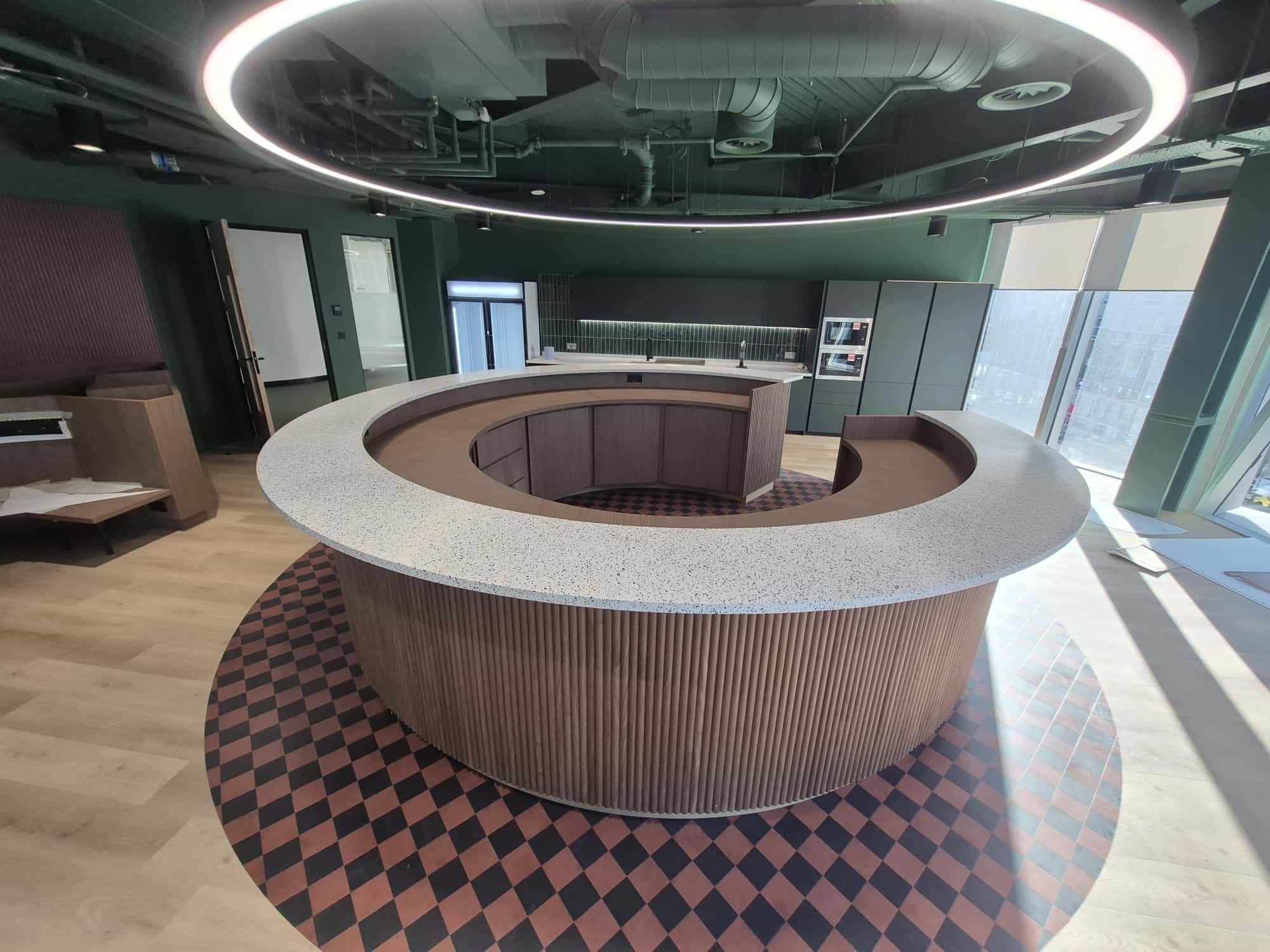
How to choose the right Solid Surface colour for a commercial project
Colour is often the decision that gets left in a commercial project. Plans get signed off, fabrication gets quoted, often based on a selection of colours, with lead times often being confirmed on the same basis, and then someone has to settle and decide on a colour. It happens on a lot of projects, and it is worth talking about, because colour in a commercial space is not the same decision as it is at home.
At home, you are choosing what you like. In a commercial setting, you are choosing what works for the people who will use the space every day, what holds up under real conditions, and what still looks right in years to come. Get it right and the space feels calm and well thought through. Get it wrong and it can be an expensive decision.
We have helped specify Solid Surface across healthcare, hospitality, education, offices, and retail for over 25 years. What follows is a straightforward guide to making colour work better for you.
What solid-through colour actually means
One of the things that still surprises people is that Solid Surface is the same colour all the way through. It is not a decorative layer over a different coloured core, and this matters for one very practical reason: the surface can be repaired.
When a fabricator sands out a scratch, a burn, or a stain, there is no ugly substrate underneath. The repaired area blends back because the material beneath is identical to what was on top. It is why we can offer a ten year material warranty with genuine confidence, and why Solid Surface makes sense in commercial environments where surfaces take a real daily beating.
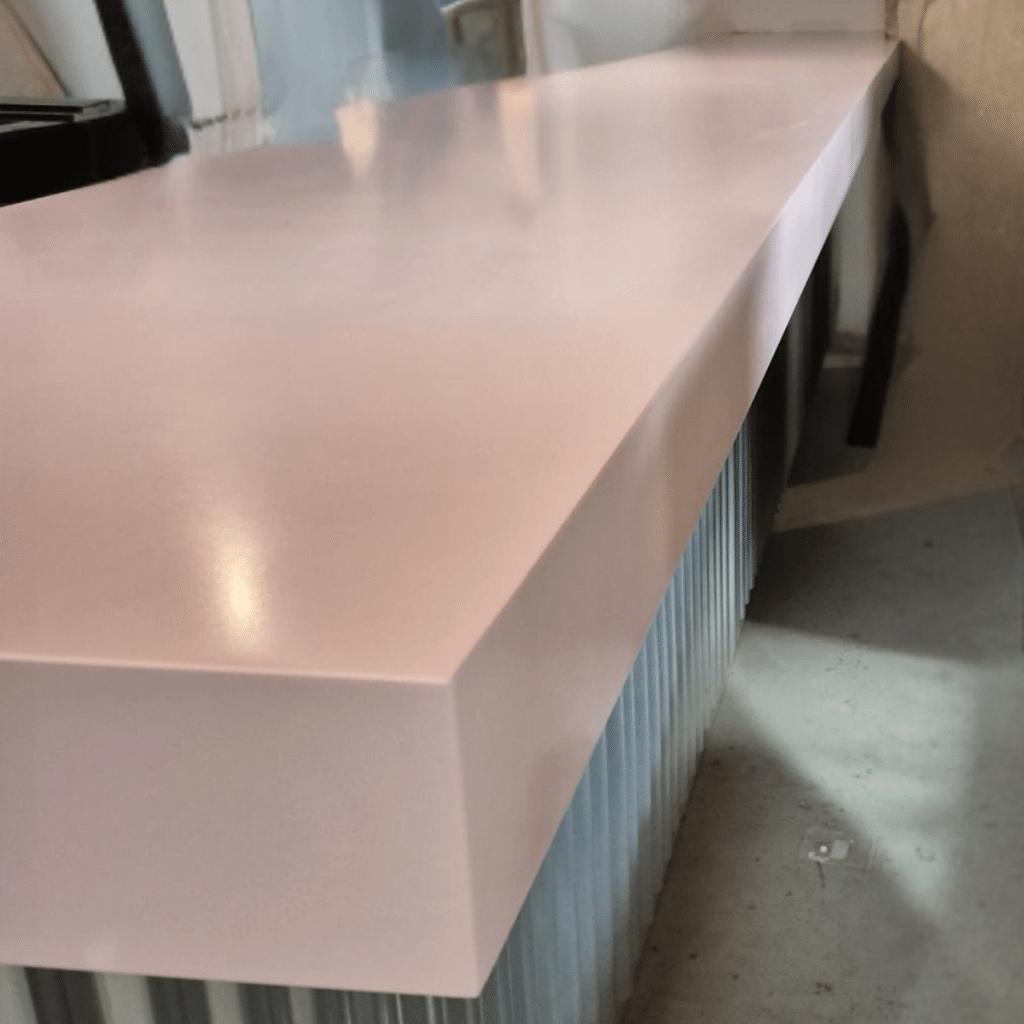
How environment should shape the decision
The most useful starting point for any commercial colour decision is not a sample fan. It is the room, and the people who will be in it.
Colour works on people whether you intend it to or not.
Light tones signal cleanliness. They reflect overhead lighting rather than absorbing it, and communicate hygiene visually before anyone has touched a surface. Whites and off whites are popular in clinical areas for exactly this reason. They also show soiling quickly, which in a setting with strict cleaning protocols is essential.
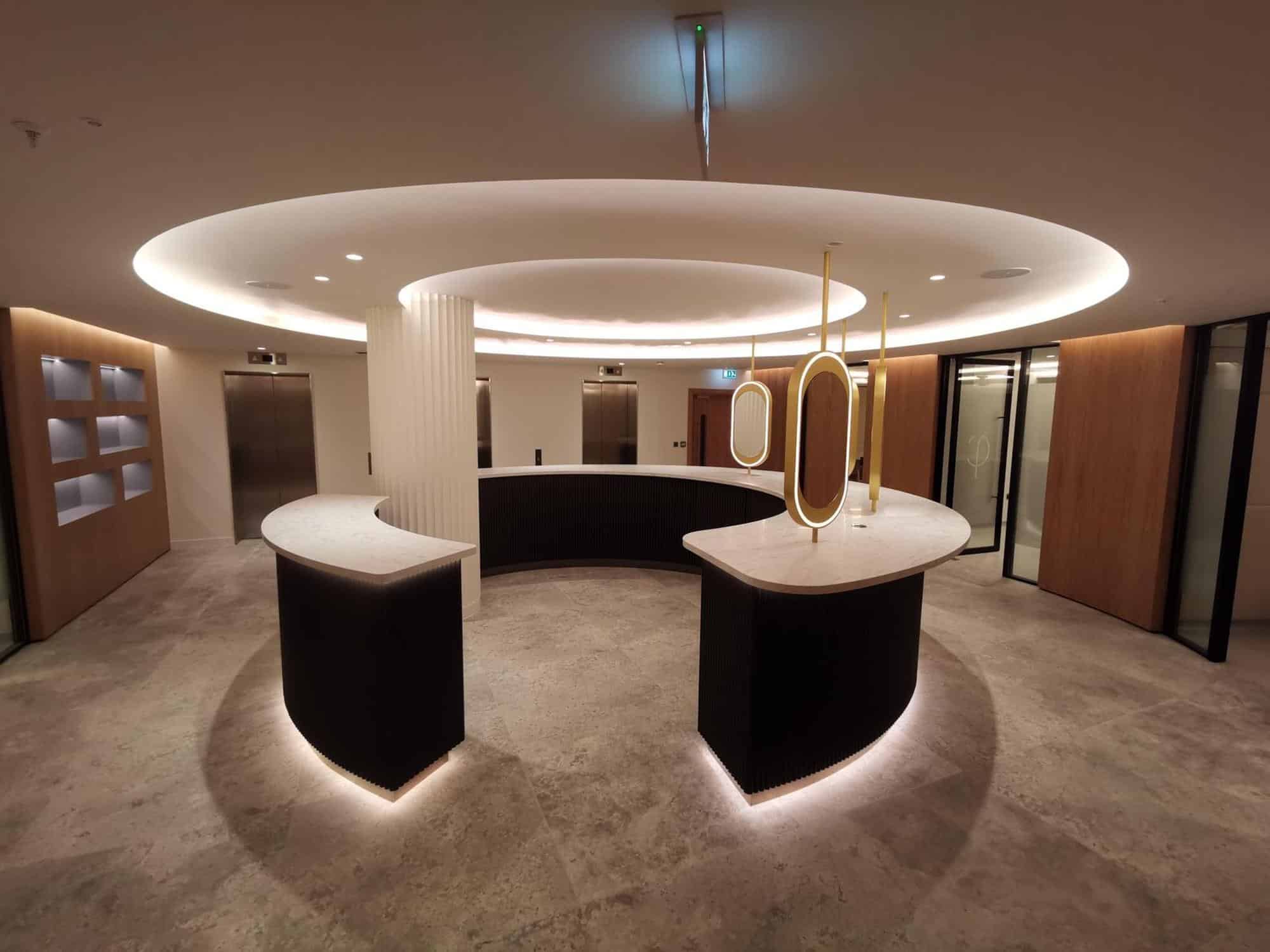
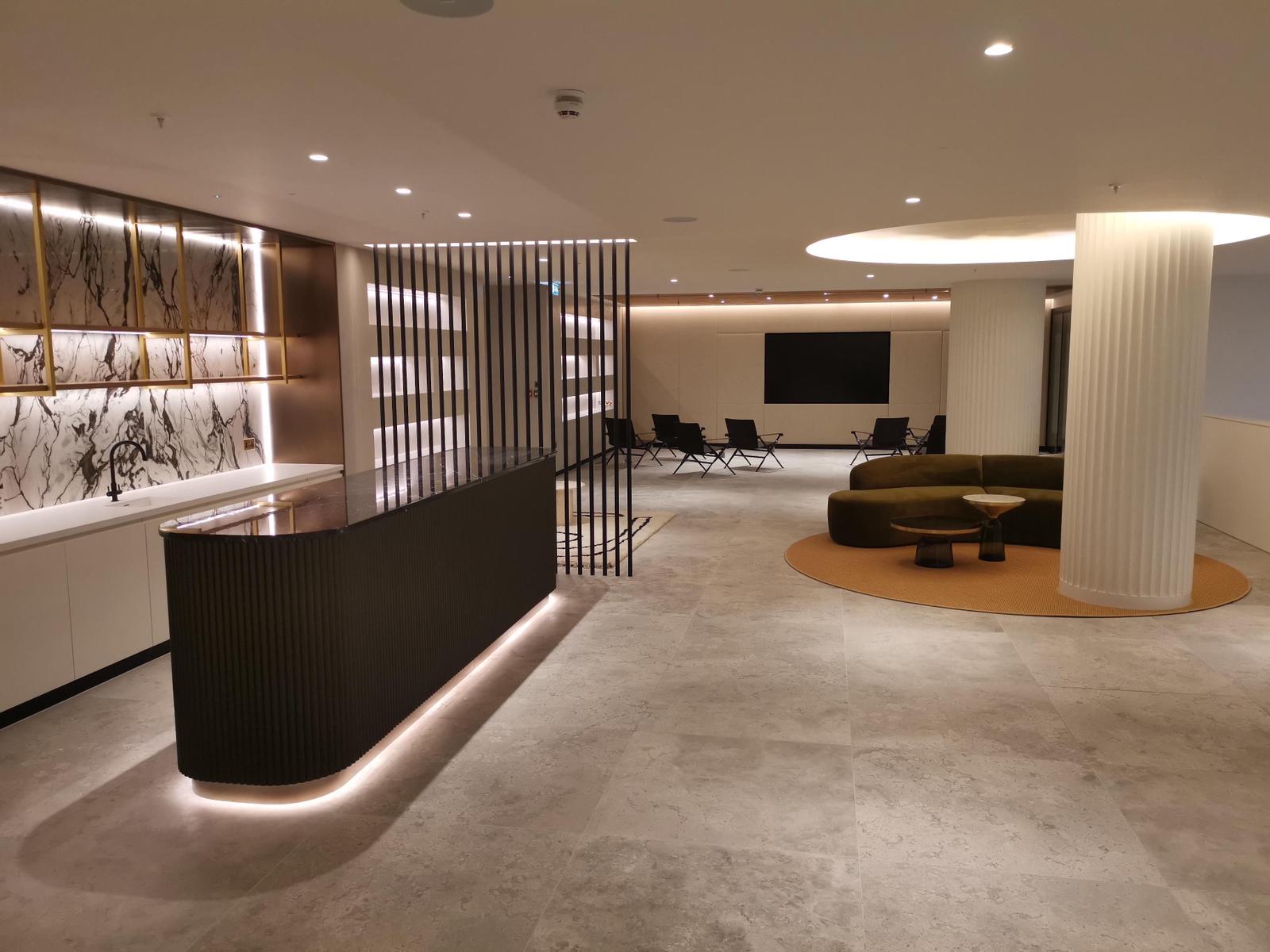
Warm neutrals and stone tones work differently. They create a sense of calm without the clinical edge, which is why they perform well in waiting areas, reception spaces, and anywhere you want people to feel at ease rather than alert.
In hospitality, colour is part of the atmosphere. A bar or restaurant surface is there to be noticed, to set a tone before a guest has looked at a menu or spoken to anyone. Deeper tones and richer colours carry energy here in a way they would not in a surgery or an open plan office.
In a workplace, particularly a teapoint or breakout area, people spend short stretches of time throughout the day. Cooler, mid range tones tend to work well because they support focus without being stark. They hold up under repeated exposure in a way that very bold or very pale colours sometimes do not. There is a reason so many offices reach for soft concrete tones and quiet stone finishes. They do not compete with everything else happening in the room.
The truth is, colour is doing something different in every space, and a good specification uses that to its advantage rather than ignoring it.
The honest conversation about dark colours
Dark colours are popular, and we have produced work in deep charcoal and real black that we are genuinely proud of. But there are things worth knowing before you commit.
Because of the chemical composition of Solid Surface, scratches show lighter than the surrounding surface on a dark colour. On a pale colour, that difference is barely noticeable. On a very dark colour in a busy environment, those fine marks build up more visibly over time. The surface is still repairable, but it will need more regular attention to stay looking its best.
Dark surfaces also show dust, watermarks, and fingerprints more readily. In healthcare, that makes them a difficult choice for clinical areas. In reception spaces or hospitality, where surfaces are cleaned and maintained as part of the daily routine, they can work well.
This is not a reason to avoid them. It is a reason to have a realistic conversation early about how the space will actually be used.
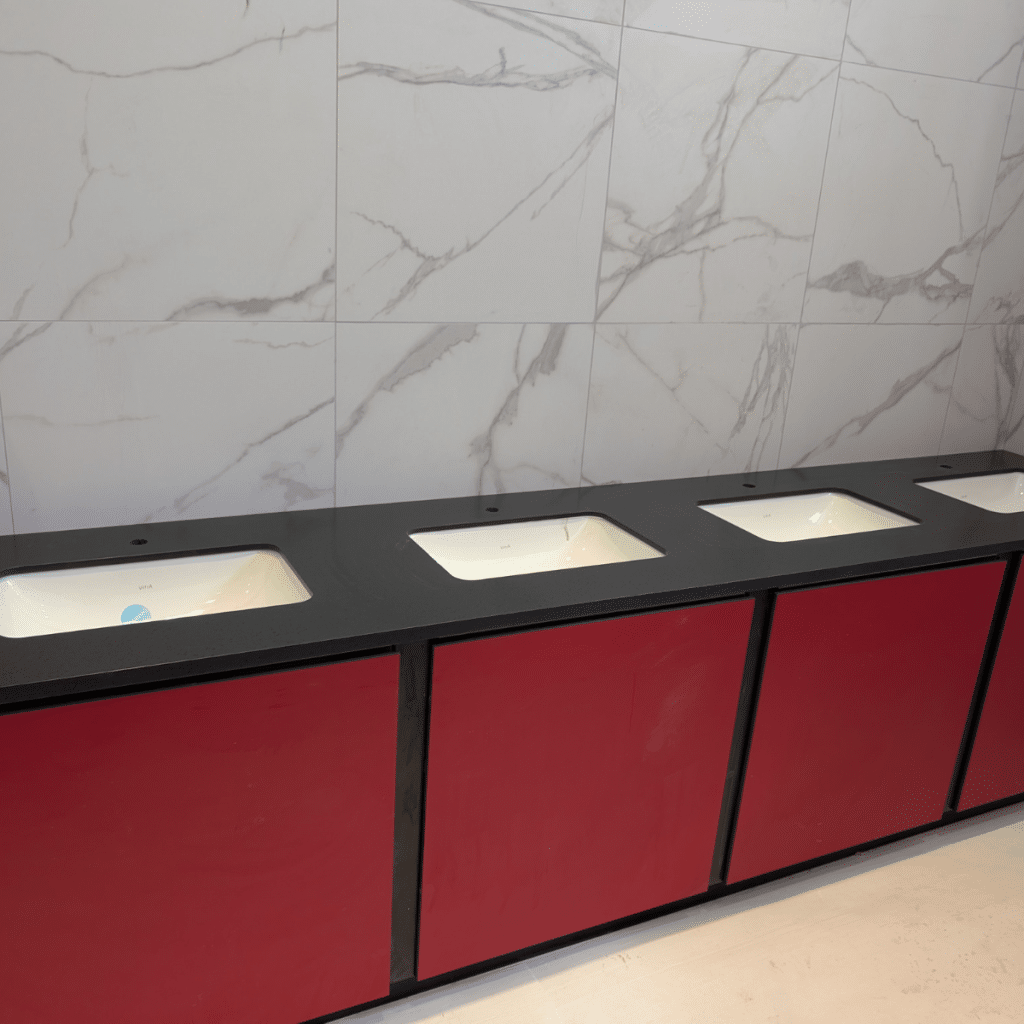
Satin or gloss: what works in commercial settings
In most commercial environments, satin finishes hold up better over time.
Gloss looks sharp on a sample. On a working surface, it shows fingerprints, dulls under repeated cleaning, and needs more careful upkeep to stay looking consistent. In clinical settings, it is rarely the right call.
Satin finishes are more forgiving of daily use and can be refreshed with light sanding if they start to dull. A satin finish on a reception desk that has seen a decade of use still looks intentional. A dulled gloss surface just looks tired.
The exception is where a deliberate design choice calls for it, or where the surface sees low contact. In those cases, gloss can absolutely work. But for most commercial specifications, satin is what experienced specifiers tend to choose.
Seams, samples and what to look for
How seams behave varies with colour. On a light, uniform tone, a well executed seam is normally inconspicuous. On a very dark solid colour with no pattern or chip effect, slight variation at the joint can be more noticeable.
Colours with natural movement and particulates tend to conceal seams more readily because the eye follows the pattern rather than the join, whereas the more swirly patterns can look more random. On larger installations, our fabricators will evaluate which technique to utilise to spread the visual load of a join across the surface. Seam placement should be planned at design stage, wherever possible to avoid any potential site issues.
This is one of the reasons we always recommend getting samples before committing. A sample in your hand, under the actual lighting of the space, can really show you what will work and what will not.
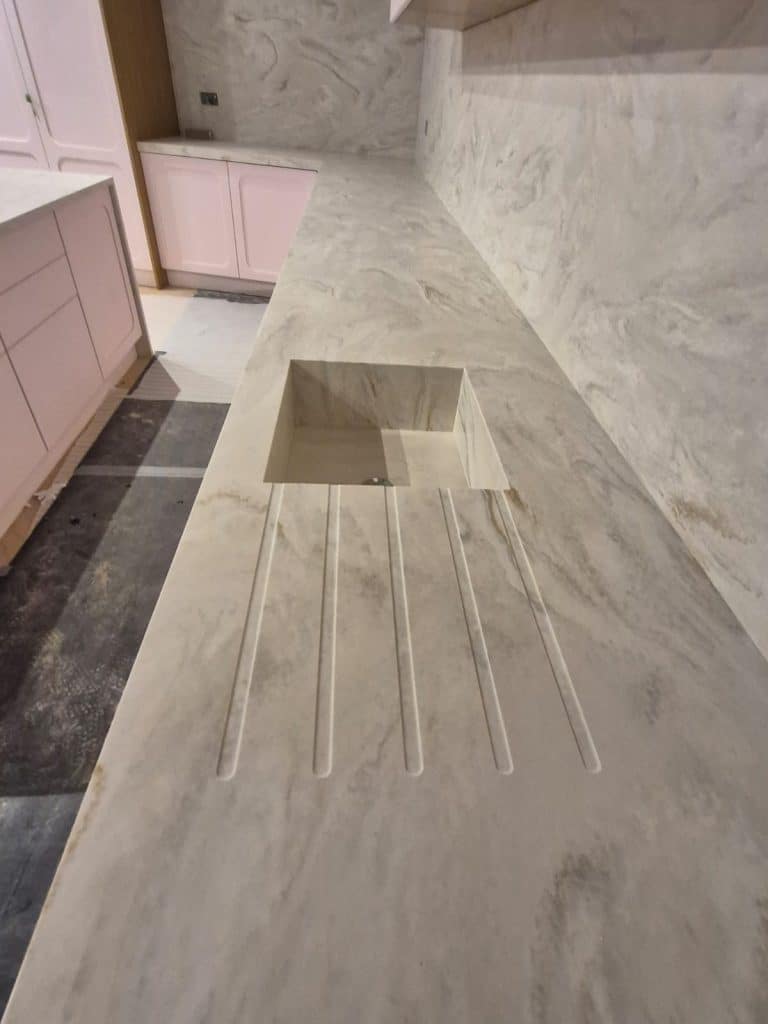
Batch consistency on larger projects
On a project that spans multiple rooms, floors, or sites, batch consistency matters. Solid Surface is manufactured in production runs and while colour tolerances are tight, there can be subtle variation between batches.
If you are specifying the same colour across a full fit out, we try to confirm batch consistency at order stage. On phased projects especially, this conversation ideally needs to happen before fabrication begins, not halfway through installation when someone notices a difference.
A final thought on coherence
The most common mistake in colour specification is making decisions room by room. Each space gets its own brief, often with different people involved, and the result is a building that feels put together rather than planned.
A stronger approach is to think about the project as a single material brief, even where different colours or finishes are used in different areas. How does the surface feel in reception? How does that connect to what people encounter in the meeting rooms, the washrooms, the teapoint?
We work with designers, contractors, and specifiers throughout this process, and it is a conversation worth having early. Not because we need to sell a particular colour, or brand of material, but because the thinking tends to produce a better result.
Ready to shortlist colours for your project?
The BSF Colour Selector lets you compare options across, HIMACS, Corian, Durasein, Hanex, Durat, Staron, and other leading brands. You can request free samples directly from the tool and explore the full colour range before committing to a specification. It is a good place to start if you are in the early stages of a project.
If you have a project coming up and want to talk through colour, finish, and what will work best for your environment, we are happy to have a chat. Drop us a message at info@bsfsolidsurfaces.com or call 01277 263 603.
Please see below for other resources:
________________________________________________________________________________________________________________
Nicola Barden is the Managing Director of BSF Solid Surfaces Ltd, with over 25 years of experience under her belt. She is also a wife, mother to her autistic son, and has three crazy cats and one loopy dog. She enjoys training at the gym, dancing, reading, nature walks and being out and about.

Solid Surface gets talked about a lot, but most people only really know it once they’ve worked with it. If you’re new to it, or you’ve only seen it in passing on a project, here’s a straightforward look at what sets it apart from other materials, nothing over the top, just the practical differences that matter day to day.
In today’s fast-paced world of interior design and construction, the use of Solid Surface in fit-out projects makes sense as it is a material that is not only attractive but also practical, durable, and sustainable.
Need help with a project? Contact us for more details.