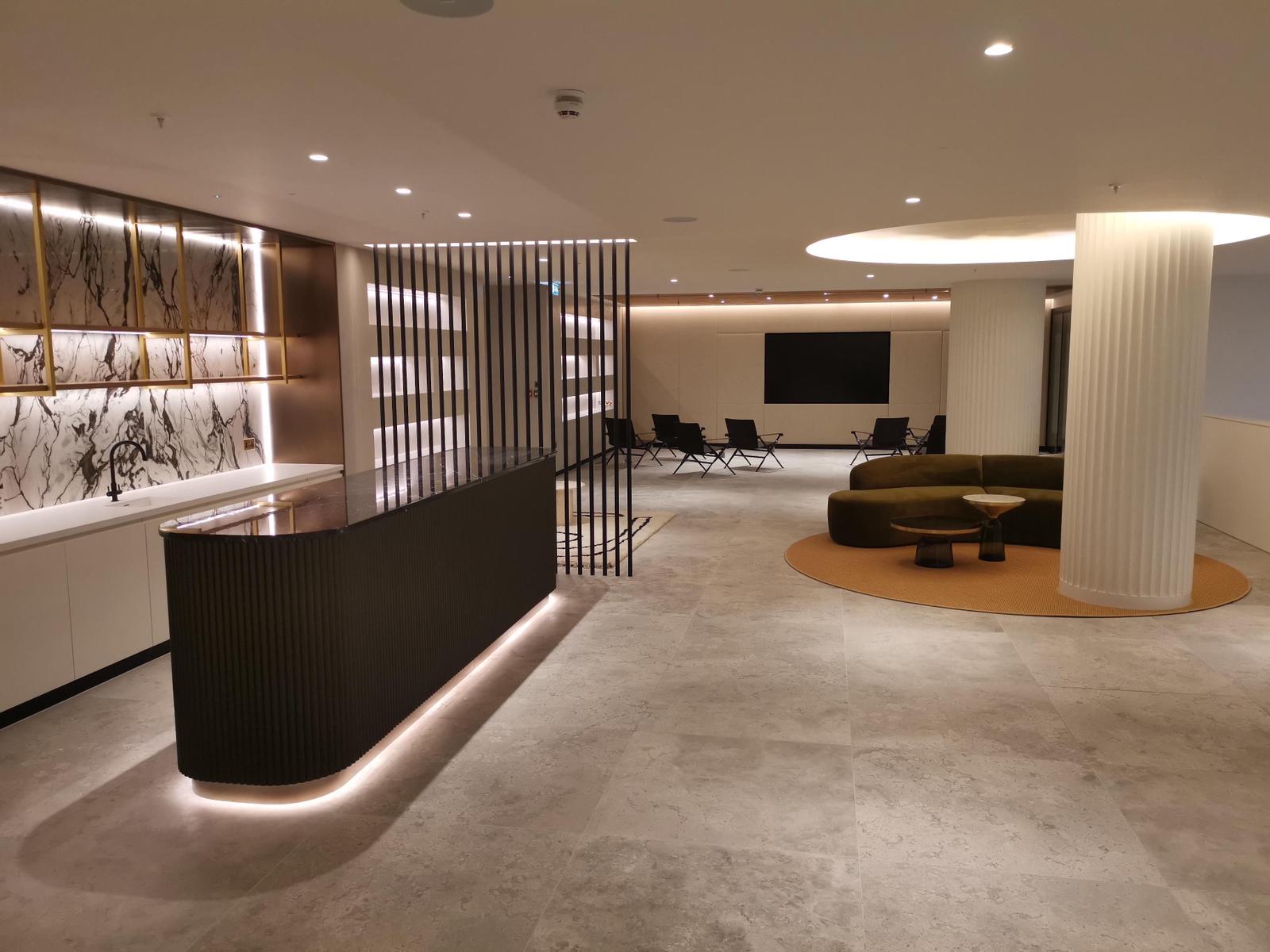
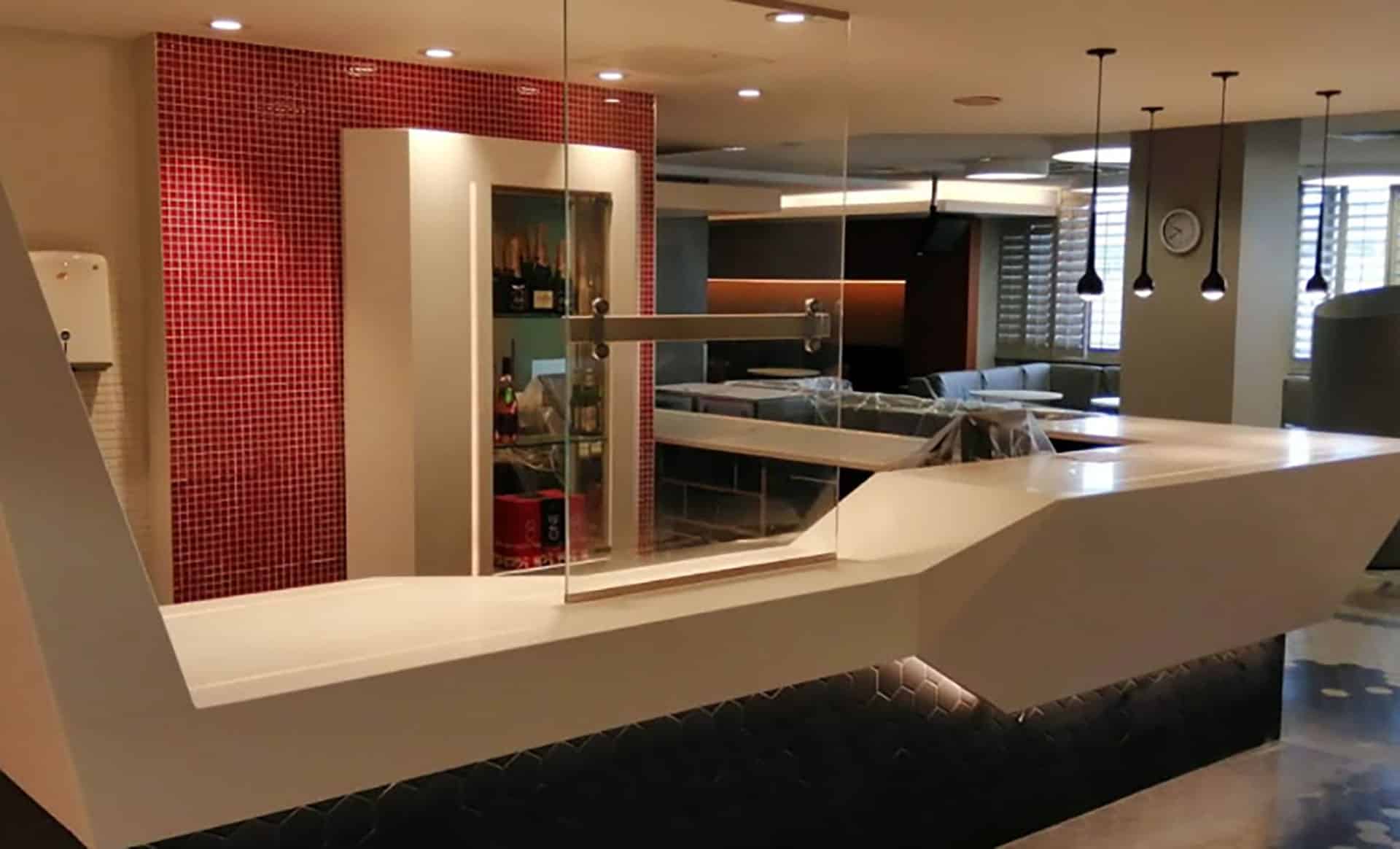
Office reception design is often discussed in terms of branding, materials and functionality, all of which are essential. Yet the most successful reception environments are shaped by something less visible: how spatial arrangement influences perception the moment someone enters. This is where ideas associated with feng shui in office reception design begin to resonate with modern commercial thinking.
Long before workplace psychology became formalised, feng shui examined how positioning, proportion and circulation affect human response. Its core principles sit comfortably alongside contemporary commercial design thinking.
At its heart, feng shui is concerned with spatial order, clarity and flow. These same principles underpin high-performing reception environments today.
The Entrance and the Logic of Flow
A reception space is experienced before it is analysed. Visitors judge orientation, openness and ease of movement within seconds.
Clear sightlines from entrance to
reception desk establish confidence. Circulation routes that feel logical rather than obstructed reduce friction. Lighting, proportion and material transitions all contribute to how smoothly the eye and the body move through the space.
In a commercial environment, flow underpins how a space is experienced and used.
The Command Position and Perceived Authority
One of feng shui’s most enduring concepts is the “command position”: placing key functions where they maintain visibility while remaining anchored and secure.
In reception design, this translates directly into desk positioning. The reception counter should:
Be immediately identifiable on arrival
Provide clear orientation
Convey stability and professionalism
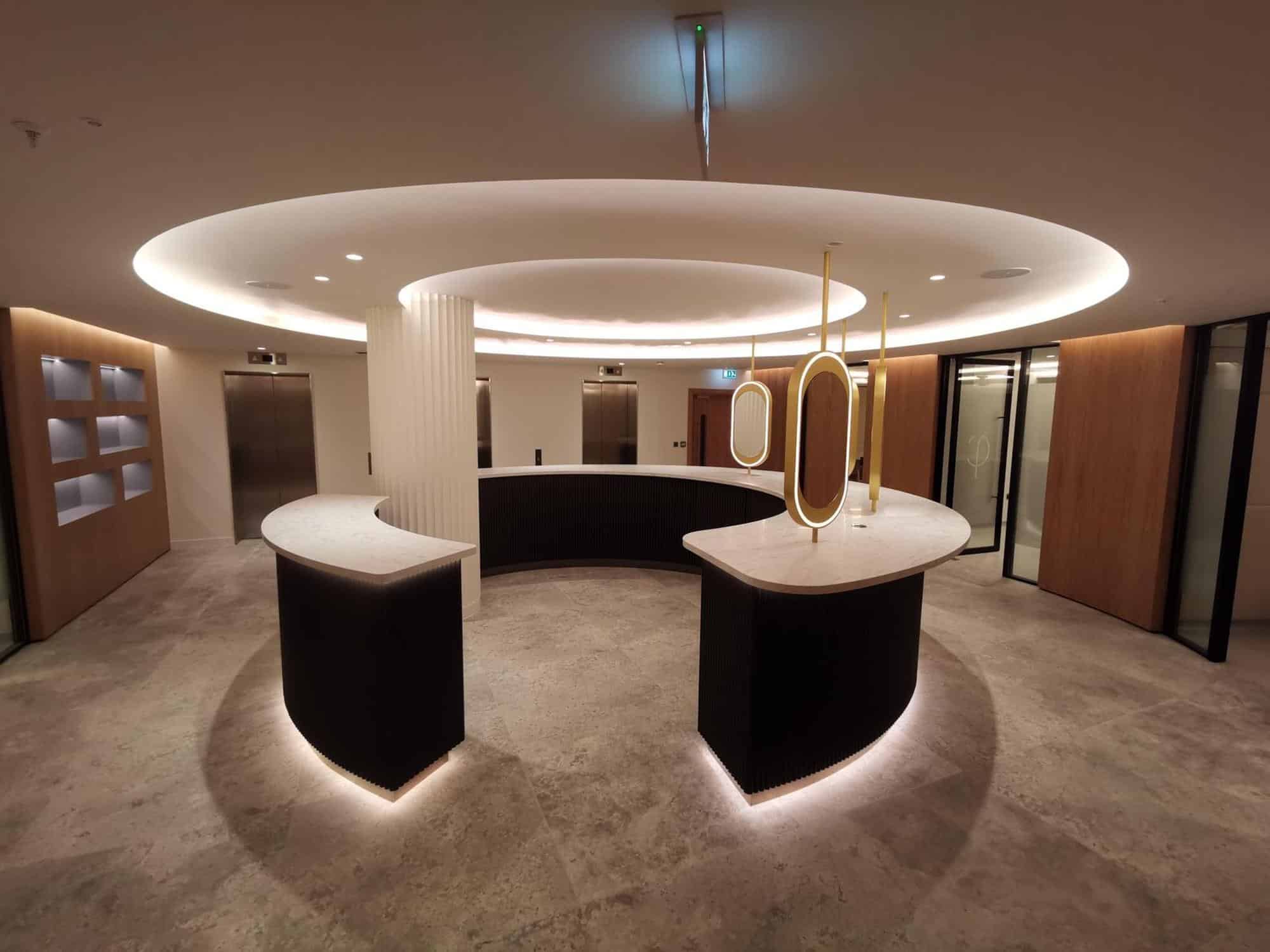
When positioned correctly, the desk becomes a point of authority without appearing defensive or imposing. When poorly positioned, even high-quality materials struggle to compensate.
Material specification reinforces this authority.
Seamless, substantial surfaces communicate permanence and precision. Softened edges or controlled curves can temper formality without diminishing presence. These decisions operate at a psychological level.
Bagua and Zoning with Purpose
Traditional feng shui uses a spatial framework known as bagua, a method of mapping defined functions or qualities onto areas of a plan. In commercial environments, this principle translates into structured zoning.
Reception areas typically contain several distinct yet interrelated functions:
When these zones are intentionally organised through layout, proportion and material continuity, the environment feels planned rather than improvised.
Bagua, in this context, is not about symbolism. It reinforces well thought through spatial planning, ensuring that each area has clarity of purpose and logical relationship to the whole.
Surface Continuity and Visual Cohesion
One of the strongest overlaps between feng shui principles and contemporary commercial interiors lies in continuity.
Visual interruption disrupts flow. Excessive material changes, visible joins or competing finishes fragment perception. Conversely,
seamless detailing and cohesive material language support calmness and clarity.
In reception counters and associated surfaces, continuity contributes to:
When surfaces integrate cleanly ie wrapping, flowing and meeting precisely, they reinforce spatial order. The environment feels composed rather than assembled.
Designing for Confidence
Reception design is not simply decorative. It shapes how a business is perceived before a conversation begins.
When entrance routes are clear, the reception counter is confidently positioned, zones are defined with intention and surfaces are cohesive, visitors experience:
Clarity
Professionalism
Reassurance
Trust
These outcomes are measurable in how organisations are received and remembered.
Feng shui, when understood beyond stereotypes, offers a framework for achieving precisely this kind of spatial confidence. Not through ornament or symbolism, but through disciplined arrangement, proportion and material integrity